
© Arosa Bergbahnen AG
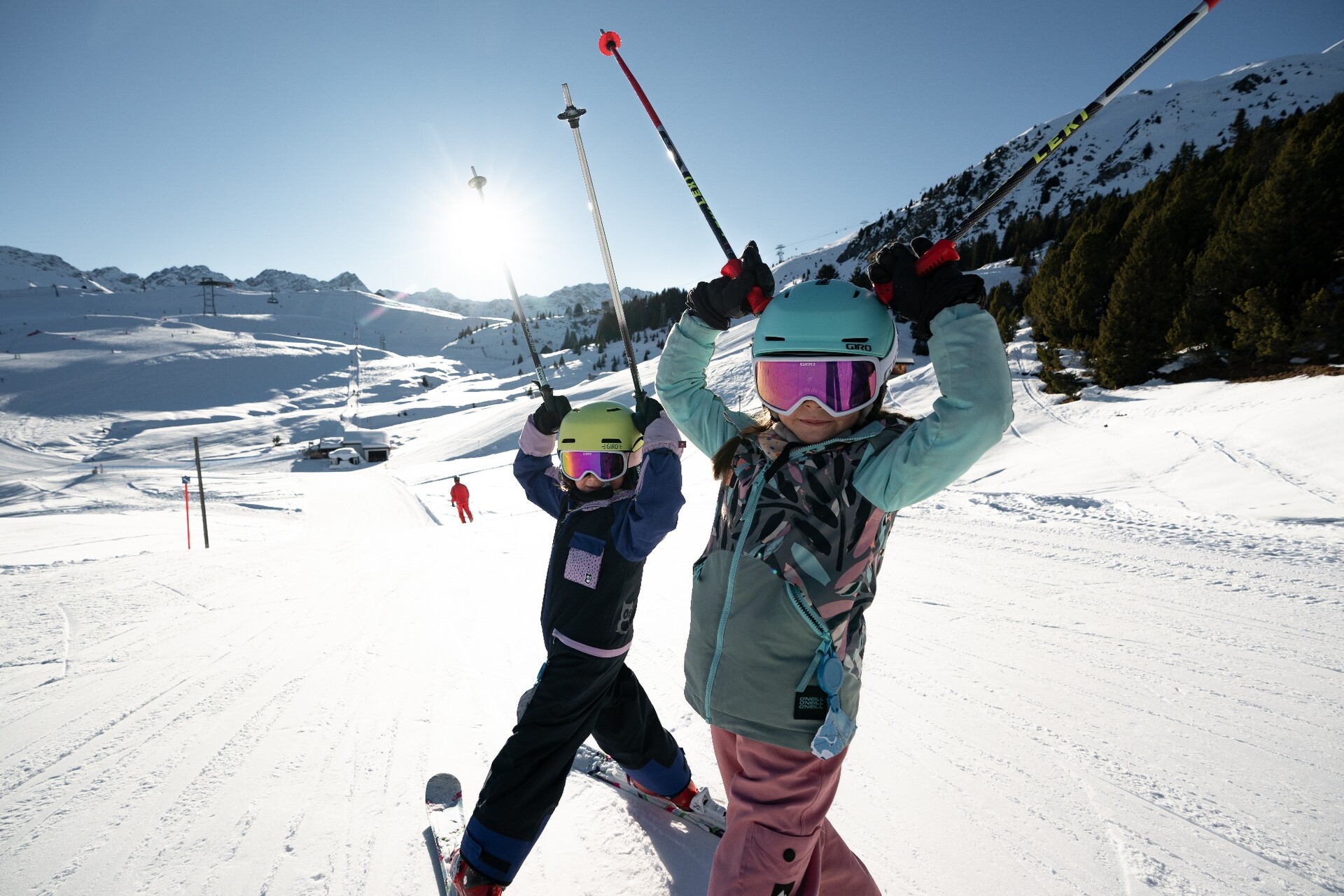
To ensure that children have fun on the slopes in winter, their ski equipment must fit properly.
Index
The importance of the right ski equipment for childrenHow to find the right ski equipment for your childImportant points to consider when choosing ski boots, ski helmets and ski gogglesTips for choosing the right size and adjustment of ski equipmentSafety on the slopes – what you should bear in mindThe advantages of renting ski equipment for childrenCare tips for your child’s ski equipmentSki equipment for children – an investment in the future of skiingFAQs about ski equipment for children
The importance of the right ski equipment for children
The basics of ski equipment for children are crucial for a good start to their alpine adventure. The right choice ensures that the little ones not only have fun, but also glide safely down the slopes. The selection of suitable skis, boots and helmets must be made with equal care. Ski helmets in particular are a must to protect children’s sensitive heads. It is essential to ensure that they have the latest EU safety certificates and a comfortable fit. The same applies to ski boots, which should be comfortable and fit perfectly to avoid foot pain. It is also important to choose ski poles carefully, as they promote balance and should be appropriate for the child’s size.Good visibility is also essential for children on the slopes. That’s why high-quality ski goggles with UV protection are a must. They not only protect against the glare of the sun, but also against the icy wind. In winter temperatures in the mountains, thermal clothing is also essential to keep little skiers warm and dry. But before hitting the slopes, proper preparation is key. Training and practice improve children’s skiing skills. And to enable them to demonstrate these skills, they need high-quality ski equipment that excels in terms of safety and durability. Even if the initial purchase costs are higher, it pays off in the long run – in the truest sense of the word.How to find the right ski equipment for your child
Finding the best ski equipment for children can be a difficult task for parents. After all, various factors such as the size, weight and ability of the child must be carefully considered to ensure that they can enjoy skiing to the full. When looking for a well-fitting ski helmet or high-quality ski goggles, there are various places you can turn to for advice. One option is to consult product tests in winter sports magazines or at specialist institutes such as Stiftung Warentest, which are available in both print and online formats.On the other hand, if you value direct advice from an expert when choosing the right skis, or if you simply want to hire them rather than buy them, you can visit a sports shop either at the ski resort itself or at home with your children. There, the staff can assess the individual skiing ability of your children and recommend the appropriate ski equipment. In addition, the equipment can be tried on and adjusted in the shop if, for example, the ski boots are too small or the helmet is too big.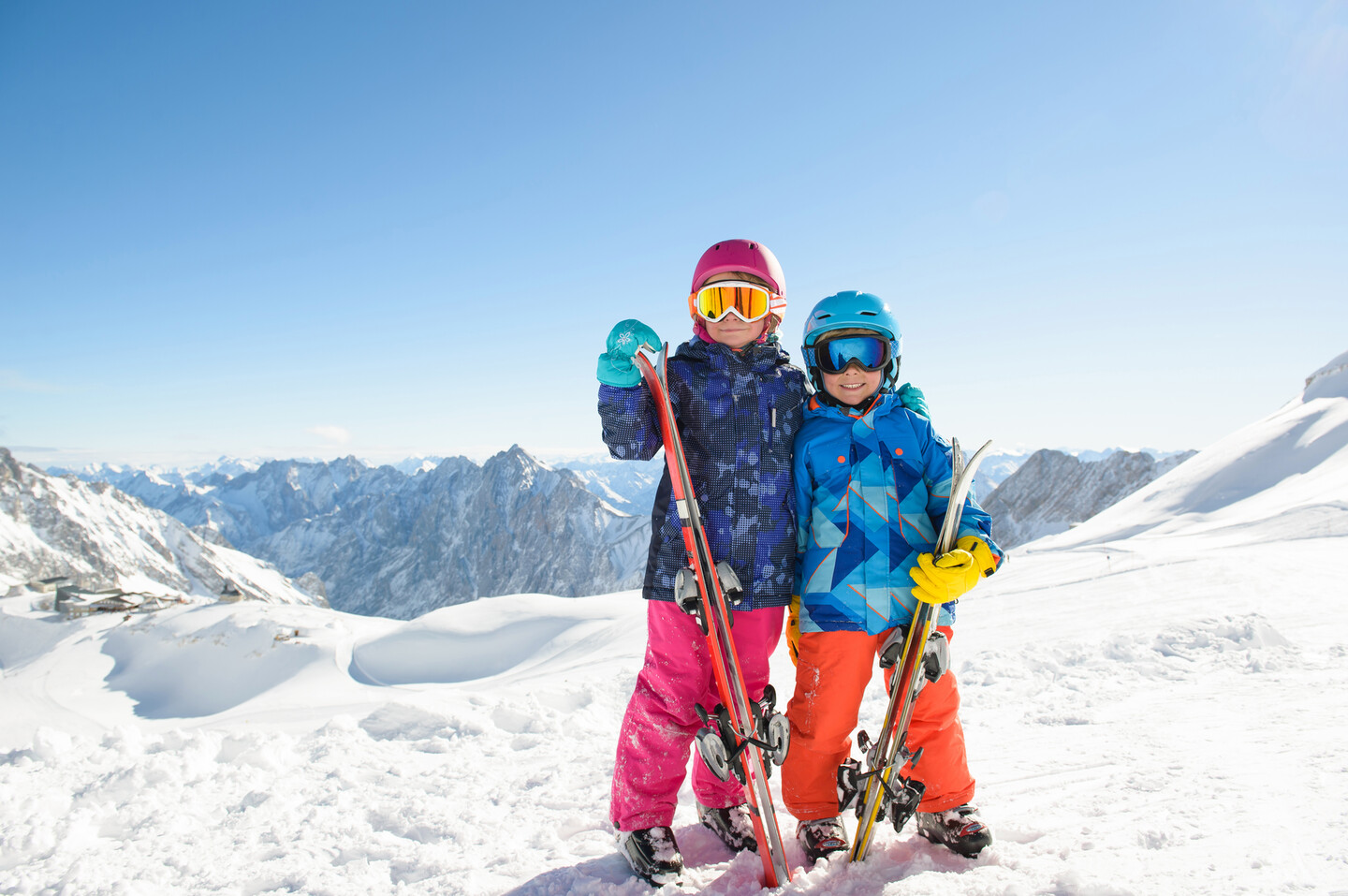
© Oksana Trautwein/shutterstock.de
Depending on the age and size of the child, they will of course need the right ski equipment, which may change from year to year due to growth spurts.
Important points to consider when choosing ski boots, ski helmets and ski goggles
When it comes to ski clothing, whether large or small, you can always focus on design or functionality. With ski boots, ski helmets and ski goggles for children, however, the fit should always be the main priority. This is because these three items of ski equipment for children are just as important for safety as they are for adults. Ski boots form the important link between the body and the skis, helmets protect against potentially life-threatening head injuries even in seemingly harmless falls, and ski goggles ensure optimal visibility even in poor visibility conditions on the slopes. Once all of this has been taken care of, you can then focus on whether the helmet is available in a colour that matches the ski jacket.Ski boots for children
When it comes to ski boots for children, the right size is crucial for safety and fun on the slopes. Since very young skiers in particular quickly outgrow their old boots by the time the new winter season arrives, some manufacturers have now launched an interesting innovation: the “grow-with-me” children’s ski boot. Thanks to their special design, these models can cover up to four boot sizes. In general, it is important to ensure that the ski boots are not too big. Otherwise, children will have less grip and control over their skis on the slopes, which can lead to accidents. Most ski boot manufacturers take into account that all children’s feet are still growing. Their products therefore have a lighter or “softer” flex and a shorter shaft than models for adults. This increases comfort and skiing enjoyment, as young skiers have more freedom of movement and control. The following table shows which ski boot size, also known as Mondopoint, fits which child’s foot:| Mondopoint (MP) | Foot length in centimetres (cm) | Shoe size EU |
|---|---|---|
| 120 | 12,0 | 19,5 |
| 125 | 12,3 to 12,7 | 20 and 20,5 |
| 130 | 13 to 13,3 | 21 and 21,5 |
| 135 | 13,5 | 22 |
| 140 | 13,8 to 14,2 | 22,5 and 23 |
| 145 | 14,6 to 14,8 | 23,5 and 24 |
| 150 | 15,0 | 24,5 |
| 155 | 15,4 to 15,7 | 25 and 25,5 |
| 160 | 16,0 to 16,4 | 26 and 26,5 |
| 165 | 16,6 | 27 |
| 170 | 16,9 to 17,3 | 27,5 and 28 |
| 175 | 17,6 | 28,5 |
| 180 | 17,9 to 18,2 | 29 and 29,5 |
| 185 | 18,5 to 18,8 | 30 and 30,5 |
| 190 | 19,2 | 31 |
| 195 | 19,5 to 19,8 | 31,5 and 32 |
| 200 | 20,0 | 32,5 |
| 205 | 20,4 to 20,7 | 33 and 33,5 |
| 210 | 21,0 to 21,3 | 34 and 34,5 |
| 215 | 21,7 | 35 |
| 220 | 22,0 to 22,4 | 35,5 and 36 |
| 225 | 22,6 | 36,5 |
| 230 | 23,0 to 23,2 | 37 and 37,5 |
| 235 | 23,6 | 38 |
Ski helmets for children
A well-fitting, high-quality ski helmet for children not only protects against head injuries, but can even save lives in extreme cases. To find the optimal model, one measurement is essential: the individual head circumference. This is measured about one centimetre above the eyebrow in children and adults. Whether the ski helmet fits can be easily determined on the back, where the measurement is usually printed. The right helmet shape is, of course, primarily crucial for safety. But comfort also depends on it. The helmet must fit well even without the chin strap fastened. The best way to test this is by gently moving your head, such as nodding or shaking it, to make sure it doesn’t slip.To find the right helmet when trying them on in a specialist shop, experts recommend starting with larger models and slowly working your way down to smaller sizes. If the helmet not only moves back and forth on your hair when you move, but also pulls your scalp slightly and remains in the same position, then it fits in the truest sense of the word. Of course, the helmet should not be too small, as this can cause uncomfortable pressure points on the head.Ski goggles for children
Whether young skiers are exploring the slopes in the mountains or having fun sledging in winter, the requirements for ski goggles for children remain the same. One of the most important criteria is UV protection, as children’s eyes are very sensitive to direct sunlight. It is therefore essential that the model of choice offers 100% protection against UVA, UVB and UVC rays. The fit of the ski goggles is also important. They should fit both the shape of the helmet and the shape of the child’s head and should be neither too big nor too small. Ventilation slots at the top of the now highly scratch-resistant lenses also ensure that the goggles remain fog-free for as long as possible and that children always have a clear view. In general, robustness also plays an important role in children’s ski goggles. Models with double lenses and shatterproof polycarbonate frames are particularly durable.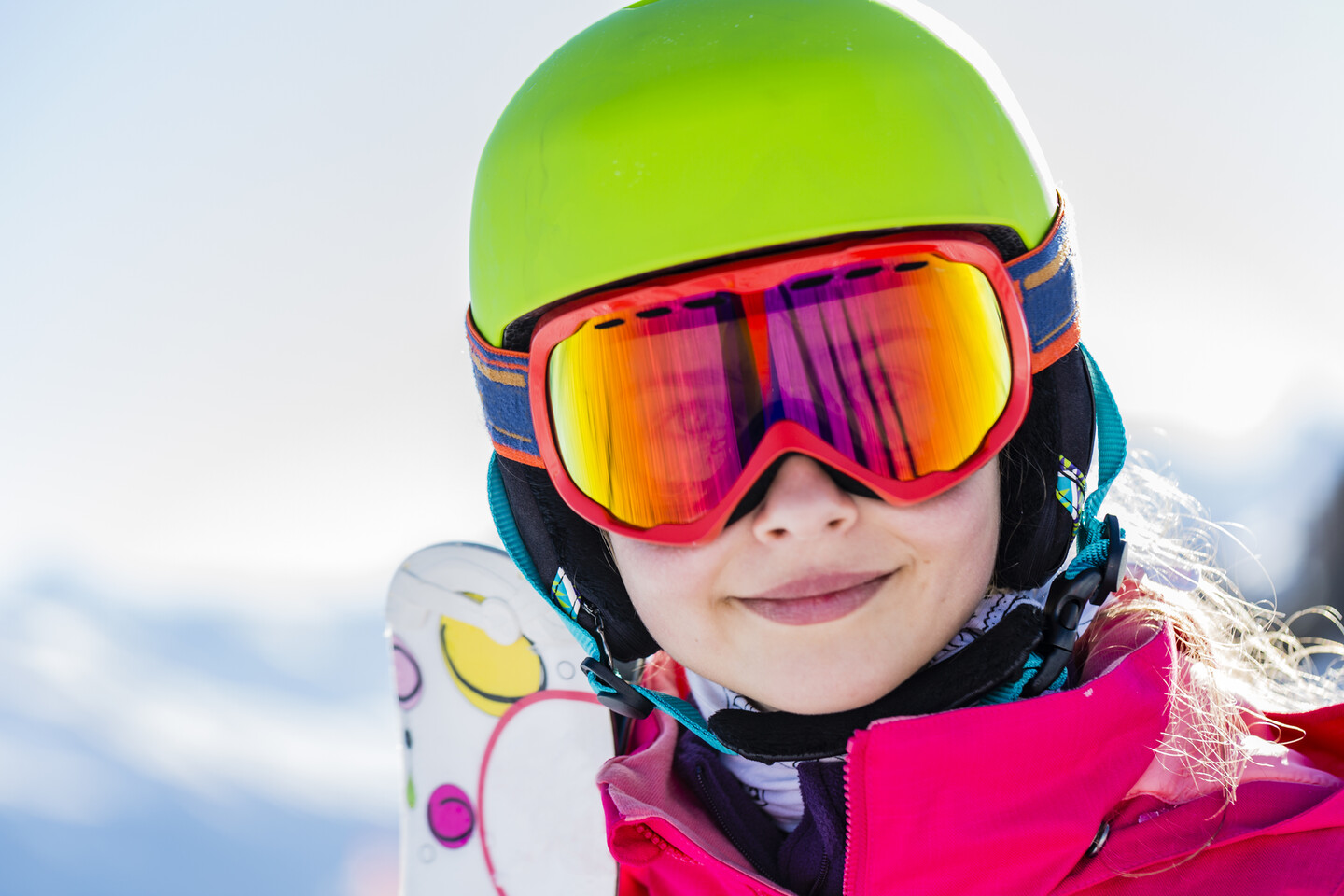
© gorillaimages/shutterstock.de
As with adults, ski goggles for children must fit the helmet perfectly.
Tips for choosing the right size and adjustment of ski equipment
The same criteria apply to the size and correct adjustment of children’s ski equipment as for adults. The individuality of the winter sports enthusiast plays the most important role here, as different equipment is required depending on height, weight, age and ability. However, when it comes to helmets and ski goggles, it is important to ensure that both fit the wearer’s head and face perfectly and without compromise for safety reasons. The correct length of ski poles for children is also easy to determine. To do this, simply turn the desired ski pole upside down, hold it with your hand under the plastic plate and place the handle on the ground. If the forearm is now parallel to the ground, the ski pole length is optimal.The characteristics that ski boots and skis for children should fulfil are less rigid. Although both must be precisely tailored to the little ones in terms of length and size, the material can be individually adapted to the child. When it comes to ski boots, the higher the flex, i.e. the stiffness of the model, the more force is required to control the ski. This means that “softer” ski boots are better for children who are just making their first turns on the slopes, while “harder” material is suitable for young skiers who have been going on winter holidays to the mountains with their parents for years. When it comes to skis, beginners benefit from shorter boards, as these allow for better control and manoeuvrability. Longer models, on the other hand, are more suitable for young ski enthusiasts who are looking for speed and stability on the slopes.How to calculate the length of skis for children
The ski length for children can be calculated relatively easily based on their ability. For absolute beginners on the slopes, skis should be 40 cm shorter than the child’s actual height. For beginners, this value drops to 35 cm, for advanced skiers to 30 cm, for experts to 15 cm, and for professionals, it is sufficient if the skis are only about 5 cm shorter than the child’s height.Safety on the slopes – what you should bear in mind
Safety when skiing is always important, especially for children. After all, speeds on the slopes are often high and the snow on the descents is usually hard or icy. Ski helmets naturally protect against head injuries. Although they are not compulsory in all Alpine countries, they are part of every modern ski outfit. As with the rest of the ski equipment, parents should check helmets regularly. Even small cracks or scratches should not be ignored. If necessary, new head protection must be purchased immediately. Otherwise, good products in this area will last three to five years.The following questions should also be considered for safety on the slopes: Do the ski boots fit properly and not pinch the feet? Are the poles the right length? Are the skis suitable for my child’s weight and height? Are the bindings adjusted correctly? Do the children know the rules of conduct on the slopes? If all these questions can be answered with a clear conscience, nothing stands in the way of a safe day of skiing.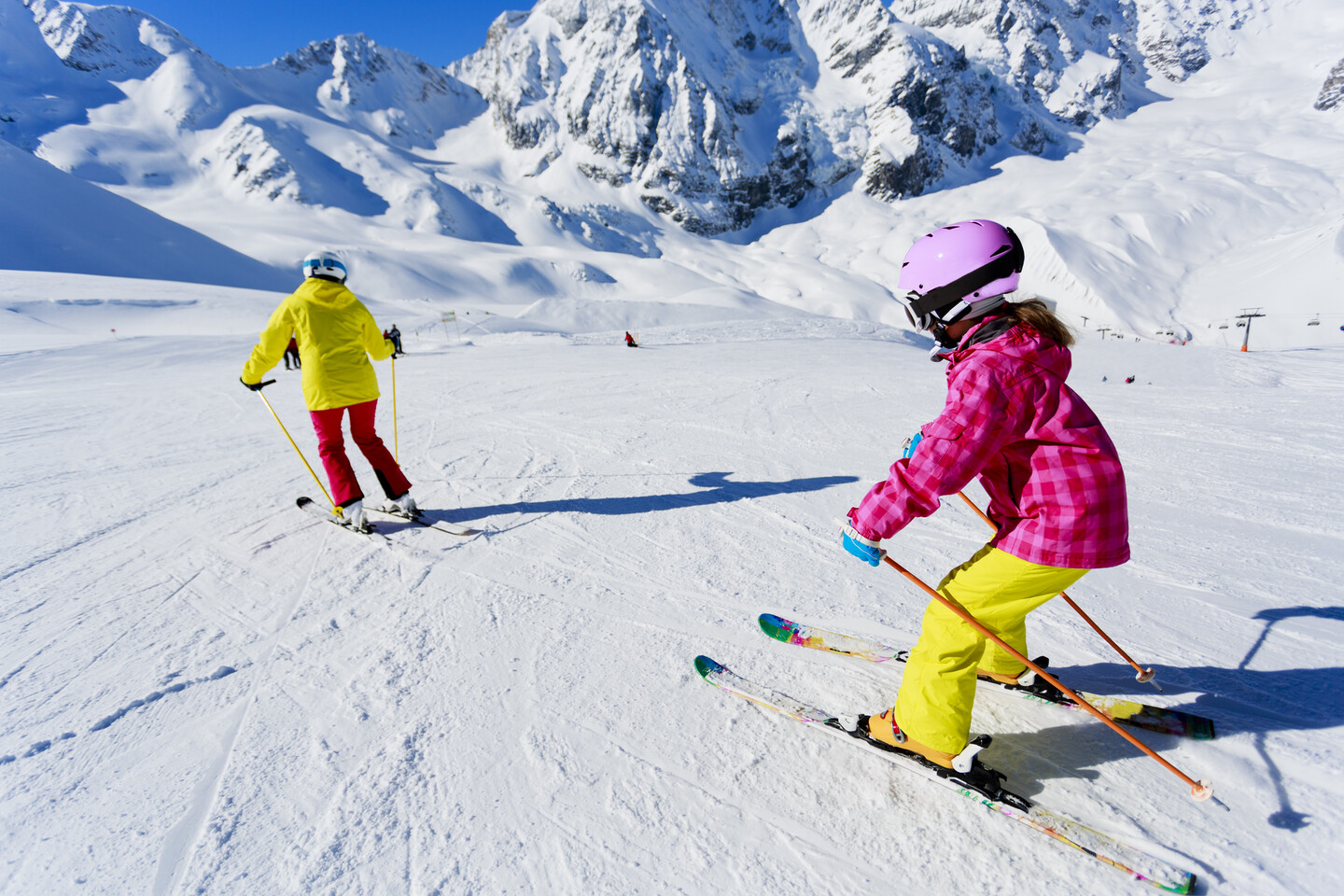
© gorillaimages/shutterstock.de
Children should feel comfortable with their ski equipment on the slopes, and this feeling is primarily conveyed through safety.
The advantages of renting ski equipment for children
Opting for rental ski equipment for children can be financially worthwhile. Children grow quickly and may no longer fit into last season’s equipment by the time the new ski season arrives. This means that new skis or ski boots would have to be purchased almost every year, which is not cheap. Children’s skis can cost up to £100 or more, new children’s ski boots between £70 and £150, ski poles up to £50, helmets up to £100 and ski goggles at least £50. Not to mention ski clothing, where you have to invest up to £200 more for trousers, a jacket, underwear and socks.The situation is completely different when it comes to rental equipment. Not only are the costs lower, but specialist shops in the ski resort or at home always have the right size for children. In addition, the rental company takes care of the maintenance and care of the equipment, so that it is always in perfect condition. Another advantage is that winter sports enthusiasts only have to worry about storage during their trip and can simply return the skis before departure. In addition, children can try out the ski equipment directly on the slopes and exchange it on the same day if they don’t like it. For parents who want to strike a balance between buying new equipment and renting, there are the following alternatives: they can browse ski bazaars for inexpensive equipment, take advantage of ski leasing offers from many sports shops, or search the internet for ski exchange offers.Care tips for your child’s ski equipment
What applies to adult equipment also applies to children’s ski equipment: even the best skis, helmets and goggles are useless if they are not properly cared for and stored in the summer. Above all, waxing and edge grinding must not be forgotten, even with children’s skis – especially after the end of the season. To prevent rust and other signs of wear, it is essential to remove salt, snow and dirt from all ski equipment after every day on the slopes. It goes without saying that equipment should be stored in a warm, dry place, both at home and in the ski resort. After the ski season, it is essential for safety reasons to have children’s skis and ski boots repaired by a specialist retailer.Day after day, ski goggles ensure the best visibility on the slopes – even for children. Accordingly, goggles should be cared for with great care. Cleaning them with a handkerchief or piece of clothing should be avoided at all costs to prevent scratches. Instead, lukewarm water and subsequent air drying are sufficient. Once the lenses are dry again, they should be carefully wiped inside and out with a microfibre or lens cleaning cloth.Always store ski clothing and ski helmets for children in a dry place
It is also important to wash children’s ski clothing correctly. There are now special detergents for ski jackets, ski trousers and ski gloves. They should therefore be washed separately from normal laundry in the washing machine. Thermal underwear, which children should wear under their actual ski clothing so that they do not freeze on the slopes even on cold winter days, can be washed as normal. Ski clothing should then be dried thoroughly and carefully waterproofed so that it is protected from moisture on the slopes next season. Jackets, trousers and gloves, as well as ski helmets, should be stored in the wardrobe, attic or basement. Incidentally, the same applies to the care of head protection as to the rest of your ski equipment. The outer shell of the helmet should be wiped down daily to detect any cracks or holes and to remove dirt.Ski equipment for children – an investment in the future of skiing
Why is good ski equipment for children also an investment in the future of skiing? Firstly, perfectly adjusted skis, comfortable ski boots and a warm helmet ensure a safe and positive skiing experience right from the start, which awakens and encourages children’s enthusiasm. In addition, choosing the right ski equipment gives young skiers self-confidence, as they feel safer on the slopes and have more confidence in their own abilities. Comfortable ski equipment also has the advantage that children are not distracted by uncomfortable pressure points and the resulting pain. This increases the fun of skiing, as they can concentrate better on controlling the ski equipment and thus really enjoy the activity.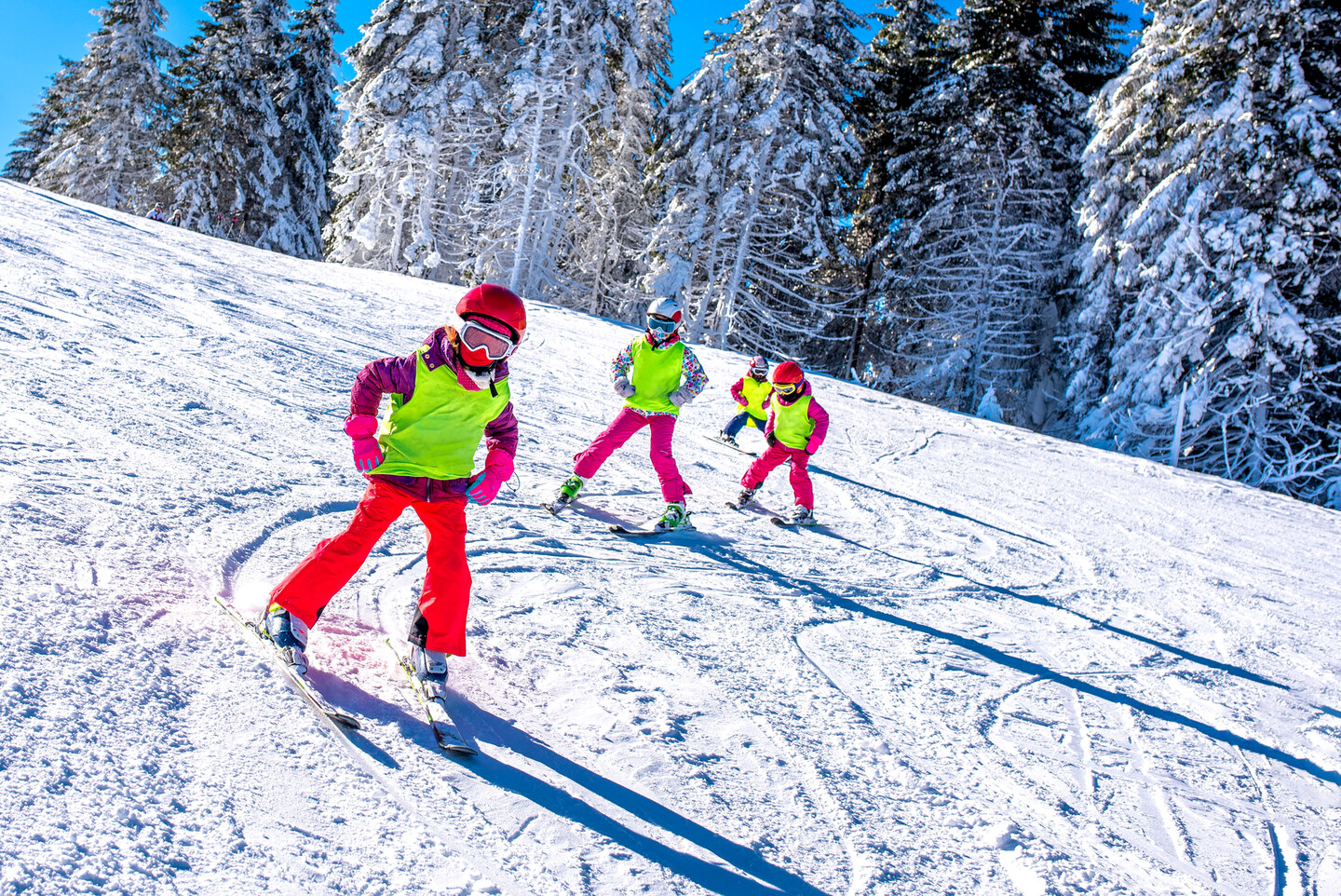
© Oksana Trautwein/shutterstock.de
Skiing takes practice, and if children have fun on the slopes with the right ski equipment at ski school, the winter sports enthusiasts of the future are born.

