
The ski pole is an often underestimated piece of ski equipment. At first glance, it is just a metal pole with a grip and a basket. But this impression is deceptive, because a good ski pole can do much more. It provides stability whilst skiing, aids the flow of movement and is a lifesaver during strenuous uphill sections. SnowTrex asked ski instructor Eddy Balduin and Heidi Kreusel, former product expert at manufacturer LEKI, why ski poles have become an indispensable part of on-piste equipment and what skiers should look out for when buying them.

Why should winter sports enthusiasts use ski poles?
A good ski pole can improve a skier’s performance. To do so, it must be stable and rigid, yet as light as possible. Heidi Kreusel can certainly confirm this. She was head of marketing at ski equipment manufacturer LEKI and knows why ski poles are so important for skiing: “They are used to push off at the start, to maintain balance whilst skiing, and to easily navigate slopes or rough terrain off-piste.” A good ski pole therefore provides stability, safety and propulsion.
Eddy Balduin, a state-certified ski instructor, illustrates this with an example from racing: “If you watch the professionals, you immediately see how important ski poles are when skiing. They are essential for balance and stability on the slopes. If a racer loses a pole, they no longer stand a chance of staying at the front of the pack. From beginners to slightly advanced skiers, ski poles provide security and make it easier to get on and move forward on the ski lift. Balduin emphasises that ski poles are also essential for the basics such as initiating turns, balance and body tension.
The material used for ski poles
The first ski poles were made of wood and were held across the body like an oar. However, those days are long gone, at least since the advent of commercial ski tourism. As a result, ski poles – which actually look very simple – are now more sophisticated than ever. “The shafts should be made either from high-strength aluminium (HTS 5.5–6.5) or carbon,” recommends Heidi Kreusel.
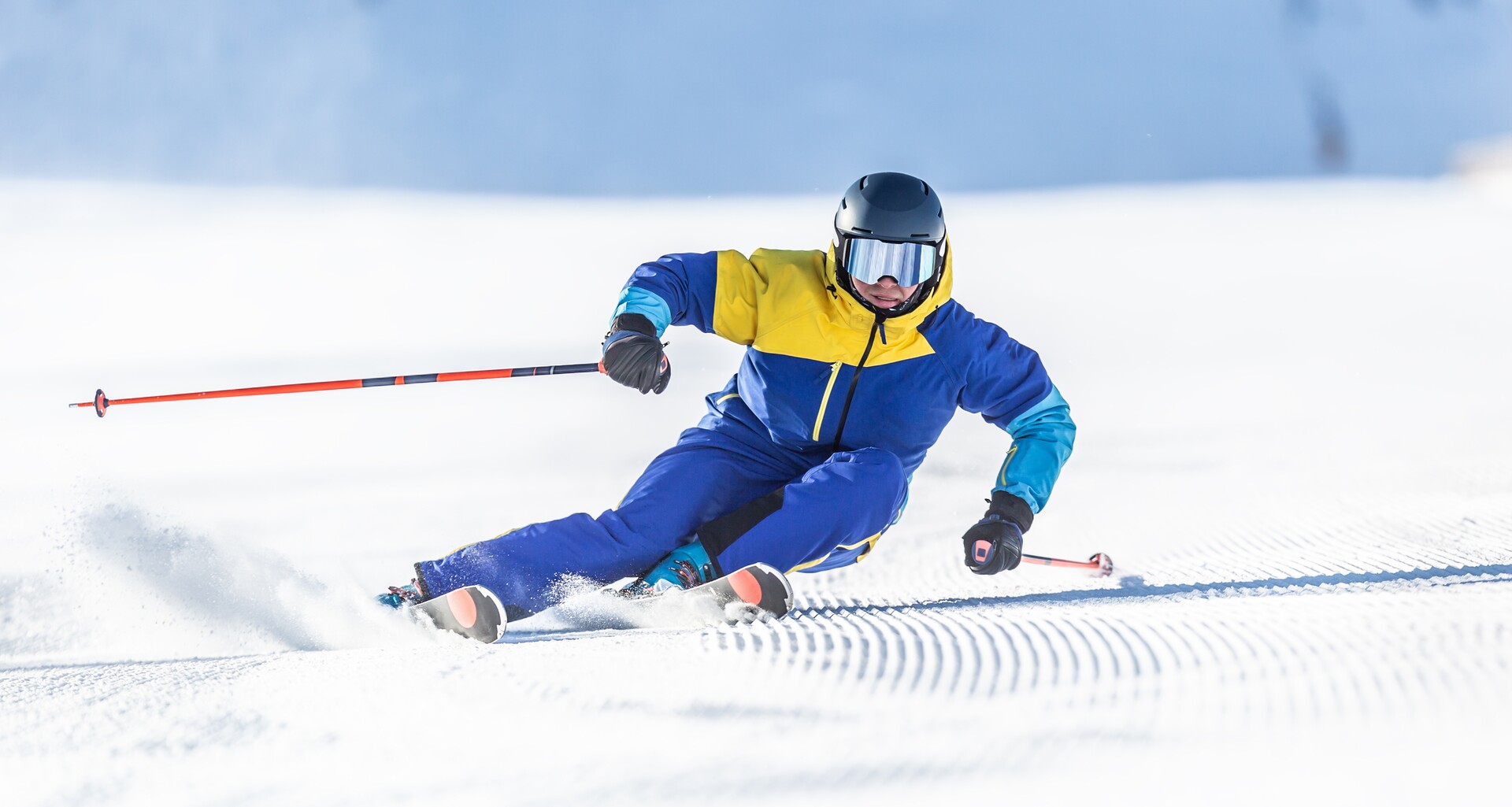
For sporty skiers who enjoy carving on the slopes, ski poles are indispensable, as they require substantial pole use. According to the expert, this makes them both lightweight and break-resistant. In tests, heat-treated aluminium ski poles have shown that, whilst they bend under heavy force, they do not break. This reduces the risk of injury and makes them safer. In the high-end segment of ski poles, by contrast, ultra-lightweight and extremely stable carbon fibres are used. The stiff material gives the pole even better shock absorption and break resistance. This quality in lightweight ski poles naturally comes at a significantly higher price – in some cases up to 200 euros!
The ski pole grip
On simpler models, the grip is made of hard plastic; on more comfortable models, it is made of a soft material that provides better shock absorption and feels more comfortable in the hand. It is important that the straps open quickly or detach from the grip in the event of a fall. Heidi Kreusel therefore recommends, among other things, the ‘Trigger S’ developed by LEKI. This system is designed so that the strap clicks into the grip via a ring-shaped opening, the Trigger Loop, on the glove. Under heavy tensile stress, such as a fall, the pole detaches from the body immediately. “It takes a bit of getting used to, but after a short adjustment period, hardly anyone wants to be without it,” says the expert.
The DIN standard for ski poles
Several characteristics are crucial for good ski poles. Firstly, weight is a key factor. A lighter pole has less swing mass, thereby placing less strain on the arm muscles and ultimately having less impact on body movement. Added to this are the shock-absorbing properties, as a well-cushioned ski pole also protects the wrists. The quality of a ski pole is determined by the “DIN ISO 7331” standard. Among other things, this standard measures the load-bearing capacity of the ski pole material, as well as the shape and compressive strength of the grip. The load-bearing capacity of the material is ultimately expressed in numbers. A 4 stands for standard quality, a 5 for medium quality and a 6 for high quality. Children’s poles are typically rated F40, whilst the racing poles used by skiing legends such as Lindsey Vonn were certainly rated F65.
The right length for ski poles
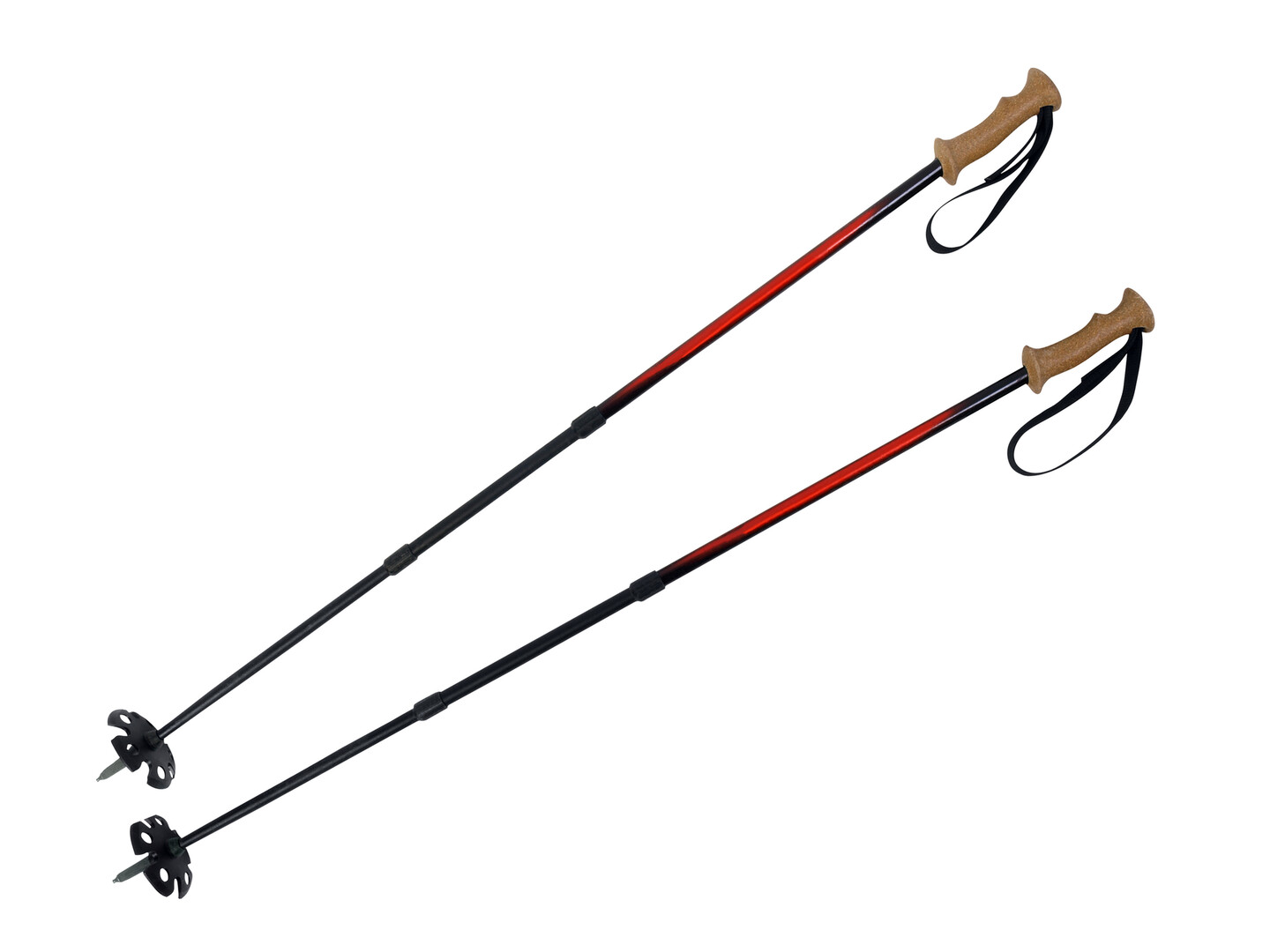
Pole length varies depending on the discipline. Therefore, there is no single ‘best’ ski pole. Whether it’s alpine skiing, ski mountaineering, freestyle skiing, or cross-country skiing in classic or skating style, each discipline requires a different ski pole. The correct length in centimetres can be determined in various ways for alpine skiers. Those who are good at maths can use the formula “body height multiplied by 0.7” for alpine poles. It is easier to turn the ski pole upside down and grasp it above the basket at the lower end. When standing upright, the upper and lower arms should then form a 90-degree angle with the correct ski pole length. Ski poles for beginners, on the other hand, are generally recommended to be shorter.
In cross-country skiing, the length depends on the style – classic or skating – and on the level of ability. As a general rule: the longer the poles, the more energy-efficient the push-off. As the push-off is a key movement in cross-country skiing, skating poles in particular are chosen to be very long. As a rule of thumb: ‘Body height x 0.8’ for classic poles and ‘Body height x 0.9’ for skating poles.
Here is a quick overview of the rules of thumb:
| Ski poles | Length - model |
|---|---|
| Alpine ski poles | Body height x 0.7 |
| Cross-country ski poles classic | Body height x 0.8 |
| Langlaufstöcke Skating | Body height x 0.9 |
Ski poles for children
Do very young skiers not need poles? Ski instructor Eddy disagrees. “Actually, poles are used from the very first time you touch skis on the snow. This applies to children too, as they help them conserve energy when moving forwards. What’s more, children see their parents as role models, and they usually ski with poles.” That’s why Eddy has children and young people (aged 6 and over) using poles from day one in his ski courses.
Heidi Kreusel would also give young skiers their first poles from the age of 4 or 5, “but it always depends on the individual child and how well they can coordinate their movements with them. Some children are very quick to pick it up. They’re desperate to use poles and manage it well, whilst others find it completely overwhelming.” The bottom line: in any case, using poles certainly does no harm to children who are learning to ski.
Ski poles for freeriders, ski tourers & freestylers
As well as classic alpine skiing, there are a number of other disciplines in the ski resort that each require a specific type of pole. For freeriders and ski tourers, Heidi Kreusel recommends the practical folding poles. “The telescopic models have evolved from the ‘rent-a-ski’ concept, so skiers can take them anywhere, neatly packed in a bag.” Thanks to the adjustment system, these poles can be flexibly adapted to the slope gradient or for the descent.
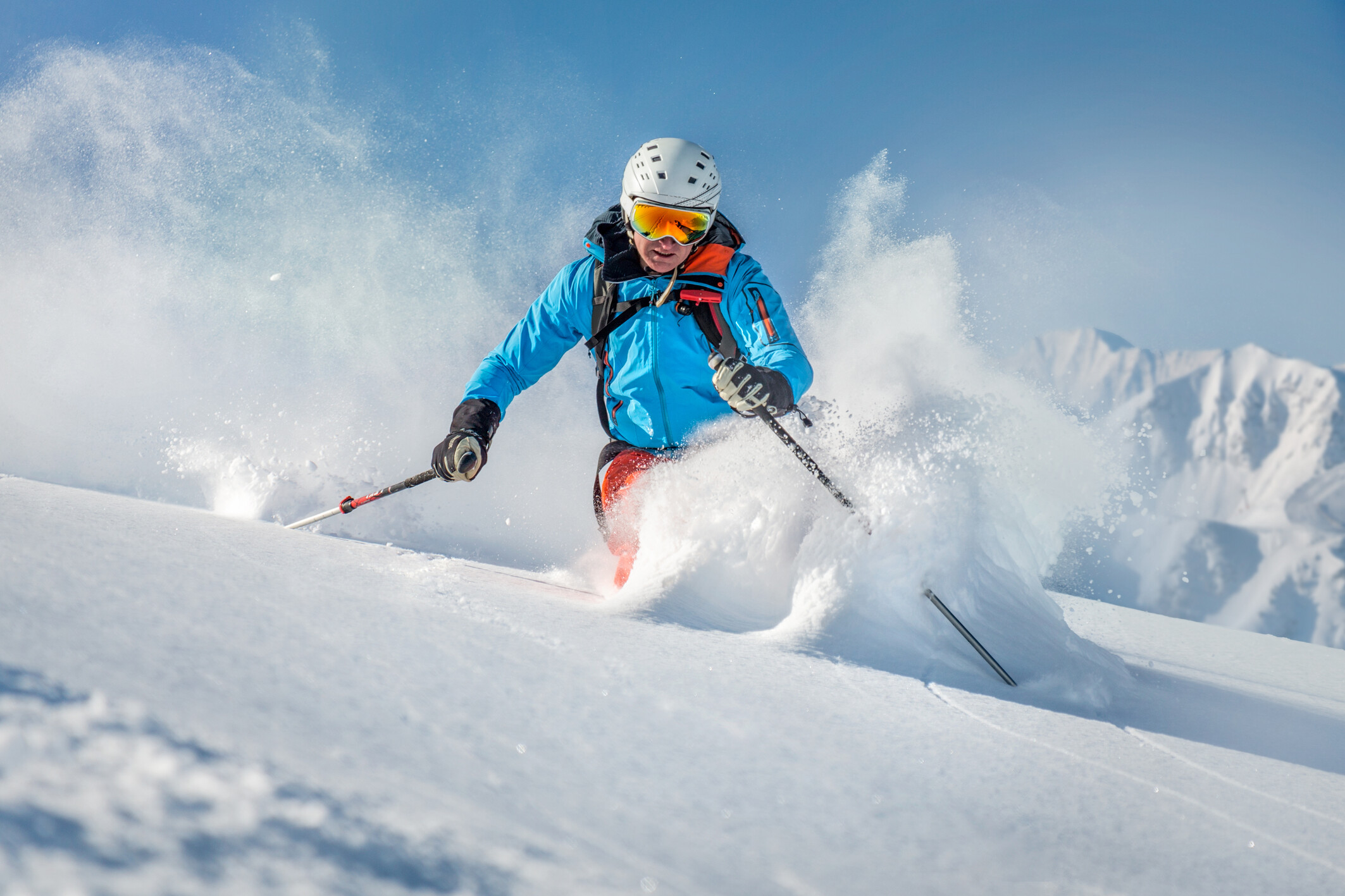
For off-piste skiers, the difference also lies in the size of the basket. It has a larger diameter and therefore a larger contact surface, which provides better grip in deep snow. Kreusel offers the following recommendations for ski poles: “If you want to head off-piste, you should be able to change the baskets quickly and easily, as the small piste baskets aren’t much fun when freeriding. Suitable interchangeable models are available for every pole.
Ski poles for racing
For alpine racing, there are specially curved, high-quality ski poles. They hug the body and are primarily designed for tight turns around gates. The average skier, even if they are fast on the piste, does not really need these rather expensive racing poles used by the pros in the Alpine Skiing World Cup, and can ski excellently with cheaper models costing between 30 and 100 euros.
Tips for buying ski poles
- Bring your own gloves and test how comfortable the grip is and how the strap system feels. Most models are adjustable in size.
- If you opt for the ‘Trigger S’ system from LEKI or click systems from other manufacturers, you can buy special gloves with an integrated trigger loop directly.
- Determine the correct pole length using the 90-degree rule mentioned above. Remember that women should not wear shoes with heels when measuring.
- Be aware of what type of pole (fixed or adjustable) you need for which skiing discipline.
- Pay attention to the basket size. If you want to be equally equipped for piste and off-piste skiing, you can buy wider baskets that can be swapped out as needed.
- Telescopic poles that ‘grow with the child’ are suitable for fast-growing children. However, they are not as stable as one-piece ski poles.
FAQ’s on ski poles
Why are ski poles important?
Ski poles play a crucial role in skiing. They not only help you push off at the start, but also aid in maintaining balance whilst skiing and when traversing flat terrain. They also improve balance and stability on the slopes. Both professionals and beginners benefit equally from the safety and propulsion that a good ski pole provides.
Which material is best suited for ski poles?
Nowadays, ski poles are usually made of high-strength aluminium or carbon. Aluminium poles are lightweight and break-resistant, whilst carbon poles offer better shock absorption and greater stability, but are also more expensive. The choice of material depends on individual needs and the intended use, with carbon being ideal for sporty skiers and aluminium for all-rounders.
How do I find the right pole length for alpine skiing?
The correct pole length for alpine skiing is easy to determine: turn the pole upside down and hold it by the basket. When standing, the angle between your upper and lower arm should be approximately 90 degrees. Alternatively, you can use the formula ‘body height multiplied by 0.7’. For beginners, a slightly shorter pole length is recommended.
What should I bear in mind when buying ski poles for children?
Children should use ski poles from the age of 4 or 5 to make it easier to move forward and transfer power. It is important that the length of the poles corresponds to the child’s height. Telescopic poles, which grow with the child, are a good option but are less stable than one-piece poles. Furthermore, children should be able to use the poles in a coordinated manner.
What are the advantages of telescopic ski poles for ski tourers and freeriders?
Telescopic ski poles are ideal for ski tourers and freeriders as they can be flexibly adjusted to the slope gradient and conditions. These poles can be conveniently stowed away and quickly adjusted when needed. Larger baskets also provide better grip in deep snow, making them particularly useful for off-piste skiers.

