
Carving out dreamy turns in the snow: winter sports enthusiasts can only do this if they choose the right ski length, as this is crucial for a great experience on the slopes. Whether you’re a beginner or a pro, the right ski length is key to how the skis feel and, therefore, to your safety on the mountain. SnowTrex explains what else matters when choosing your ski equipment and how ski enthusiasts can best determine their ski length.
Why the right ski length is so important
The right ski length not only ensures greater comfort but also better control and safety. With the optimal ski length, you can realise a ski’s full potential, leading to a more enjoyable and safer skiing experience. But how do you find the right ski length? There are various factors and guidelines to help you.
In the following video, influencer Marius Quast explains which ski lengths are ideal for winter sports enthusiasts of all ability levels and ages, and what else to look out for when buying skis:

Please also note that by using our services and integrating the YouTube API Services, the YouTube Terms of Service and the YouTube API Services Terms apply and your use of our website is deemed to be acceptance of these terms.
What to look out for when choosing your ski length
Calculating the optimal ski length: takeyour height , ability and skiing style into account – the ski length depends on your height, ability and preferred skiing style.
The difference between alpine skis and cross-country skis: Choosingthe right length for each type of ski means that alpine skis are shorter and cross-country skis are significantly longer than your height.
The key factors: height, ability and skiing style
Choosing the ideal ski length depends on several factors, including height, ability and skiing style. Taller skiers generally need longer skis, whilst shorter skis are better suited to beginners as they are easier to manoeuvre.
- Height: The general rule of thumb is that the ski length should extend from the chin to the top of the head. A skier who is 1.75 m tall should therefore choose skis that are between 1.60 m and 1.75 m long.
- Skilling level: Beginners benefit from shorter skis, which are easier to control, whilst advanced and professional skiers prefer longer skis, which offer greater stability at higher speeds.
- Skiing style: Those who enjoy fast, long turns should choose longer skis, whilst shorter skis are better suited to shorter, tighter turns.
The differences between alpine and cross-country skis
Alpine skis, which also include fun-carvers and cross-country skis, differ significantly in their construction and, consequently, in the recommended ski length. Alpine skis are shorter and more stable, ideal for downhill runs, whilst cross-country skis are longer and narrower to glide more effectively on cross-country trails.

- Alpine skis: For beginners, the ski length should be between the chin and the nose; for advanced skiers, up to the forehead; and for professionals, up to their full height.
- Cross-country skis: Cross-country skis should generally be 15 to 20 cm longer than your height. For someone who is 1.75 m tall, a ski length of around 1.90 m to 1.95 m is recommended.
The right ski length for every skill level
Calculating ski length for beginners and advanced skiers: The rules of thumb based on height suggest that beginners should choose shorter skis (around −20 to −10 cm), whilst advanced skiers should opt for longer ones (around −10 cm to their height).
Choosing ski length for experts: Maximum stability from longer skis means that experts should choose skis equal to their height or up to 10 cm longer for greater stability at speed.
Recommendations for beginners
Beginners benefit from shorter skis that reach up to their shoulders or chin. This ski length allows for greater control and makes it easier to learn the basic techniques of skiing. The rule of thumb here is: ski length equal to your height minus 20 cm to 10 cm.
- Example: For a height of 1.70 m, the ski length should be between 1.50 m and 1.60 m.
Recommendations for advanced skiers
Advanced skiers can switch to longer skis that reach the tip of the nose or even the forehead. These offer a good balance between speed and control, which helps to improve technique. The formula here is: body height minus 10 cm to body height.
- Example: For a height of 1.70 m, the ski length should be between 1.60 m and 1.70 m.
Recommendations for professionals
Professionals often choose skis that are as long as their height or even longer. These longer skis offer greater stability at high speeds and are ideal for challenging slopes and difficult terrain. Experienced skiers should always use the following calculation: height plus 0 cm to 10 cm.
- Example: If you are 1.70 m tall, your ski length should be between 1.70 m and 1.80 m.
Ski length for children is crucial
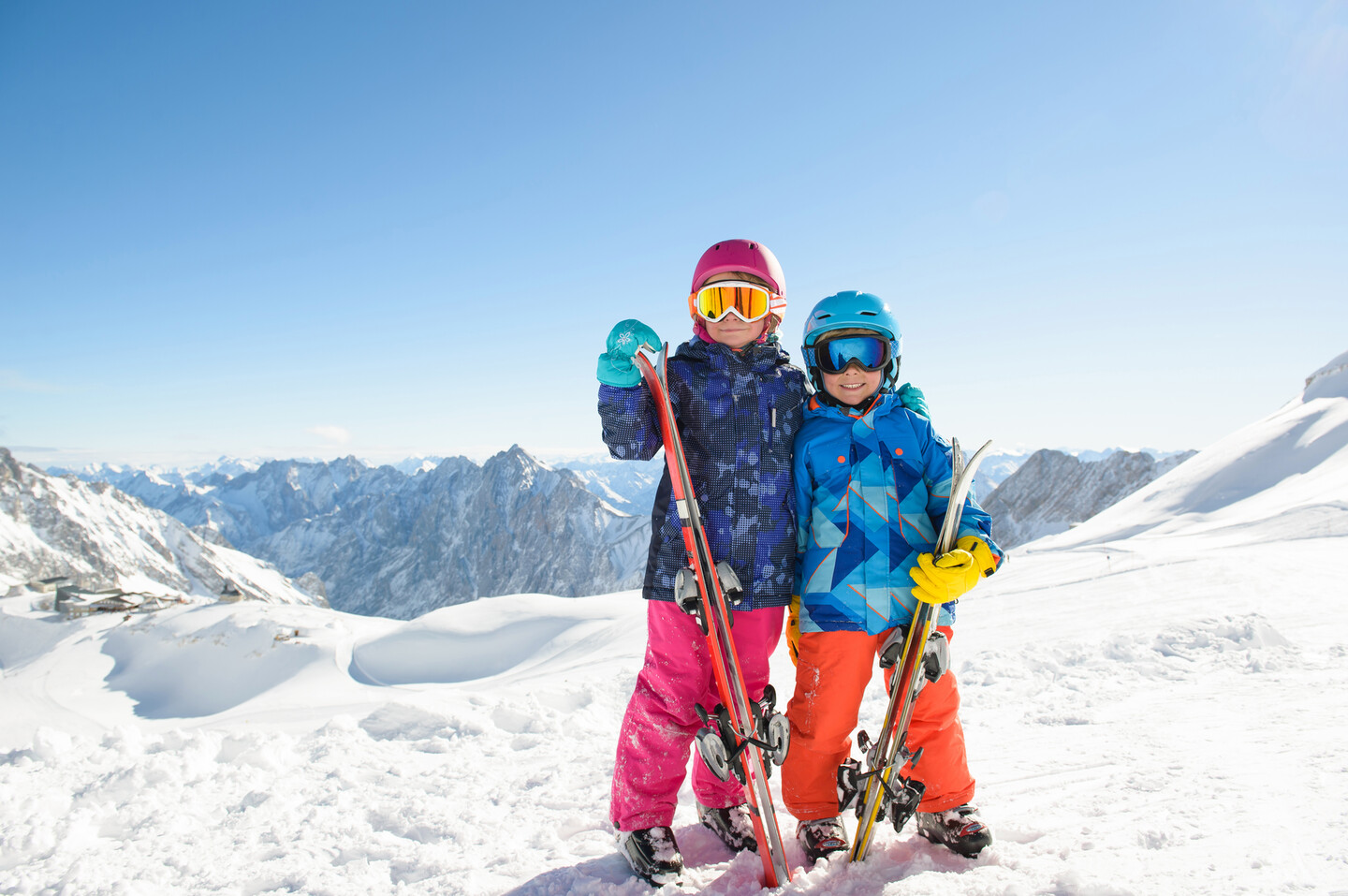
Choose a child-friendly ski length for safety and learning progress:Children should use shorter skis reaching roughly to their chest or shoulders (10–30 cm shorter than their height, depending on age) to improve control and safety.
Adjust ski length according to age: There are guidelines for different age groups, so younger children use significantly shorter skis, whilst older children can use longer skis reaching up to their shoulders to further develop their skills.
The right length ensures safety and progress
Safety is the top priority for children. Skis that reach up to the chest offer maximum control and make learning easier. Skis that are too long can increase the risk of injury and make the learning process more difficult. Parents should therefore ensure that the skis are roughly chest-high.
- Example: A child who is 1.20 m tall should choose skis that are between 1.00 m and 1.10 m long.
Recommendations for all age groups
For younger children aged 3 to 5, skis should be significantly shorter, whilst older children aged 10 and over can use longer skis that reach up to their shoulders:
- 3 to 5 years: Ski length should be 20 to 30 cm shorter than the child’s height.
- 6 to 10 years: Ski length should be 10 to 20 cm shorter than the child’s height.
- From 10 years and over: Ski length should reach up to the shoulder.
How ski length affects skiing performance
Manoeuvrability
Shorter skis are more manoeuvrable and easier to control, which is particularly beneficial for beginners. They allow for quick changes of direction and are ideal for tight turns. Short ‘fun carvers’ are also ideal here, as their design makes them extremely agile to ski on.
Stability and speed
Longer skis offer greater stability at high speeds and are better suited to advanced and professional skiers. They ensure a smooth ride and increase safety on fast descents.
Practical tips for determining ski length
Use a ski length calculator
Online ski length calculators are handy tools for quickly and easily determining the right ski length. These calculators take various factors into account, such as height, weight and skiing ability, and provide a reliable recommendation.
Consider individual factors
In addition to the standard recommendations, it is important to take personal preferences and individual factors, such as height, weight and age, into account. Your skiing style, preferred slope conditions and specific technical requirements play a crucial role in choosing the right ski length. If you’re still unsure about ski length, you can also seek advice from a specialist shop.
FAQs on ski length
How long should skis be?
Depending on your ability, skis should be roughly between your chin and your height. As a rule of thumb for adults: beginners should choose skis that are about 10 to 20 cm shorter than their height, intermediate skiers should choose skis that match their height, and advanced skiers may even opt for skis that are slightly longer. Skiing style and intended use are also key factors.
How do I work out the ideal ski length for me?
The ideal ski length is between your height minus 20 cm and 10 cm, depending on your ability and skiing style. For beginners, this is roughly -20 to -10 cm; for advanced skiers, -10 cm to their height; and for professionals, up to 10 cm. This is because longer skis are generally required for fast, wide turns, whilst shorter skis are better suited to short turns.
Is there a difference in ski length between beginners and advanced skiers?
Yes, beginners generally use shorter skis than advanced skiers. In other words: beginners use shorter skis to achieve better control and easier manoeuvrability. Advanced skiers, on the other hand, prefer longer skis, which offer greater stability and a smoother ride at higher speeds.
What ski length is suitable for children?
Children should ski on skis that are 10 to 30 cm shorter than their height. For maximum control, children’s skis usually reach up to the chest or shoulder. Younger children ski on significantly shorter skis. Older children can use longer models to further develop their technique.
Does ski length affect how I ski?
Yes, shorter skis are more manoeuvrable and longer skis are more stable. Short skis make it easier to change direction quickly and are therefore ideal for beginners or tight turns. Long skis, on the other hand, offer greater stability, a smoother ride and safety at high speeds.
Can I use the same ski length for alpine and cross-country skiing?
No, cross-country skis are significantly longer than alpine skis. Whilst alpine skis are usually around your height, cross-country skis are generally chosen to be about 15 to 20 cm longer, as they are optimised for efficient gliding.
Can skis be too short?
Yes, skis that are too short are less stable and do not glide as smoothly. Although they are very manoeuvrable, they offer less control at speed. This can feel unsafe and unstable, particularly for advanced skiers or taller skiers.

