
Powder snow, untouched slopes and breathtaking panoramic views – in the mountains, winter sports enthusiasts can really let off steam on touring skis away from the groomed runs. And to ensure nothing stands in the way of the fun, you need the right equipment. Because not all touring skis are the same. Different models are required depending on the terrain, skill level or demands. Whether it’s long ascents, leisurely ski tours or challenging descents on steep terrain, choosing the right skis is crucial for safety and enjoyment in the powder. Factors such as weight, waist width and the shape of the ski for ascents and descents play an important role in ski touring, which is why SnowTrex is now showcasing the most important types of touring skis and explaining which model is best suited to which terrain.
What makes a touring ski stand out?
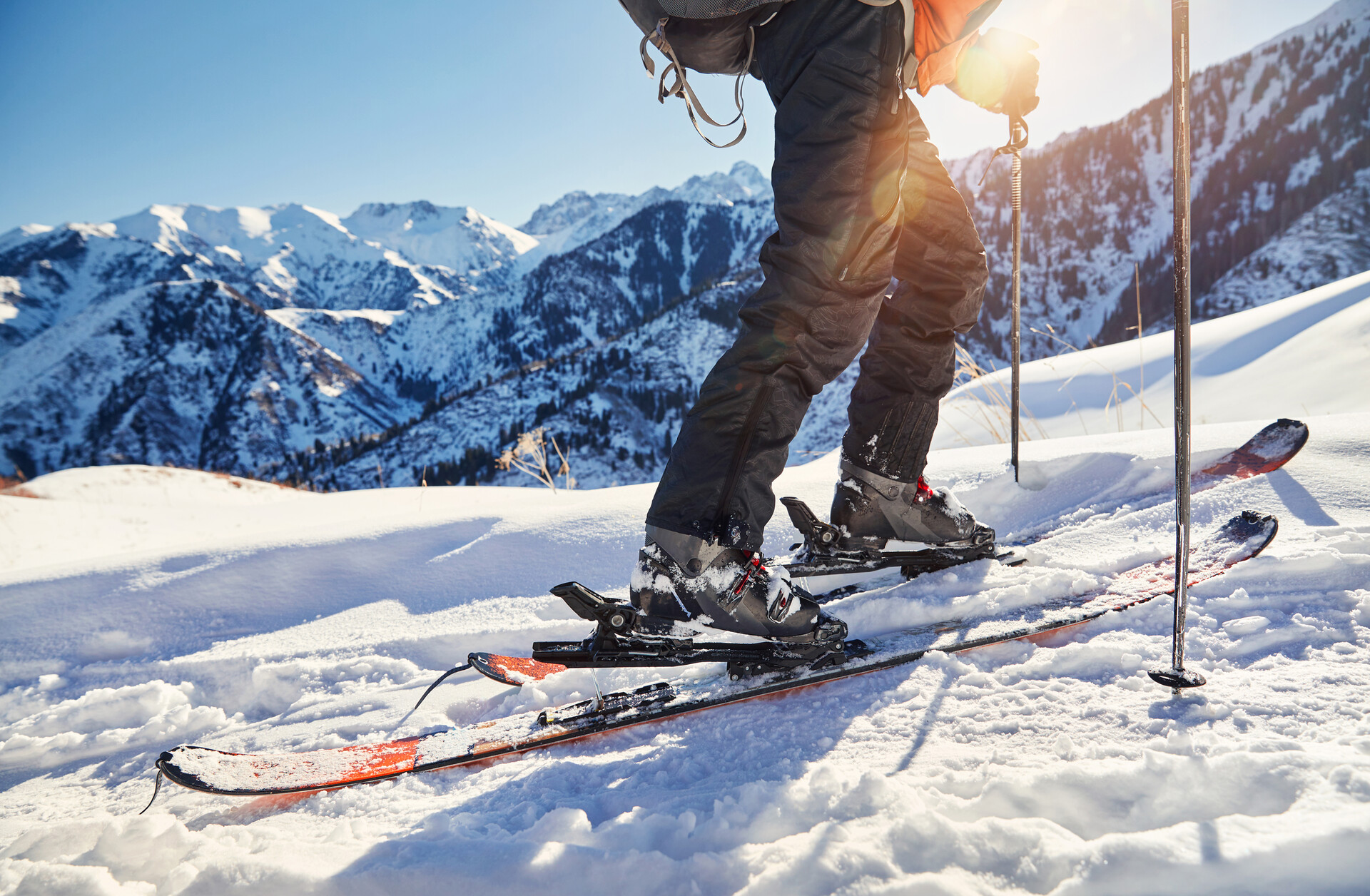
A touring ski is much more than just a lightweight alpine ski, as its construction follows a specific philosophy that takes into account the entire sequence of movements on ski tours. Whilst a conventional ski is optimised for use on groomed slopes, a touring model must cope with varying snow conditions, from hard-packed snow to deep powder, whilst also supporting the skier’s movements. Therefore, in the world of ski mountaineering, a combination of lightness and performance is the ultimate goal of engineering.
Weight, Construction & Sidecut
The most striking feature distinguishing touring skis from alpine skis is their weight. Every gram saved reduces the effort required during the ascent and leaves more energy for the descent. Consequently, modern all-round touring skis usually weigh between 1.2 kg and 1.5 kg. To achieve this low weight, innovative materials are used in their construction, such as cores made from ultra-light yet highly stable Paulownia wood, as well as carbon or titanal reinforcements that ensure torsional stiffness. Furthermore, the handling characteristics of touring skis are significantly influenced by their geometry. A wider tip provides better float in deep snow, whilst rocker constructions enhance manoeuvrability. And when it comes to the radius, the same applies as with alpine skis: a smaller radius ensures agility in turns, whilst a larger one ensures a smoother ride.
Difference from alpine skis
The fundamental difference between touring skis and alpine skis is, of course, the focus of their characteristics. Alpine skis are designed for high speeds, maximum smoothness and stability on groomed slopes. Heavy metal inserts provide damping, but also make the skis heavier. Touring skis, on the other hand, are optimised for ascents and descents in off-piste terrain, for which they are often equipped with a mechanism for attaching climbing skins. Furthermore, the ski bindings differ: those for touring allow a free heel for walking, whilst the ski boot remains fixed in alpine models.
A comparison of types and uses of touring skis
| Type of ski | Centre width | Weight (per ski) | main focus |
|---|---|---|---|
| Aiming for promotion | 80 to 85 mm | between 0,9 und 1,2 kg | Long tours |
| All-round touring skis | 85 to 95 mm | between 1,2 und 1,5 kg | Versatility |
| Freeride touring skis | over 95 mm | over 1,5 kg | Downhill/Powder |
| Electric touring skis | variable | over 2,5 kg | Step stool |
Ascent-oriented touring skis
Ascent-oriented touring skis are ideal for ski mountaineers who enjoy challenging ascents and want to cover significant elevation gain. To this end, these models are consistently designed for lightweight construction, often weighing less than 0.9 kg and featuring a waist width of under 85 mm. This provides secure grip in hard snow as well as excellent power transfer to the ski edge. Furthermore, short radii and narrow tips enhance manoeuvrability, which is particularly necessary in terrain such as tight hairpin bends, steep wooded slopes or rocky gullies.
All-round touring skis
An all-round touring ski is the perfect compromise for most ski touring enthusiasts. This is because, on the one hand, a waist width of 85 to 95 mm ensures sufficient float in fresh snow, whilst this width is also narrow enough for safe ascents in classic tracks. Modern all-round models weigh between 1.2 and 1.4 kg per ski, combining lightweight materials such as carbon with a stable geometry. This makes them ideal for ski tourers who want to venture between the tree line and high-alpine ridges, where an all-round touring ski can unleash its full potential and score points for manoeuvrability, float and riding comfort.
Freeride touring skis
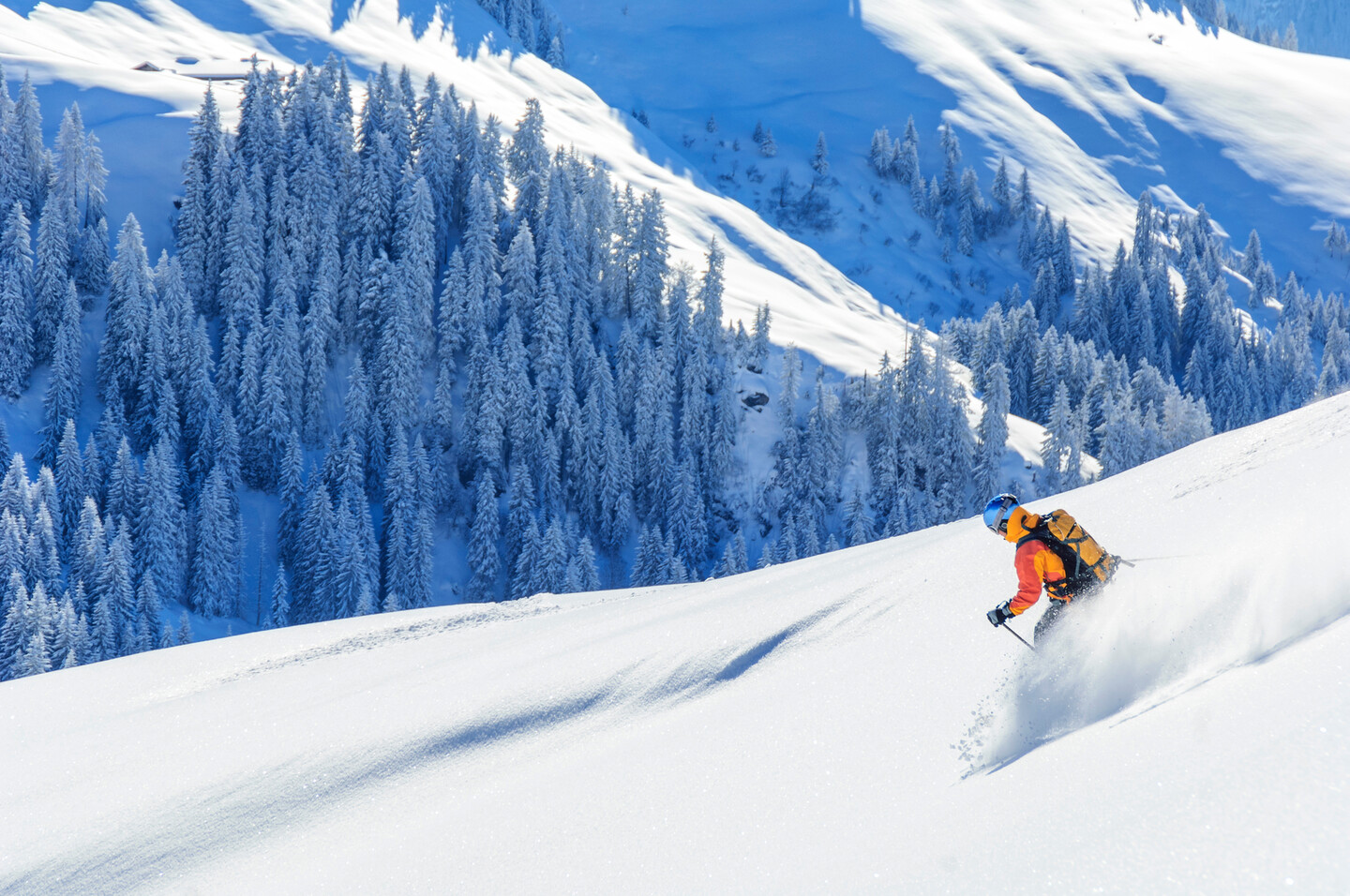
At the other end of the touring ski spectrum are downhill-oriented touring skis, also known as freeride touring skis. With a waist width of over 95 mm and a pronounced rocker profile, they offer maximum float in deep powder snow. Furthermore, this more robust construction ensures smooth running at high speeds. This makes them ideal for ski tourers who, after a shorter ascent, are looking for the perfect descent in powder snow. To this end, the weight of over 1.5 kg is deliberately accepted, as it guarantees stability and control, allowing them to really show their strengths in deep snow.
Electric-powered touring skis
The e-touring ski is a pioneering innovation in the field of ski mountaineering, comparable to the rise of e-bikes. These motorised ski models offer a whole new level of assistance during the ascent, significantly increasing range and comfort. E-systems such as the “eSkimo” from the Swiss company “E-Outdoor” use a drive unit with a caterpillar track, battery and sensors that measure position and weight distribution, thereby automatically adjusting propulsion. According to the manufacturer, this can increase ascent speed by up to 80 per cent and reduce the effort required by winter sports enthusiasts by around 30 per cent! In return, ski tourers can select various modes on the e-skis, such as ‘Drive Mode’, and thus reach speeds of up to 14 km/h on moderate gradients. The lithium batteries provide power for up to 1,500 metres of elevation gain and add between 2.8 and 3 kg to the weight of each pair of skis. E-touring skis are not yet widespread, but collaborations with well-known manufacturers such as Tecnica suggest that the concept could become established and thus increasingly appeal to a broader audience.
Selection criteria for the right touring skis

Please also note that by using our services and integrating the YouTube API Services, the YouTube Terms of Service and the YouTube API Services Terms apply and your use of our website is deemed to be acceptance of these terms.
Body weight and skiing ability
Body weight influences how much a ski flexes. Heavier skiers therefore require stiffer ski models with a wider waist to achieve optimal floatation in soft snow. Skiing ability is, of course, also a decisive factor. Beginners therefore benefit from skis with pronounced rocker, which are more forgiving of mistakes as they make it easier to initiate turns. Advanced ski tourers, on the other hand, prefer a stiffer ski that provides precise feedback at higher speeds and in changing conditions. Ultimately, professionals tend not to focus on their own weight when choosing touring skis and often base the ski length on their height to achieve maximum stability.
Planned terrain and tour profile
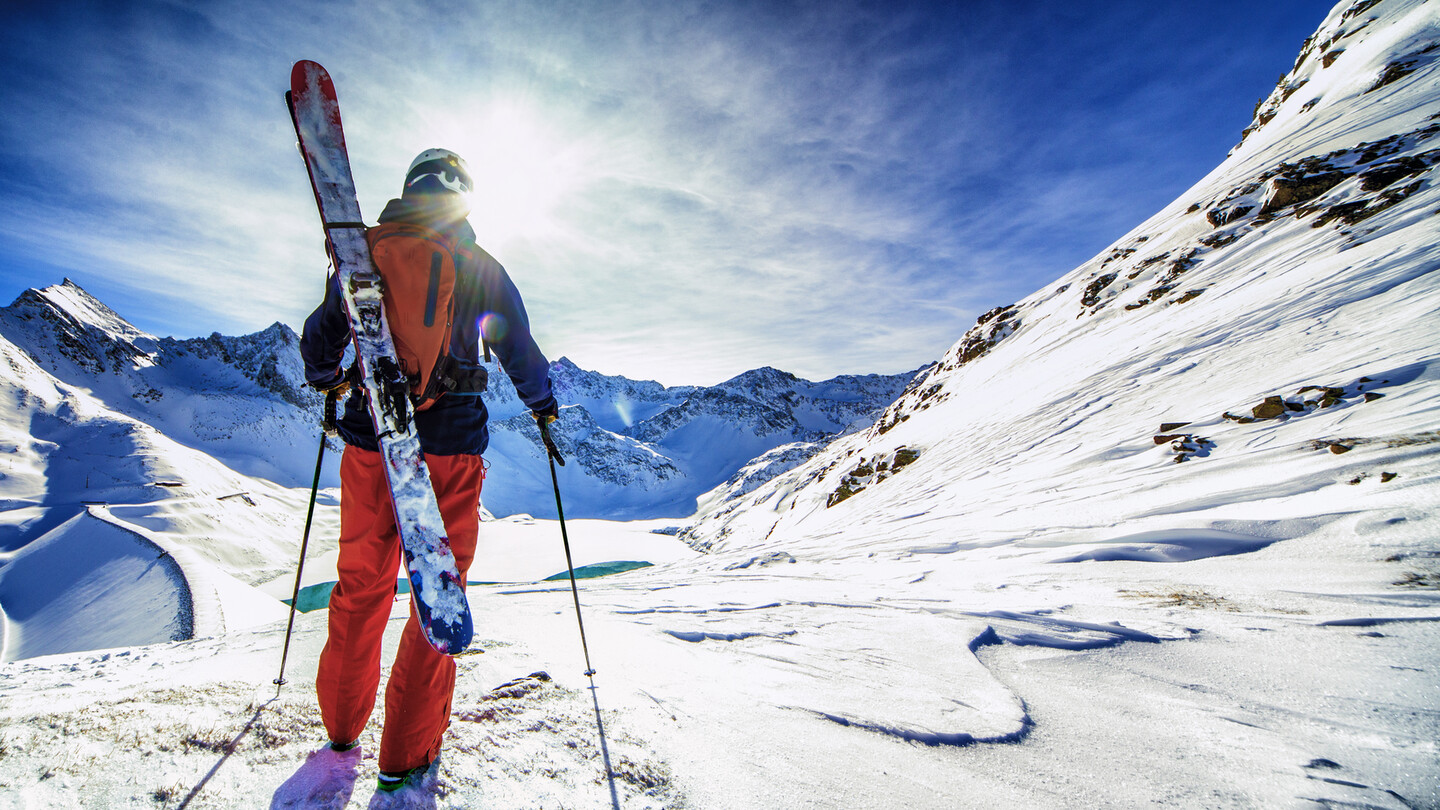
When looking for the right touring skis, their intended use also plays a major role. So, those who mainly ski on groomed slopes tend to opt for a narrow, lightweight ski that also allows for easy ascents. Winter sports enthusiasts, on the other hand, who seek the tranquillity of the high mountains and plan descents in steep gullies or powder snow slopes, will find all-round or freeride touring skis the better choice. Ultimately, the planned elevation gain also plays a role here. This means that for ascents of more than 1,000 metres in altitude, lighter equipment is crucial for strength and endurance. However, for shorter tours on ski routes, a heavier ski can be chosen, as it offers better downhill performance.
Ski length and waist width
The ideal length of touring skis is determined by the skier’s height. For all-rounders, the rule of thumb is: height minus 5 to 15 cm. This is because shorter skis make it easier to navigate kick turns and improve manoeuvrability in the forest, whilst longer models offer smoother gliding and more float in deep snow. The waist width also influences the versatility of the skis. For example, 85 to 90 mm is optimal for classic touring. Beginners, on the other hand, often choose a waist width between 84 and 88 mm, as this provides a more stable stance without having to carry unnecessary weight on the ascent. Beyond that, freeriders prefer ski models with a width of over 95 mm, whilst speed or race skiers use narrower skis with a width of under 80 mm.
Materials and construction of touring skis
Wood core, carbon or sandwich construction
The core is literally the heart of every touring ski. High-quality models therefore use wood core materials such as paulownia, poplar or ash, as wood dampens vibrations and is durable. Fibreglass or carbon layers are then wrapped around the core. In the widely used sandwich construction, these layers are bonded to the sidewalls. This ensures greater torsional stiffness and good edge grip whilst skiing. Another option is the cap construction, where the surface is pulled over the core like a shell. This ensures a smooth skiing experience, particularly in lightweight models. Finally, in high-quality torsion boxes, fibres are wound around the core. This ensures maximum performance on hard surfaces, as well as stability and precise handling in changing snow conditions.
Impact on flex and weight
Carbon fibres are indispensable in the construction of modern touring skis, as they are extremely light and tensile. Through the targeted use of carbon stringers, longitudinal flex and torsional stiffness can be precisely controlled. This means that stiffer skis offer better edge grip on steep sections, whilst a softer flex ensures riding comfort in powder snow. However, innovative techniques such as the Air-Tech system, in which the wood core is milled in a staggered pattern, also play a role in the construction of touring skis today. This allows the overall weight to be reduced by up to 25 per cent without compromising stability. The aim, however, is always to achieve a balanced combination of flex and torsion that gives the skier a smooth, controlled skiing experience on all terrains. This allows them to conserve energy and provides them with greater safety.
Other touring ski equipment

Please also note that by using our services and integrating the YouTube API Services, the YouTube Terms of Service and the YouTube API Services Terms apply and your use of our website is deemed to be acceptance of these terms.
A touring ski can only realise its full potential when paired with the right bindings and the right ski boots. Lightweight skis work particularly well with lightweight bindings, as they efficiently support both the ascent and the descent. Touring ski boots are also a key component. They offer freedom of movement during the ascent and stability for power transfer on the descent. Especially on the way up the mountain, climbing skins are, of course, absolutely crucial for ski tourers. Here, mixed skins made of mohair and nylon offer a good compromise between grip and gliding properties. Other important ski touring accessories include crampons for frozen surfaces, as well as safety straps or ski brakes. Whilst ski brakes are easy to use, safety straps can offer advantages when securing skis in alpine terrain.
FAQ on touring skis
What distinguishes a touring ski from an alpine ski?
Touring skis are specially designed for ski touring in the backcountry. They are lighter than alpine skis, feature attachments for climbing skins and use heel-free bindings. This makes walking uphill easier. Alpine skis, on the other hand, are designed for speed, stability and smooth gliding on groomed slopes. They are often heavier as they contain metal inserts for shock absorption. Touring skis must cope with changing snow conditions, from hard-packed snow to deep powder, and offer a combination of lightness and performance for both ascent and descent.
What types of touring skis are there, and which is suitable for what?
There are various types of touring skis, tailored to the terrain, intended use and skiing style. Ascent-oriented touring skis are light, narrow and manoeuvrable. They are ideal for athletic ascents, tight hairpin bends or steep forest sections. All-round touring skis strike a balance between weight, float and stability and are suitable for tours from the tree line to high-alpine terrain. Freeride touring skis are wide, offering maximum float in deep snow and smooth running at high speeds. E-touring skis are motorised, making the ascent easier and increasing range and comfort, particularly on long or steep tours. This makes ski mountaineering more accessible and less physically demanding.
What role do weight and skiing ability play in choosing touring skis?
The weight of the ski affects the effort required during the ascent: the lighter the ski, the easier and more energy-efficient the tour. Skiing ability determines the flex and construction. Beginners benefit from soft, forgiving skis with rocker, which make turning easier. Advanced skiers, on the other hand, choose stiffer skis that provide precise feedback at higher speeds. Professionals often base their ski length on their height to achieve maximum stability and optimal power transfer to the edge and snow.
How do ski length and waist width affect the handling of touring skis?
Ski length affects manoeuvrability and smoothness of ride. Shorter skis make kick turns easier and facilitate skiing through narrow passages in the forest, whilst longer skis provide greater stability on fast descents and buoyancy in deep snow. The waist width determines versatility: 85 to 90 mm is ideal for classic touring, over 95 mm is suitable for deep-snow descents, and narrower skis under 80 mm in width are optimal for speed or race types. By combining length and width, every winter sports enthusiast can select the skis that suit their terrain profile and skiing style.
Which materials and construction methods are recommended for touring skis?
High-quality touring skis feature a wood core made of paulownia, poplar or ash, which dampens vibrations and is durable. Layers of fibreglass or carbon are then applied on top. Sandwich constructions with bonded sidewalls ensure torsional stiffness and edge grip, whilst the cap construction in lightweight models provides a harmonious skiing experience. Carbon stringers precisely control flex and torsion: stiff for edge grip on steep terrain and soft for comfort in deep snow. Air-Tech milled channels reduce weight by up to 25 per cent without compromising stability. This creates a perfect balance between power transfer, riding comfort and safety in all snow conditions.

