
Hardly any other winter competition series draws so heavily on tradition as the Cross-Country World Cup. In Norway, the cradle of Nordic skiing, the first cross-country races were documented as early as 1843. The sport has, of course, evolved enormously into the 21st century. Today, in the FIS Cross-Country World Cup, athletes battle for every centimetre, both over the very long, historic distances and in the short, innovative races. The past season, which once again captivated hundreds of thousands of fans on the trails and in front of their televisions, was dominated by Johannes Høsflot Klæbo (Norway) and Jessie Diggins (USA). SnowTrex has now summarised which races will take place when and, above all, where in the 2025/2026 World Cup programme.

An overview of the 2025/2026 Cross-Country World Cup races
| Date | Venue | Country | Events |
|---|---|---|---|
| 28 Nov – 30 Nov 2025 | Ruka | Finland | Individual (Classic), Mass Start (Freestyle) & Sprint (Classic) |
| 05 Dec – 07 Dec 2025 | Trondheim | Norway | Individual (Freestyle), Skiathlon & Sprint (Freestyle) |
| 12 Dec – 14 Dec 2025 | Davos | Switzerland | Individual (Freestyle), Sprint (Freestyle) & Team Sprint (Freestyle) |
| 28 Dec 2025 – 01 Jan 2026 (Tour de Ski) | Toblach | Italien | Individual (Classic), Mass Start (Freestyle), Sprint (Freestyle) & Pursuit (Classic) |
| 03 Jan – 04 Jan 2026 (Tour de Ski) | Val di Fiemme | Italien | Final Climb (Freestyle) & Sprint (Classic) |
| 17 Jan – 18 Jan 2026 | Oberhof | Germany | Individual (Classic) & Sprint (Freestyle) |
| 23 Jan – 25 Jan 2026 | Goms | Switzerland | Mass Start (Classic), Sprint (Classic) & Team Sprint (Freestyle) |
| 06 Feb – 22 Feb 2026 (Olympic Winter Games) | Tesero | Italien | 50 km Mass Start (Classic), Individual (Freestyle), Skiathlon, Sprint (Classic), Relay & Team Sprint (Freestyle) |
| 28 Feb – 01 Mar 2026 | Falun | Sweden | Skiathlon & Sprint (Freestyle) |
| 07 Mar – 08 Mar 2026 | Lahti | Finland | Individual (Freestyle) & Sprint (Freestyle) |
| 12 Mar 2026 | Drammen | Norway | Sprint (Classic) |
| 14 Mar 2026 | Oslo | Norway | 50 km Mass Start (Freestyle) |
| 20 Mar – 22 Mar 2026 | Lake Placid | USA | Individual (Classic), Mass Start (Freestyle) & Sprint (Freestyle) |
Highlights of the 2025/2026 World Cup season
28 to 30 November: Ruka (Finland)
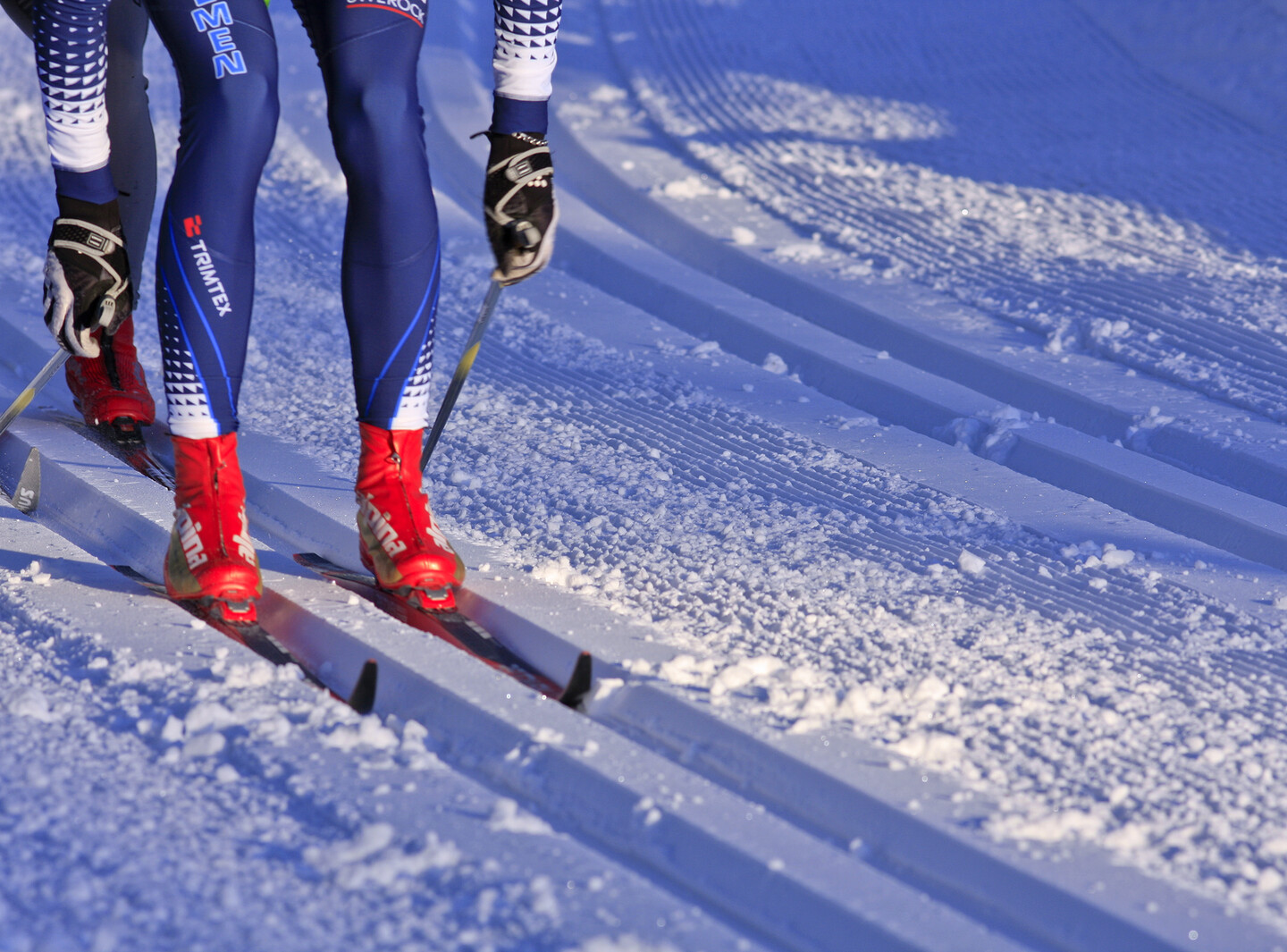
The first of 13 Cross-Country World Cup events in the 2025/2026 season is traditionally the Nordic Opening in Ruka, Finland. Every year, a true winter wonderland awaits the athletes on the trails of the Kuusamo Ski Centre. This is due to the location of the resort, which lies just 60 kilometres south of the Arctic Circle. Temperatures are correspondingly cold, and athletes usually have to contend with them under floodlights during the six races scheduled.
12 and 14 December: Davos (Switzerland)
At an altitude of 1,560 metres, Davos is the highest town in Europe. For the cross-country skiers, the first of two Swiss World Cup stops in the 2025/2026 season, just under two weeks before the start of the Tour de Ski, features one individual race, one sprint and one team sprint. The two 10 km races will be held using the skating technique (freestyle), whilst the shorter distances will also be contested in freestyle.
28 December to 1 January: Dobbiaco (Italy)
Much like the Four Hills Tournament for ski jumpers, the Tour de Ski is always one of the season’s highlights for cross-country skiers, even in years featuring major events such as the Winter Olympics or World Championships. The race, which also earns the athletes a large number of World Cup points, consists of six stages in total. The first four events – a sprint and a mass start (both freestyle) as well as an individual race and a pursuit in classic technique – take place in Italy on the trails in Dobbiaco, in the shadow of the famous Three Peaks in the Dolomites.
3 and 4 January: Val di Fiemme (Italy)
After four gruelling races in five days, with just a 24-hour break on 2 January and a move within Italy, the cross-country skiing circuit heads to Val di Fiemme for the Tour de Ski finale. For the overall leaders in both the women’s and men’s categories, the task here is to defend their leader’s jerseys over the final two stages. Most of the races will be held on the trails on the other side of the valley from Cavalese.
First up there are a classic-style sprint and a skiathlon, before things get really tough again on 5 January – the final day. Over a 15 km course, the “Final Climb” involves conquering 400 metres of elevation gain at the end on a ski slope that winter sports enthusiasts normally use for high-speed descents. The cross-country skiers must tackle gradients of up to 28 per cent.
6 to 22 February: Tesero (Italy)
The absolute sporting highlight of the year for cross-country skiers will also take place in Italy in 2026. The Winter Olympics in Milan and Cortina d’Ampezzo are scheduled to take place here from 6 to 22 February. For both the women and the men, the programme during this period on the trails of Tesero in the Fiemme Valley is packed with a total of seven races for gold, silver and bronze medals. On two occasions – in a relay and a team sprint – compatriots will compete together. The remaining five races, including two 50 km mass starts in the classic technique, will, however, be contested individually.
14 March: Oslo (Norway)
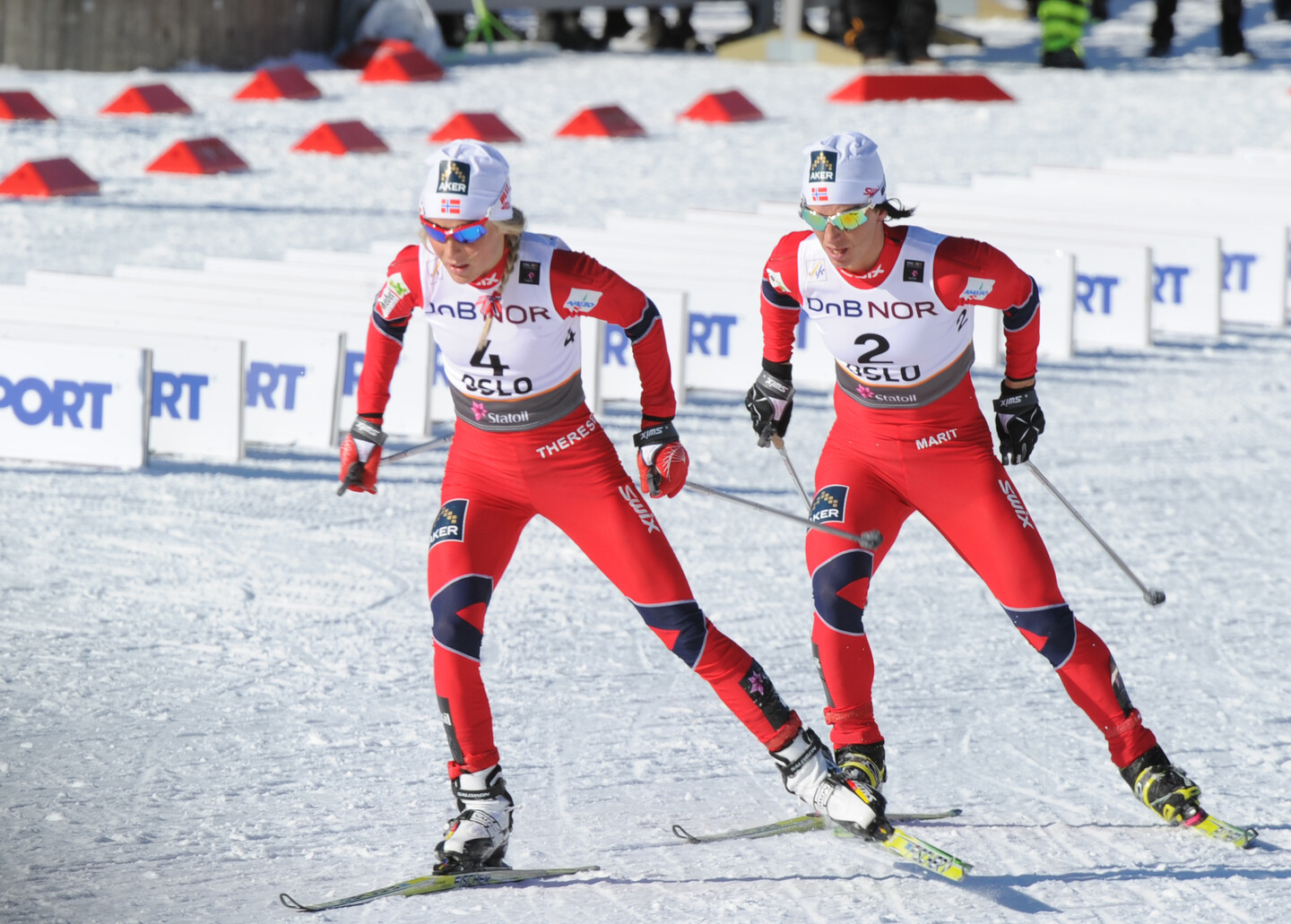
When cross-country skiers talk about Holmenkollen, their eyes light up with awe. The trails around the local mountain of the Norwegian capital, Oslo, are the stuff of legend, at least in the world of Nordic skiing. Every year, the professionals compete on one of the most legendary cross-country World Cup courses, where athletes traditionally have to tackle genuine marathon distances. In the 2025/26 season, two 50 km mass starts in the freestyle technique are once again scheduled here. As a reward, the winners will then be invited to a private audience in the royal box, where the sports-loving King Harald V of Norway will, as always, be waiting to greet the athletes with words of praise.
20–22 March: Lake Placid (USA)
Just under five months after the 2025 Cross-Country World Cup opened in Finland, the season now draws to a close on the other side of the Atlantic in the USA, specifically in Lake Placid. To round off a gruelling series of competitions, three more races are on the programme here. In addition to an individual race and a sprint, each to be contested in both classic and freestyle techniques, the 1980 Olympic host city will also host a 20 km freestyle mass start race. Following these two races, the best female and male cross-country skiers of the 2025/2026 season will then be honoured on 22 March 2026 with the large crystal globes, befitting their triumph in the overall World Cup.
The International Ski Federation (FIS) has compiled the best images from American Jessie Diggins’ dominant 2024/25 World Cup season into an atmospheric video:

Please also note that by using our services and integrating the YouTube API Services, the YouTube Terms of Service and the YouTube API Services Terms apply and your use of our website is deemed to be acceptance of these terms.
Cross-country skiing is fascinating: the most Nordic of all endurance sports is by no means just for World Cup professionals. Many winter sports resorts now offer extensive networks of cross-country trails for everyone, alongside their ski areas. However, for winter sports enthusiasts who have been used to wide alpine skis for years, the switch to narrow cross-country skis can always take a while. That’s why SnowTrex has done some research and put together some tips for beginners on the trails.
This is the Cross-Country Skiing World Cup
- Start of the 2025/2026 Cross-Country World Cup season: The season kicks off from 28 to 30 November 2025 in Kuusamo, Finland, with the Nordic Opening at the Ruka Ski Centre.
- First sprint of the 2025/2026 season: On 29 November 2025, the first sprint for both women and men, using the classic technique, will also take place in Kuusamo.
- First Skiathlon 2025/2026: On 7 December 2025, the first skiathlon of the cross-country season, featuring a change of skiing technique after 10 km, will be held in Trondheim (Norway).
- 2025/2026 Cross-Country World Cup Finals: Will take place from 20 to 22 March 2026 in Lake Placid (USA) with a total of six races – three each for the men and women.
- History of the Cross-Country World Cup: The first official Cross-Country World Cup was launched in the 1981/1982 season with the inaugural races in Klingenthal and Reit im Winkl.
- Cross-Country World Cup TV coverage: Eurosport, ARD and ZDF broadcast live or show highlights such as the Final Climb of the Tour de Ski.
- Prize money: The overall World Cup winners each receive 60,000 Swiss francs (approx. 64,150 euros) and 15,000 Swiss francs (approx. 16,037 euros) is awarded for a single race victory – as of July 2025
FAQ on the Cross-Country World Cup
When does the 2025/2026 Cross-Country World Cup start?
The season opener of the 2025/2026 Cross-Country World Cup will take place from 28 to 30 November at the Ruka Ski Centre in Kuusamo. This is where the cross-country skiers, including the American Jessie Diggins, one of the favourites for the Cross-Country World Cup, will gather 60 kilometres south of the Arctic Circle for the Nordic Opening.
When will the first sprint of the 2025/2026 season take place?
The first sprint of the 2025/2026 season for both women and men is scheduled to take place right at the World Cup opener in Kuusamo, Finland. On 29 November 2025, the race will be held using the classic technique.
When will the first skiathlon of the 2025/2026 season take place?
On 7 December, the athletes of the Cross-Country World Cup will compete in the first Skiathlon of the 2025/2026 season in Trondheim. During the race, athletes switch from classic to free technique – i.e. skating – at the halfway point after 10 km. To do so, they must stop in a special transition zone in the stadium and change their skis within seconds.
Where does the 2025/2026 Cross-Country World Cup end?
To mark the conclusion of the 2025/2026 FIS Cross-Country World Cup, another competition weekend will take place in Lake Placid (USA). At the venue of the 1980 Winter Olympics, a total of six races – three each for women and men – are scheduled from 20 to 22 March 2026.
Since when has the Cross-Country World Cup been in existence?
The first official season of the Cross-Country World Cup took place in 1981/1982. On 9 January 1982, the very first races were held in Klingenthal (then still in the GDR) and in Reit im Winkl. Květa Jeriová from Czechoslovakia won the women’s event and Pål Gunnar Mikkelsplass from Norway won the men’s.
Where can I watch the Cross-Country World Cup on TV?
In recent years, live broadcasts of the Cross-Country World Cup on television have been handled by the private sports channel Eurosport. In addition, ARD and ZDF in Germany take turns showing several highlights of the races every World Cup weekend. Highlights such as the Final Climb of the Tour de Ski in Val di Fiemme, on the other hand, are traditionally shown live by the public broadcasters.
How much money do the winners of the Cross-Country World Cup earn?
For first place in the overall World Cup, the Cross-Country World Cup winners in both the women’s and men’s categories each receive 60,000 Swiss francs, equivalent to 64,150 euros (as of 7 July 2025), in prize money. A victory in a World Cup race is also worth 15,000 Swiss francs, equivalent to 16,037 euros (as of 7 July 2025), for both women and men. In winter sports, it is also traditional for the overall World Cup trophies to be made of the finest crystal glass. That is why the best female and male cross-country skiers are honoured by the International Ski Federation (FIS) with two large ‘crystal globes’.

