
As they get older, many older people wonder whether it’s sensible to still hit the slopes. Some have given up skiing or cross-country skiing for years because they’ve let themselves be put off. Unnecessarily so! Provided there are no medical reasons against it (check with your doctor!) and a few basic principles are followed, SnowTrex knows that nothing stands in the way of winter sports in later life.

Prepare your body
From a health perspective: exercise in the fresh air is always beneficial, but thorough physical preparation is essential. Ski gymnastics has long been regarded as the ideal way to prepare. Walking, aerobics and any other sport that involves sufficient stretching are also useful. Skiing itself helps to improve balance, strength and endurance, as well as agility and coordination.
Check your equipment
A lot has changed in terms of material over the decades. The alpine ski is much more manoeuvrable than it used to be. This reduces the strain on the knee joint in particular. Cross-country skis have also become shorter: In the past, they were often over 3 m long, but today they are geared to the height of the cross-country skier. In addition to a helmet (at least for alpine skis), optimal equipment includes high-quality wind- and waterproof high-tech clothing made of microfiber and fleece.

Look for role models
Role models are always an inspiration – take Françoise Stahel, for example (see first picture). She is arguably the poster child for winter sports in later life. Since 1969, the now 80-year-old has taken part in every edition of the Engadin Ski Marathon. No other woman in the world has taken part in this cross-country skiing competition more often than she has. She says quite clearly: “I do feel my age, especially in the mornings when I sometimes feel a bit stiff.” But her burning passion for winter sports is stronger, and so the French-born athlete continues to train regularly. “After every race, I feel like I’m on an incredible high.”
Find the right ski resort for you
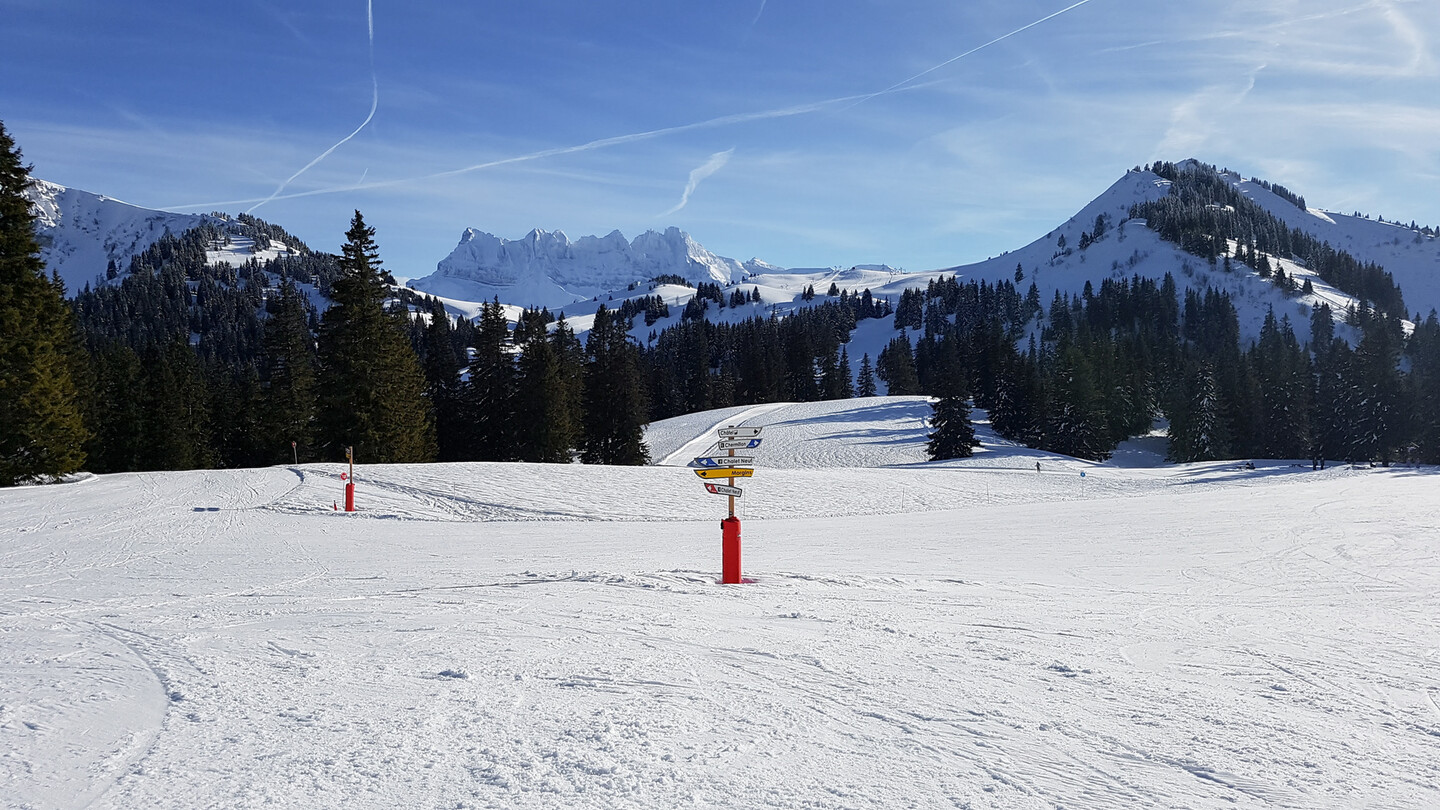
The expectations that winter sports enthusiasts aged 40+ have of a ski resort differ from those of the younger generation. A compact ski resort with a high proportion of blue and red runs, as well as wide slopes, is ideal for alpine skiing. It is better to choose a smaller ski resort than one where techno music blares from the huts round the clock. Peace and quiet, magnificent views and delicious food – these are the things the older generation values when it comes to their lunch break. Ski resorts in Austria that meet these criteria include Berwang, Lofer and the Wildkogel Arena. In France, Saint Francois-Longchamp, Chamrousse, Châtel and Super Dévoluy are recommended. In Italy, Plan de Corones and Alta Badia are particularly popular. And Switzerland offers the Schatzalp in Davos, a so-called ‘slow mountain’ – a relaxed ski resort where no artificial snow is used. Almost all of them offer discounted ski passes for senior citizens. Some also attract visitors with refresher courses. Incidentally, there have been significant improvements in lift comfort in recent years. Many chairlifts have weather-proof canopies and some are even heated.
There are also plenty of options for cross-country skiers who don’t want to get too ambitious: In Germany, for example, the Berchtesgadener Land and the Oberstdorf region are recommended. In Austria, leisurely cross-country skiers get their money’s worth in the Stubai Valley and SkiWelt Wilder Kaiser-Brixental, for example. And Italy’s No. 1 cross-country skiing region in 3 Zinnen Dolomites region, with over 200 kilometres of trails, is also worth a trip.
Don’t overdo it
When you finally head for the mountains (again), a cautious approach is essential. Older people no longer have anything to prove to anyone, least of all to themselves. Misplaced ambition and unrealistic self-assessment have no place here. Taking your time, stopping for breaks, admiring the fantastic mountain scenery – that is the right approach. This way, skiing or cross-country skiing becomes an extraordinary pleasure for non-professionals too, and a treat for all the senses.
End the day in a relaxed way
The skiing is over, but the day is not over yet. How about a sauna or a swim? This is possible at a lovely spa hotel. In addition, soothing massages, beauty treatments and relaxing fitness facilities are usually on offer. For a day off or an evening stroll, the town should have nice shops and good restaurants. After all, relaxation and enjoyment after skiing are just as important as the skiing itself.


