
Skiers and other winter sports enthusiasts will be familiar with this: you spend hundreds or even thousands of euros on ski equipment, and then suddenly it’s gone from the ski resort. It’s a frustrating scenario that, sadly, is no longer a rare occurrence. Every year, around 20,000 pairs of skis are stolen from the slopes in the Alps! No wonder anti-theft protection for skis has become so important. SnowTrex has put together some practical tips here on how to combat ski theft and brazen ski thieves, as well as which products can be used to secure your own ski gear.
1807
Technology as a means of protecting skis against theft
Ski locks
These ski locks are available:
Just as with bicycle locks, there are various types of ski locks: cable locks, U-locks and combination locks. Cable locks are flexible, lightweight and therefore ideal for carrying in a rucksack on the slopes. U-locks, on the other hand, offer more robust protection due to their sturdier construction, whilst combination locks are easy to use as they do not require a key. Prices for ski locks range from around 10 euros for simple cable locks to 50 euros for high-quality U-locks.
How ski locks work
A ski lock is threaded around the binding or through fixed parts of the ski and secured to a sturdy object such as a ski rack or a railing. This makes it considerably more difficult for thieves to take the skis. Overall, ski locks reduce the risk of theft by up to 60 per cent. This means they are a reliable way to prevent ski theft.
Advantages and disadvantages of ski locks
Ski locks have proven to be a simple and effective way of protecting skis from theft on the slopes. They are also lightweight and easy to carry. However, this can be a disadvantage with lower-priced models, as their inferior build quality makes them less sturdy and therefore potentially easier to break into. The extra weight of a ski lock in your rucksack can also be a nuisance on longer trips.
Ski trackers
What is a ski tracker?
A ski tracker is a small device that is attached to your skis and monitors their position via GPS. It is one of the best ways to prevent ski theft, as the device can easily transmit the skis’ location to a digital device in the event of loss. Modern ski trackers cost between 50 and 150 euros. More expensive models are usually equipped with additional features such as a motion alarm.
How a ski tracker works
The tracker continuously sends location data to an app on your smartphone. This means the skis can be pinpointed even when they are out of sight or left in busy ski resorts. Using the GPS data, the tracking system can then pinpoint the location to within a radius of up to 5 metres.
Advantages and disadvantages of ski trackers
The main advantage of a ski tracker is that it can locate the skis to within a metre of accuracy in some cases. On the other hand, the disadvantages are the cost and the need to recharge the devices regularly. Nevertheless, 80 per cent of skiers who use a tracker feel that it provides better protection for their ski equipment.
Ski coding
What is ski coding?
Ski coding involves marking skis with a unique identifier to prevent theft, making them clearly identifiable. This can be done by engraving, applying a sticker or using a special coating. The cost of such coding is usually between 10 and 30 euros per pairof skis.
How ski coding works
Coding can be carried out in ski shops or by specialist providers. The skis are marked with a unique number or a QR code, which is then registered in a database. The advantage of this is that the marking cannot be easily removed, making the marked skis less attractive to thieves.
Benefits and importance of ski coding
Coding deters potential thieves, as coded skis are more difficult to sell. Furthermore, coding makes it easier to recover stolen skis. By registering ski equipment with individual numbers and QR codes, the risk of theft for skis marked in this way has been reduced by up to 50 per cent in recent years.
Ski storage facilities and ski rooms
What you need to know about ski depots
Ski depots are specially equipped rooms in ski resort cable car stations or in accommodation facilities, designed to store skis securely. Access is usually via keys or electronic cards. Use is often included in SnowTrex’s hotel packages, but depending on the accommodation, it may also cost an extra 5 to 15 euros per day.
Tips on using ski depots and their advantages
It is recommended that you always store your skis in locked depots or rooms and plan to use such facilities in advance. Overall, ski depots and ski roomsoffer a secure place to store your skiing equipment, particularly overnight or during longer breaks. In large ski resorts, such as Engelberg, St. Anton or Les 3 Vallées, as well as in well-equipped accommodation, they are often under CCTV surveillance and secured by access restrictions.
Practical tips for protecting your skis against theft
Behaviour on the slopes
Do not leave your skis unattended
You should never leave yourskisunattended in public places. Even brief absences or moments of inattention can be exploited by thieves. The fact that 70 per cent of skiers surveyed admitted to having left their skis unattended at the side of the piste or whilst stopping for a break at a mountain hut shows why so much ski equipment is stolen in such situations.

Storing your skis correctly
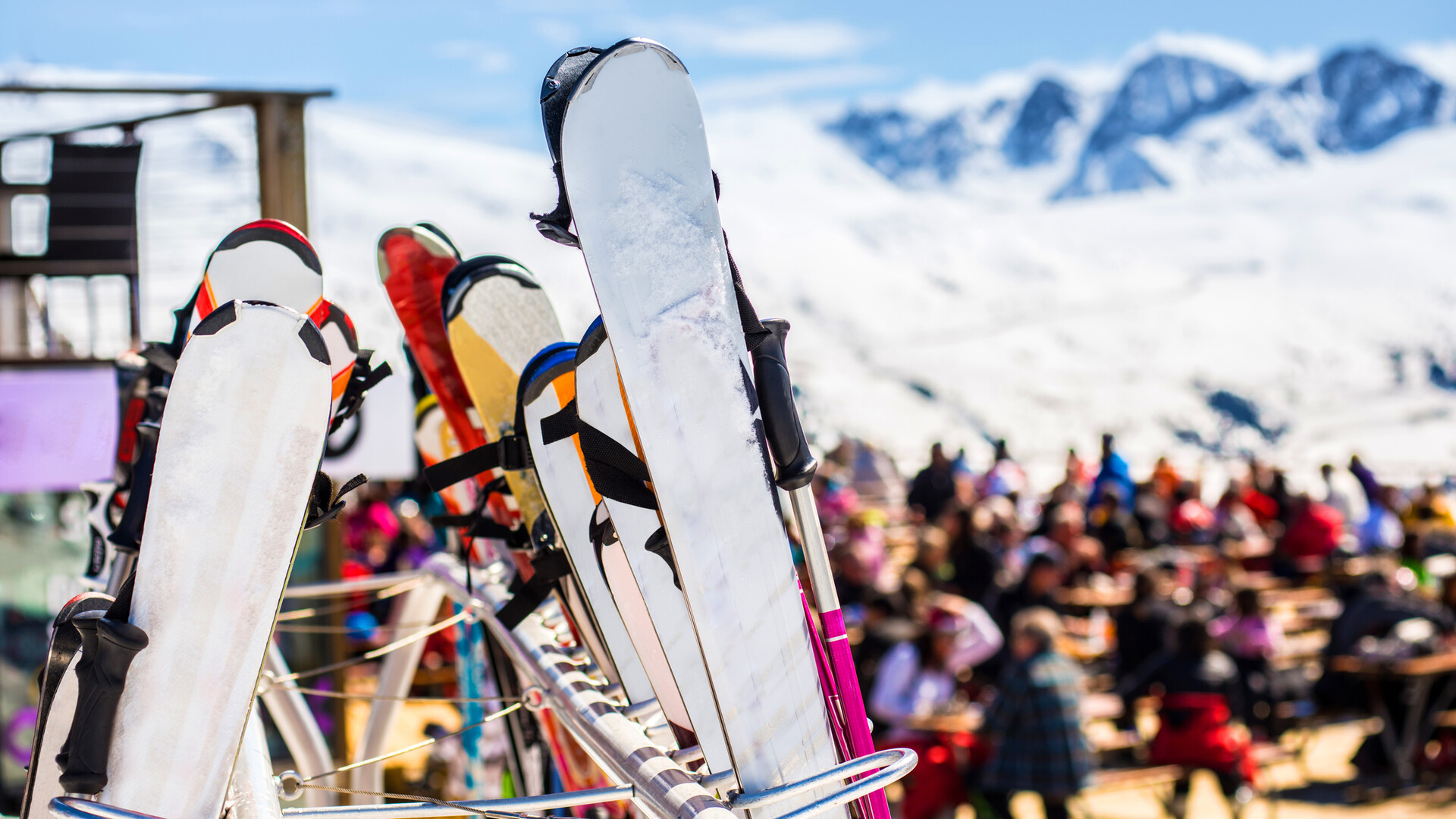
To protect against ski theft, ski equipment should therefore always be stored in clearly visible and busy areas. A good tip is to cross your skis to prevent them from being mixed up. This makes it harder for thieves to steal a matching pair.
Marking your skis
Marking your skis individually – for example, with eye-catching stickers or ribbons rather than a complex ski coding system – makes them easier to identify and deters thieves. These markings can be bought from specialist shops or applied yourself, and usually cost less than 5 euros.
Safety precautions on the ski lift or cable car
Securing skis properly in the gondola
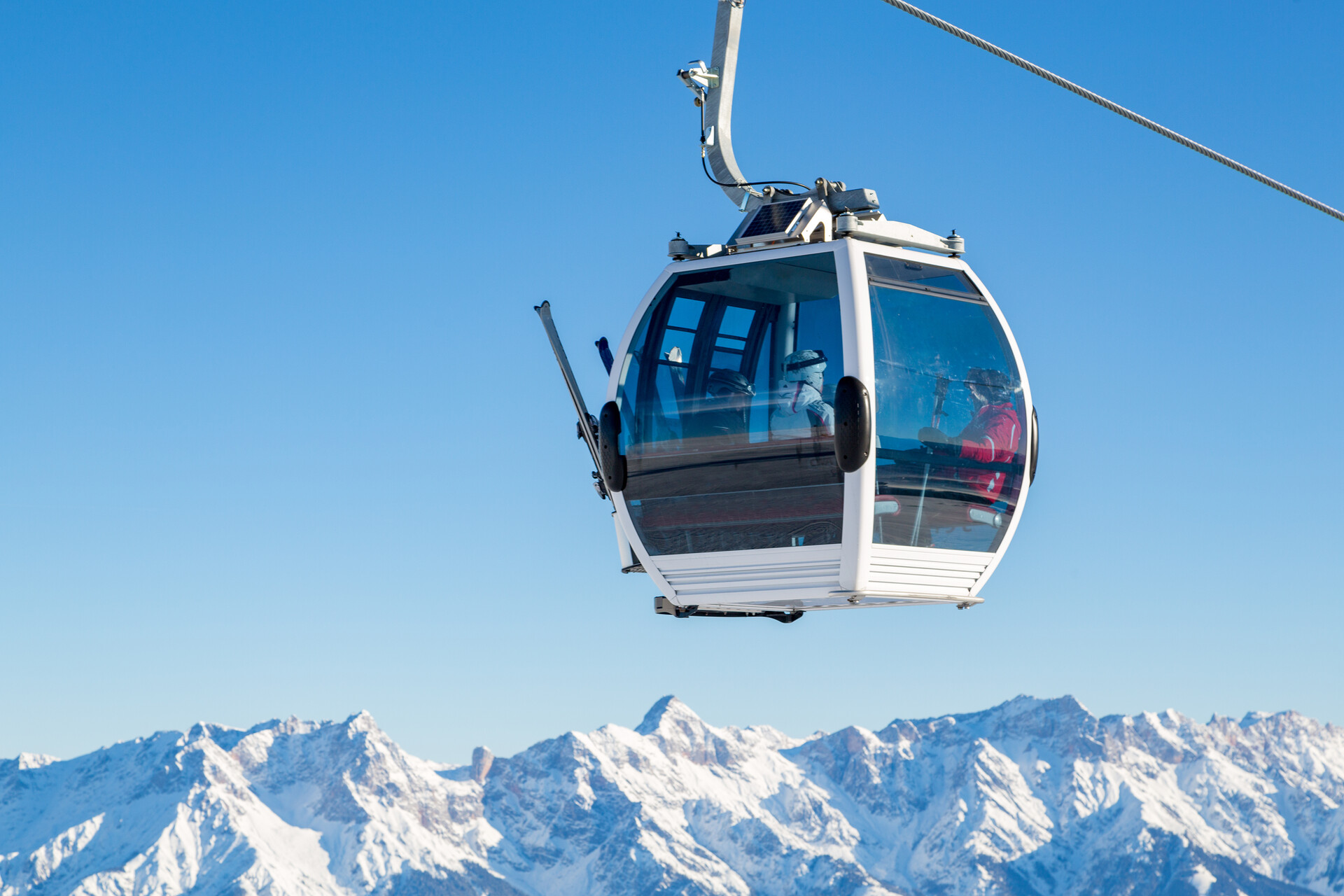
Before boarding thegondola, winter sports enthusiasts should always secure their skis firmly in special holders or other designated fixtures on the cabin, rather than simply leaving them loose on the floor.
Be careful when getting on and off the cable car
When getting on and off, skiers should always keep an eye on their equipment to ensure it is not mixed up or even stolen. This is precisely the kind of situation that ski thieves try to exploit, and statistically speaking, this is one of the most common times for thefts to occur in the ski resort, as many winter sports enthusiasts are less vigilant about their skis at this moment.
Do not leave skis unattended at the ski lift
Even during a brief stop at the ski lift, you should not leave your skis unattended. As is so often the case, it is advisable to keep a close eye on your poles and skis at all times, particularly if you are on the slopes alone, or to leave your equipment with members of your own ski group.
Insurance cover for ski equipment
Which ski insurance policies also cover theft?
Many travel insurance policies also include special cover for the theft of ski equipment. Before taking out a policy, you should always check carefully whether the loss of your skis is actually covered. The cost of such insurance is often between 20 and 50 euros per year. To protect yourself against ski theft, insurance is therefore essential!
What should a ski insurance policy include?
A goodskiinsurance policy should cover the theft of all your equipment – as some providers also offer cover for accessories such as ski poles and helmets – as well as any damage or loss. The replacement value of the skis should also be covered.
Tips for choosing the right ski insurance
When taking out insurance, it is important to pay attention to the cover limits and the exact terms and conditions. We recommend insurers that offer a straightforward claims process and do not require high excesses. Insurance benefits are usually easiest to compare on comparison websites, via Stiftung Warentest or the Consumer Advice Centre.
Why theft cover for skis is so important
Protecting skis against theft is a key concern for all winter sports enthusiasts who want to know their equipment is safe. Whether it’s ski locks, ski trackers, coding systems or the use of ski storage facilities – there are many ways to effectively protect your skis from thieves. It is therefore worth taking appropriate measures at all times to secure your ski equipment so that you can enjoy carefree days on the slopes.
FAQ on ski theft protection
What types of ski locks are available and how much do they cost?
There are three types of ski locks: cable locks, U-locks and combination locks. Cable locks are flexible, lightweight and therefore ideal for carrying in a rucksack on the slopes. U-locks offer more robust protection thanks to their sturdier construction. Combination locks are particularly easy to use, as no key is required. Prices range from around 10 euros for simple cable locks up to 50 euros for high-quality U-locks.
How does a ski tracker work and what advantages does it offer?
A ski tracker is a small device that is attached to the skis and monitors their position via GPS. The tracker continuously sends location data to an app on a smartphone, so that the skis can be pinpointed accurately even when out of sight. Modern ski trackers cost between 50 and 150 euros and can be fitted with additional features such as a motion alarm. The main advantage of a ski tracker is the precise tracking of the skis, which significantly increases protection against theft.
How much does ski marking cost?
Ski coding involves marking the skis with a unique identifier that makes them clearly identifiable. This can be done using engravings, stickers or special paint finishes. The coding is carried out in ski shops or by specialist providers and usually costs between 10 and 30 euros per pair of skis. The coding deters potential thieves and makes it easier to recover stolen skis.
Which insurance policies offer cover against ski theft and what should you bear in mind?
Many travel insurance policies offer specialised cover to safeguard ski equipment and provide protection against theft. A good insurance policy should cover the theft of the entire set of equipment, as well as any potential damage or loss. The replacement value of the skis should also be covered. The cost of such insurance is often between 20 and 50 euros per year. It is important to check the levels of cover and the exact terms and conditions, and to choose a provider that offers a straightforward claims settlement process.
How secure are ski storage facilities and how much does it cost to use them?
Ski storage facilities are specially equipped rooms in the cable car stations of ski resorts or in accommodation where skis can be stored safely. Access is usually via a key or an electronic card. The cost of using them can vary considerably depending on the accommodation or ski resort, but in most cases ranges from 5 to 15 euros per day. Ski storage facilities mainly offer a secure place to store skis overnight or during longer breaks, and are often under CCTV surveillance and have restricted access.

