
© Ground Picture/Shutterstock
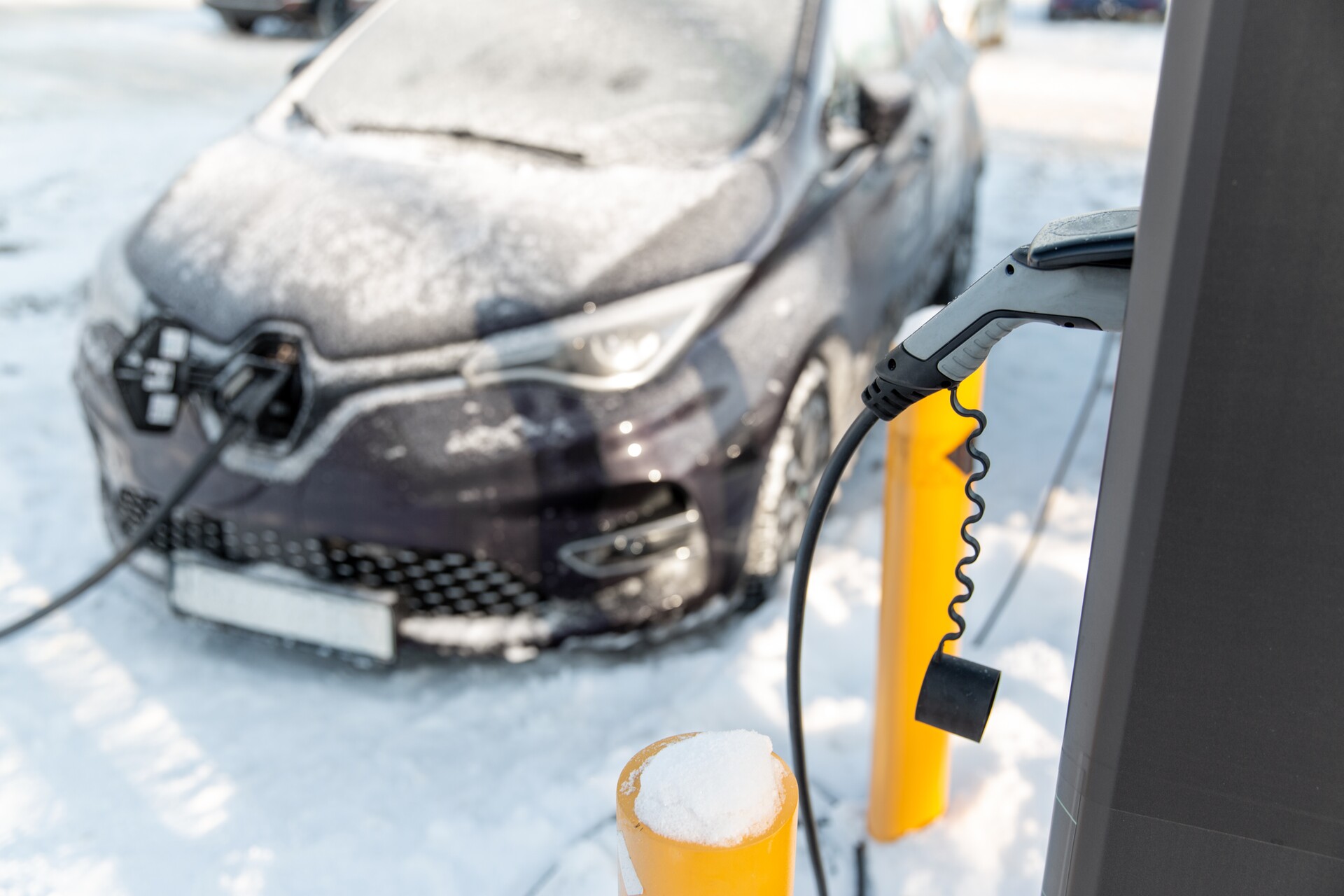
Driving electric cars in winter is no longer a problem, thanks in part to the expansion of the charging infrastructure.
Index
Why an electric car is a good choice in winter tooTips for preparing your electric car for the cold seasonHow to maximise the range of your electric car in winterHeating and air conditioning in electric cars: what you should bear in mindThe importance of winter tyres for your electric carSafety tips for driving an electric car in winterHow to protect your electric car in extreme weather conditionsFAQs about electric cars in winter
Why an electric car is a good choice in winter too
The days when electric cars were produced exclusively as small cars and therefore offered relatively little interior space are long gone. Today, car manufacturers produce electric cars in all kinds of models. There are purely battery-powered SUVs, estate cars and even saloon cars. So if you are an environmentally conscious driver who wants to take your family or friends skiing in the mountains for a few days in winter, you no longer have to make any compromises. After all, modern electric cars offer enough space for more than two passengers and all the necessary skiing equipment.Electric cars are also a good choice in winter because most models have four-wheel drive due to their design. This guarantees the best possible traction, especially on wet, snowy or even icy roads, as all four wheels have their own electric motor. In addition, electric vehicles are on average 200 to 300 kilograms heavier than comparable combustion engines due to their batteries. But what initially sounds like a disadvantage in terms of range can be an advantage for electric cars in winter. This is because the higher weight presses the vehicle more firmly onto the road. In slippery road conditions, this can also lead to better traction. Another advantage of the design of electric cars for winter conditions is that the heavy batteries are mainly installed low down in the bodywork. This lowers the vehicle’s centre of gravity, which in turn increases stability on roads that are often slippery during the cold season.Tips for preparing your electric car for the cold season
The big and decisive difference between an electric car and a combustion engine model is, of course, the drive system. And this is precisely what needs to be paid particular attention to in an electric vehicle in winter. This is because the battery, like all other batteries, for example in a mobile phone, is significantly more sensitive to cold due to its design. Car manufacturers are of course aware of this, which is why they deliver the drive systems of their electric models winter-proof ex works. To protect the battery from potentially sub-zero temperatures, they are covered with an insulating layer. In addition, an electronic temperature management system switches on automatically while driving. This keeps the electric car’s drive system at an optimum operating temperature of between 20 and 40 degrees in winter.Otherwise, the same tips apply to preparing an electric car for winter as to a combustion engine model. To prevent the batteries, electric motors and charging unit from overheating, these cars also have their own cooling system. And this works best in the cold season with a special antifreeze agent. The same applies to the windscreen washer system, whose washer fluid should be mixed with antifreeze in winter to prevent it from freezing. Fitting winter tyres is also a must. Drivers are best advised to follow the “O to O” rule – October to Easter. Anyone who is drawn to snowy mountain regions in their own car should also carry snow chains for safety reasons.In addition, the following items are essential as part of your winter emergency kit and should be kept in the boot: first aid kit, warning triangle, high-visibility vest, blanket or sleeping bag, food and drink, door lock de-icer, ice scraper, shovel, jumper cables, power bank and a torch.How to maximise the range of your electric car in winter
According to experts at the ADAC, cold weather in winter can actually reduce the range of electric cars by 10 to 30 per cent. There is one main reason for this. During the cold season, significantly more energy is required to heat the vehicle. The problem is that, unlike combustion engines, electric motors do not produce waste heat. An electric car must therefore generate its own heat in order to bring not only the interior but also the battery up to temperature and keep it there.A simple way to save energy and thus maximise the range of your electric car is to switch to eco mode while driving. This is because, in both combustion and electric vehicles, a sporty driving style always leads to higher fuel or energy consumption. Against this backdrop, most electric cars today are equipped with this mode as standard, which focuses on absolute energy efficiency. The on-board electronics control the battery drive in such a way that it delivers less power to the wheels. This not only increases the range of the electric car, but also improves safety on roads that are often slippery in winter.Electric car owners should also bear in mind that low temperatures can affect the charging process in winter. This means that if the battery does not warm up properly during charging, the charging time will be longer. It is therefore advisable to park your electric car in a relatively warm garage that is protected from wind and weather and to charge it there in winter. The necessary power source can then be either your own wall box or, in a public underground car park, a charging station from an energy supplier or vehicle manufacturer. This technology usually “knows” that batteries are sensitive to low temperatures. Charging stations now automatically adjust to the battery temperature and reduce the power supply to avoid overloading the energy cell.These electric cars have the longest range in winter
Recurrent Auto, a company specialising in studies on electric cars, has examined the battery performance and range of thousands of electric cars under real-world conditions and in all seasons. In the winter tests, the experts found that Jaguar’s I-Pace (470 km battery range), among others, loses only three per cent of its range at outside temperatures of -7 degrees. The Audi e-tron (420 km battery range) lost eight per cent, the Tesla Model X electric SUV (540 km battery range) lost 15 per cent and the smaller Tesla Model 3 (415 km battery range) lost 17 per cent. These are followed by the Nissan Leaf (385 km battery range) with 21 per cent, the VW e-Golf (280 km battery range) with 23 per cent, the BMW i3 (270 km battery range) with 24 per cent and another electric SUV, the VW ID.4 (385 km battery range) with a 30 percent loss of range in sub-zero temperatures.Heating and air conditioning in electric cars: what you should bear in mind
Low temperatures in winter can reduce the range of electric cars, especially due to intensive use of the heating system. Preheating the vehicle is therefore an effective way of optimising energy consumption. However, it is essential that the car is still connected to the charging station. This protects the battery and means the car is ready to drive immediately. Modern electric cars equipped with a heat pump also offer a more efficient heating solution that can further minimise energy consumption. Seat and steering wheel heaters can be an energy-efficient alternative to conventional heating. They ensure a comfortable driving experience without heating up the entire interior.Many electric cars also have recuperation systems that are activated when braking or releasing the accelerator and feed energy back into the battery. Additional insulation measures or window covers can also help to keep the interior warm and reduce the need for heating. The navigation systems built into many electric cars can also help to find the most efficient route. They always take into account the battery’s charge status and the energy consumption of the heating system.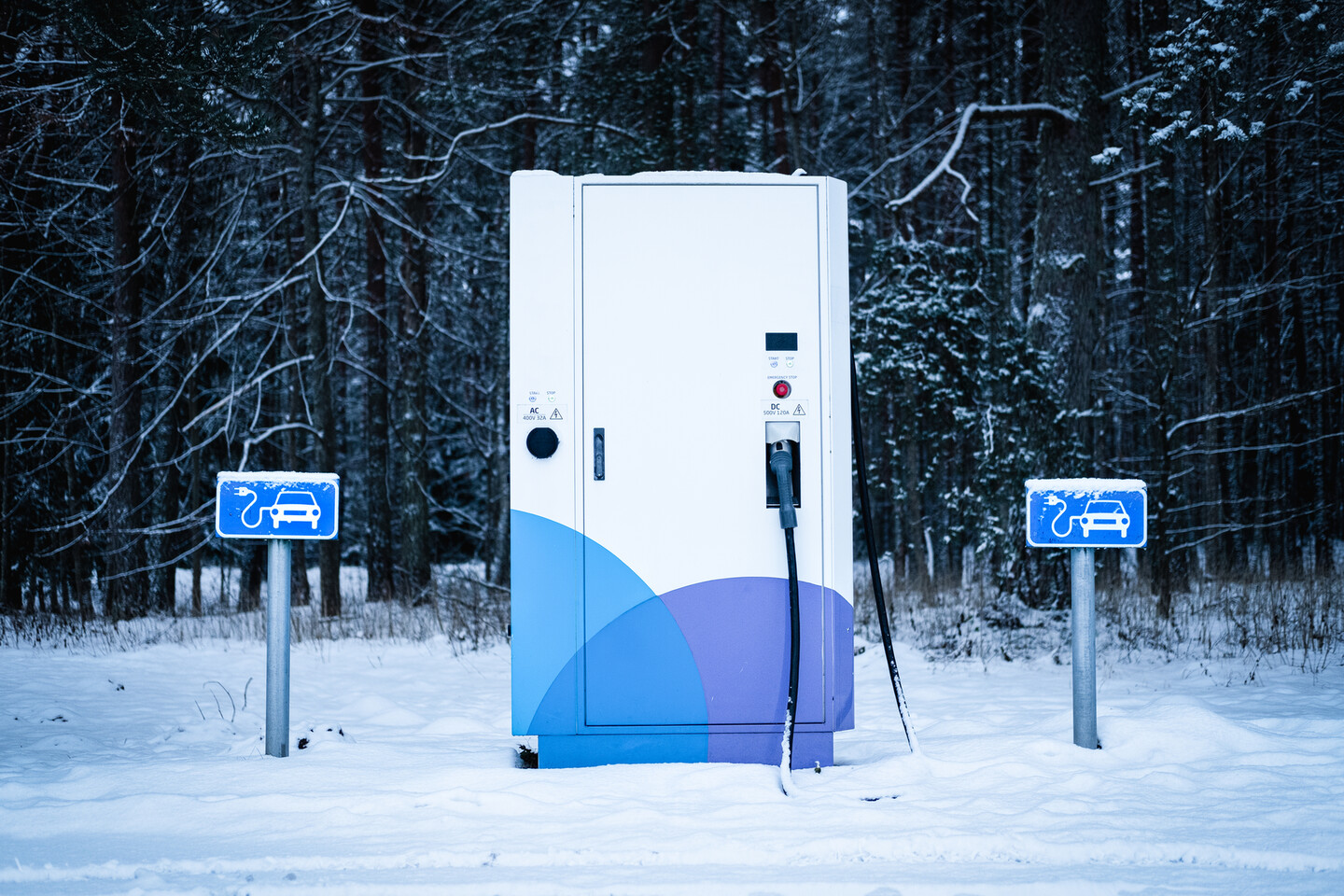
© Crunchy Beans/shutterstock.de
The batteries of electric cars should always be sufficiently charged in winter, as the cold reduces the range and the interior heating consumes additional power.
The importance of winter tyres for your electric car
Due to their design and functionality, electric cars place special demands on tyres. Although normal winter tyres for combustion engine models can also be fitted here, there are now winter tyres specially developed for electric vehicles. Firstly, the battery makes electric cars significantly heavier. Their special rubber tyres for the cold season have therefore been designed to be more robust in order to carry the additional weight without compromising performance. Another important advantage of these tyres is their optimised rolling resistance. This feature minimises the vehicle’s energy consumption, which has a positive effect on the range of an electric car, especially in winter.As electric cars are also significantly quieter when driving due to the absence of the noise of a combustion engine, external noises such as the rolling noise of the tyres can become more prominent. For this reason, some tyre manufacturers place great emphasis on the smooth running of the tread on the road surface when developing tyres specifically for electric cars. The immediately available torque of electric motors should not be overlooked either. For tyres, this means that they must offer excellent traction, especially in wet conditions or on ice. When choosing the right tyre, motorists should therefore take into account both the manufacturer’s specifications and independent tests.Safety tips for driving an electric car in winter
In winter, drivers of electric cars also face special challenges. That’s why they should follow a few tips before venturing out onto snow-covered roads. As with all other cars, the most important step is choosing the right winter tyres. These special tyres offer better grip on ice and snow and can significantly reduce braking distances. For good visibility in the cold season, the windows and headlights should also be cleared of snow and ice before each journey. This is not only for your own safety, but also for that of other road users.In winter road traffic, it is also important to adapt your driving behaviour. Driving more slowly, keeping greater distances and being mindful of the regenerative brakes, which can react differently in cold weather, are key aspects here. This is because even electric cars can quickly skid on wet or snowy roads, causing the driver to lose control. Before the first snowfall of the year, it is particularly important to check the general winter suitability of your electric car to ensure that all systems are working properly. After all, the driver assistance systems that are often integrated into electric cars can be a valuable aid on slippery roads when set correctly.
© LeManna/shutterstock.de
As with a combustion engine, winter road conditions can also be challenging at times when driving an electric car.

