
Just leave the car behind and take the train to the mountains for a ski trip—it not only saves you a lot of stress, valuable time, and hard-earned money, but it’s also better for the environment. After all, many attractive ski resorts in the Alps and elsewhere in Europe are now easily accessible by train! Reason enough for SnowTrex to show winter sports enthusiasts where they can travel comfortably by train to the ski resorts.

Traveling by train to winter sports destinations in Switzerland
Bern
Accessible destinations/ski areas: Adelboden-Lenk, Grindelwald, Interlaken, Jungfrau Region, Mürren, Wengen
Switzerland is at the forefront when it comes to travelling by train to ski resorts. Almost all ski resorts are well connected and accessible by public transport. What’s more, winter sports enthusiasts will also find a number of car-free ski resorts in Switzerland: here, cars are parked in a car park in the village just before the resort, and visitors continue their journey by shuttle train or horse-drawn carriage. With these options in mind, skiers are best advised to leave their cars at home and start their ski holiday in a relaxed manner by train.
Nestled in the heart of the Bernese Oberland lies one of Switzerland’s most beautiful ski destinations: the Jungfrau Region. Around ski resorts such as Grindelwald, Interlaken and Mürren, winter sports enthusiasts can let off steam on countless, perfectly groomed slopes in the mountains or make the pilgrimage to Wengen – the Mecca of the Alpine Ski World Cup – in the shadow of the Eiger, Mönch and Jungfrau. As cars are generally not permitted there, skiers can only reach the resort by train anyway. It is therefore no surprise that travelling to the canton of Bern by train is well worth it – and indeed it is for winter sports enthusiasts. When travelling to and from the Jungfrau Region with SBB, winter sports enthusiasts can benefit from the ‘Ride&Slide’ advantages as well as use the ‘Snow’n’Rail’ ticket.
Graubünden
Accessible destinations/ski areas: Arosa, Davos, Disentis, Klosters, Laax, Lenzerheide, St. Moritz
The special Alpine trains operated by the Rhaetian Railway to Davos and Klosters are very well known and correspondingly popular. The Rhaetian Railway, or “RhB” for short, offers several routes along Switzerland’s most beautiful mountain ranges. Over bridges and through mountain tunnels to the main ski resorts. Thanks to these good rail links to many winter sports resorts, there is sometimes no need to change trains.

Among the top destinations in Graubünden are, of course, Arosa and Lenzerheide, Scuol and Andermatt. With hundreds of kilometres of slopes and a wide range of off-piste activities, they delight winter sports enthusiasts year after year and are also pioneers in the field of sustainable ski tourism. Together with three other ski resorts, they are part of the “Ride&Slide” project. This is intended to encourage skiers to travel to the mountains by train rather than by car. So anyone travelling by train from another country to one of the six ski resorts can enjoy a number of benefits there. For instance, on presentation of a train ticket, there is up to a 30% discount on lift passes and ski lessons, or reduced-price equipment hire. Via the stations in Chur, Lucerne or Interlaken, the ski resorts in Graubünden are connected via Switzerland’s excellent public transport network and can be reached daily from Germany, Italy, France and Austria with just a few changes.
Another real highlight for train travel in Graubünden is the “Bernina Express” panoramic train. It departs from Chur and winds its way along the highest railway line in the Alps via Davos and St. Moritz to Tirano in Italy.
Obwalden
Accessible destinations/ski areas: Engelberg
Although the canton of Obwalden itself is relatively unknown, Engelberg – the largest winter holiday destination in Central Switzerland – awaits skiers here. And if they wish, they can choose to leave their cars at home entirely and take the train to the ski resort instead. This is because, along with five other Swiss ski resorts, Engelberg is also part of the “Ride&Slide” project. So, on their way to the world-famous monastery town, winter sports enthusiasts can take a train from their home town to Lucerne. And from there, the Lucerne-Engelberg Express takes them almost straight to the slopes in just 40 minutes.
Another option for skiers to travel to Engelberg by train in a relaxed and comfortable manner is the “Snow’n’Rail” ticket. This is an offer from Swiss Federal Railways (SBB) modelled on the Austrian combined tickets. When travelling to any of the 27 participating ski resorts across the country, including Laax, Crans-Montana and Adelboden-Lenk, winter sports enthusiasts receive a 20% discount on their journey when purchasing the SBB ticket. On top of this, there is a discounted lift pass and a further 15% discount on equipment hire at “Intersport Rent”.
Valais
Accessible desinations/ski areas: Crans-Montana, Fiesch, Les 4 Vallées, Les Portes du Soleil, Täsch
Skiing in the French-speaking part of Switzerland offers more than just linguistic and culinary experiences off the slopes. Here, winter sports enthusiasts can also enjoy action-packed hours on skis and snowboards on the runs in the vast Les Portes du Soleil ski region (580 kilometres of slopes) or in Verbier within the Les 4 Vallées ski area. And for the journey there and back, they can do without a car entirely and take the train instead. This is because the major ski regions in Valais also offer convenient and fast connections by bus and train, where skiers can save money with the “Ride&Slide” benefits or a “Snow’n’Rail” ticket.
Unlike the sometimes dead-straight routes planned for long-distance trains, however, there are also railway lines in Valais that are a touch more spectacular. Such as that of the “Glacier Express”, which operates on the Rhaetian Railway network as well as that of the Matterhorn Gotthard Railway. It takes 8 hours to travel from St. Moritz through the Albula Valley and the Rhine Gorge to Zermatt. Alternatively, there is also a regional connection via Davos to Filisur.
The following film should make it clear why the legendary ‘Glacier Express’ is known as the ‘window to the Swiss Alps’:

Please also note that by using our services and integrating the YouTube API Services, the YouTube Terms of Service and the YouTube API Services Terms apply and your use of our website is deemed to be acceptance of these terms.
The scenic route of the Matterhorn Gotthard Railway also ends in Zermatt. The red-and-white train departs from Disentis (Disentis 3000 ski resort) and travels via major ski resorts such as Andermatt, Fiesch and Täsch to the glamorous ski resort at the foot of the Matterhorn. As the village is car-free, the railway is also the only truly practical public transport link here. In total, the train covers around 144 km of track on its way to Zermatt. Once at the Matterhorn, winter sports enthusiasts must change to the Gornergrat Railway for the final leg of the journey to Riffelberg and Gornergrat.

This cog railway is the second-highest in Europe and runs for over 9 km to the mountain station on the Gornergrat at an altitude of 3,089 metres. And whilst the views during the train journey were already fantastic, the view from up here is simply breathtaking!
Travelling by train to winter sports destinations in Austria
Tyrol
Accessible destinations/ski areas: Axamer-Lizum, Fulpmes, Imst, Innsbruck, Kitzbühel Alps, Kufstein, Landeck, Mayrhofen, Seefeld, SkiWelt Wilder Kaiser-Brixental, St. Anton, Wörgl, Zillertal
Thanks to its proximity to the mountains, the Tyrolean capital Innsbruck enjoys excellent transport links and thus serves as a central hub for all winter sports enthusiasts wishing to travel to the ski area by train. Once there, skiers can take the Nordkettenbahn from the Hungerburg district of Innsbruck to the heart of the ‘Nordkette’ ski area at Hafelekar (2,256 m) in just 20 minutes, where the large-capacity cable car runs every 15 minutes. In addition, Innsbruck Central Station is the destination for all five Nightjet services operated by the Austrian Federal Railways (ÖBB).
So if you want to arrive in Tyrol feeling relaxed and well-rested, you can travel there daily on night trains from Germany and the Netherlands. For example, a train runs directly from Hamburg via Hanover and Göttingen to Austria, whilst the service from Amsterdam stops in Düsseldorf, Cologne, Bonn and Koblenz on its way to Innsbruck. In addition, three ÖBB Nightjets also depart from Vienna and Graz. Particularly appealing to winter sports enthusiasts is the “Im Nightjet zum Schnee” package, which includes not only train tickets but also transfers from the station to eight different ski regions and back, as well as a multi-day lift pass. In addition to the night trains, there are also 15 daily train services in winter with ICE, IC and EC trains from Germany to Austria, including from Munich, Cologne and Frankfurt.
The ICE “Skiexpress” in particular lives up to its name, as it stops at the stations in Kufstein, Wörgl, Jenbach, Innsbruck, the Ötztal valley, as well as in Imst, Landeck and St. Anton on its route from Hamburg via Hanover and Würzburg. Some of these stations, some of which are just a few minutes’ walk from the nearest gondola lift, are also served by the ÖBB from Switzerland. Six times a day, a Railjet connects Zurich with Vienna, making several stops in Tyrol along the way. The same applies to the daily service on the EC “Transalpin” from Zurich to Graz, which, thanks to its panoramic carriage, offers stunning views of the passing Alpine landscape from the train. And the Railjet service between Zurich and Innsbruck, which runs as many as seven times a day, even goes as far as the Kitzbühel Alps.
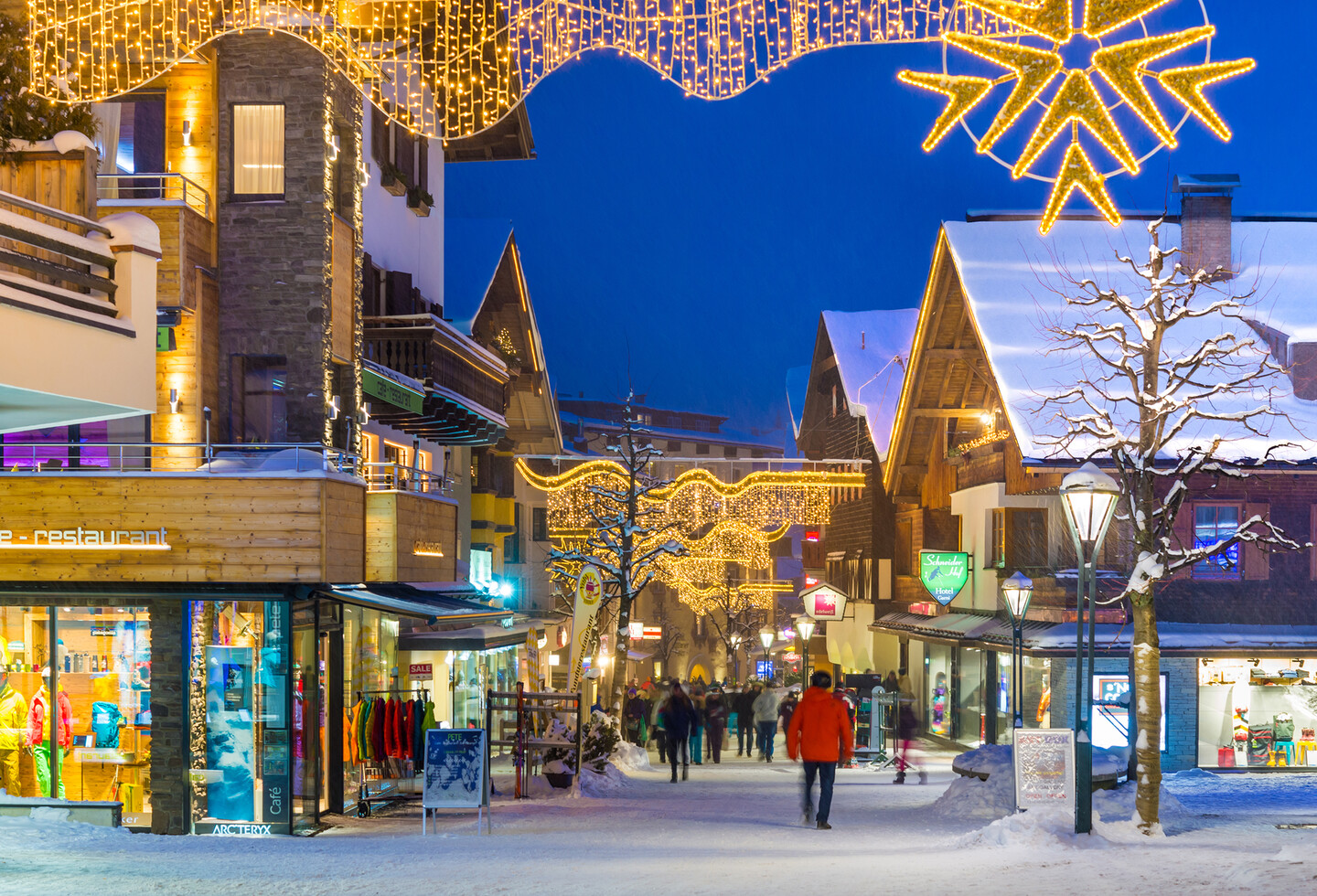
Within Tyrol, the Zillertalbahn is also very popular when it comes to trains. As its name suggests, it runs between the towns in the Zillertal valley. The starting station is in Jenbach, and the terminus is in Mayrhofen. As well as being a practical means of transport for winter sports enthusiasts, the train is also a real tourist attraction. This is because, alongside diesel multiple units, the carriages are also pulled by charming steam locomotives. Here, then, lovers of all things vintage can take a leisurely trip through the valley and even have a go at being the train driver themselves.
Other ski resorts in Tyrol that are easily accessible by public transport include the SkiWelt Wilder Kaiser-Brixental, the Axamer-Lizum ski resort, the ski resort in Seefeld and the ski resort in Fulpmes. The stations are usually situated in the centre of these often small towns, so the walk from the platform to the hotel or the slopes is not far. Some accommodation providers also offer a transfer to and from the station. Furthermore, in many ski resorts, additional public transport options such as buses, Postbuses and shuttles are available free of charge to winter holidaymakers for the final stretch, for example upon presentation of a valid lift pass.
Salzburg Region & Styria
Accessible destinations/ski areas: Bad Hofgastein, Bad Gastein, Dorfgastein, Flachau, Schladming, St. Johann im Pongau, Wagrain
In Ski amadé, the largest ski lift network in the Salzburg region, there are no fewer than seven stations serving as connections to the ski resorts. Leading the way here is the Gastein Valley, as all three valley towns – Dorfgastein, Bad Hofgastein and Bad Gastein – each have their own station. These are also served by long-distance trains. As a border station, Salzburg Central Station is also well connected to the Deutsche Bahn network. From the provincial capital, winter sports enthusiasts can then travel by bus and train to a wide variety of ski resorts. There are 40 trains a day to St. Johann im Pongau alone. From there, the Snow Shuttle ski buses run to Wagrain and Flachau. What’s more, skiers and snowboarders who buy their lift pass online can even use the entire public transport network (except long-distance trains) for free!
And from 2025, all ski visitors to the Salzburg region will be able to benefit from an extremely affordable public transport offer. From 1 January, travel by bus and train (excluding long-distance trains) will cost tourists just 50 cents a day throughout the entire region! Holidaymakers who have booked accommodation locally will be able to collect their bus and train ticket directly upon check-in, for which only a small mobility surcharge per person per day will apply, similar to the visitor’s tax. In return, however, you can use the bus from the hotel to the valley station and back as often as you like for less than €1 a day, with your ski equipment in tow.
Winter sports enthusiasts can also reach some of Styria’s most important ski resorts easily by train. Schladming, in particular, is quickly and comfortably accessible via ÖBB trains, with some direct services even available from Munich. For example, the Eurocity takes just 2.5 hours from the Bavarian capital to Bischofshofen in neighbouring Salzburg. And from there, it takes just under an hour with one change to be dropped off by the train almost right at the edge of the slopes of the Schladming-Dachstein mega-ski resort.
Travelling by train to winter sports destinations in France
Isère
Accessible destinations/ski areas: Alpe d’Huez, Alpe d’Huez Grand Domaine Ski
No country in Europe has a larger high-speed rail network than France’s state-owned railway company, the SNCF. According to its own figures, it transports over 10 million passengers by rail to their winter holiday destinations each year. In some cases, the tracks are so well developed that TGV high-speed trains run right up to the entrance points of the ski resorts. This includes Alpe d’Huez. Skiers can take the high-speed train from Paris or Lyon to Grenoble almost 20 times a day without having to change trains. Long-distance trains from Geneva in Switzerland also call at the station up to 15 times a day during the week. The same applies at weekends. Skiers then continue their journey by shuttle bus up the 21 hairpin bends, made world-famous by the Tour de France, to the mountain resort. At an altitude of up to 3,330 metres, they can finally enjoy 250 kilometres of slopes in the Alpe d’Huez Grand Domaine Ski resort.
Haute-Savoie
Accessible destinations/ski areas: Avoriaz, Les Portes du Soleil
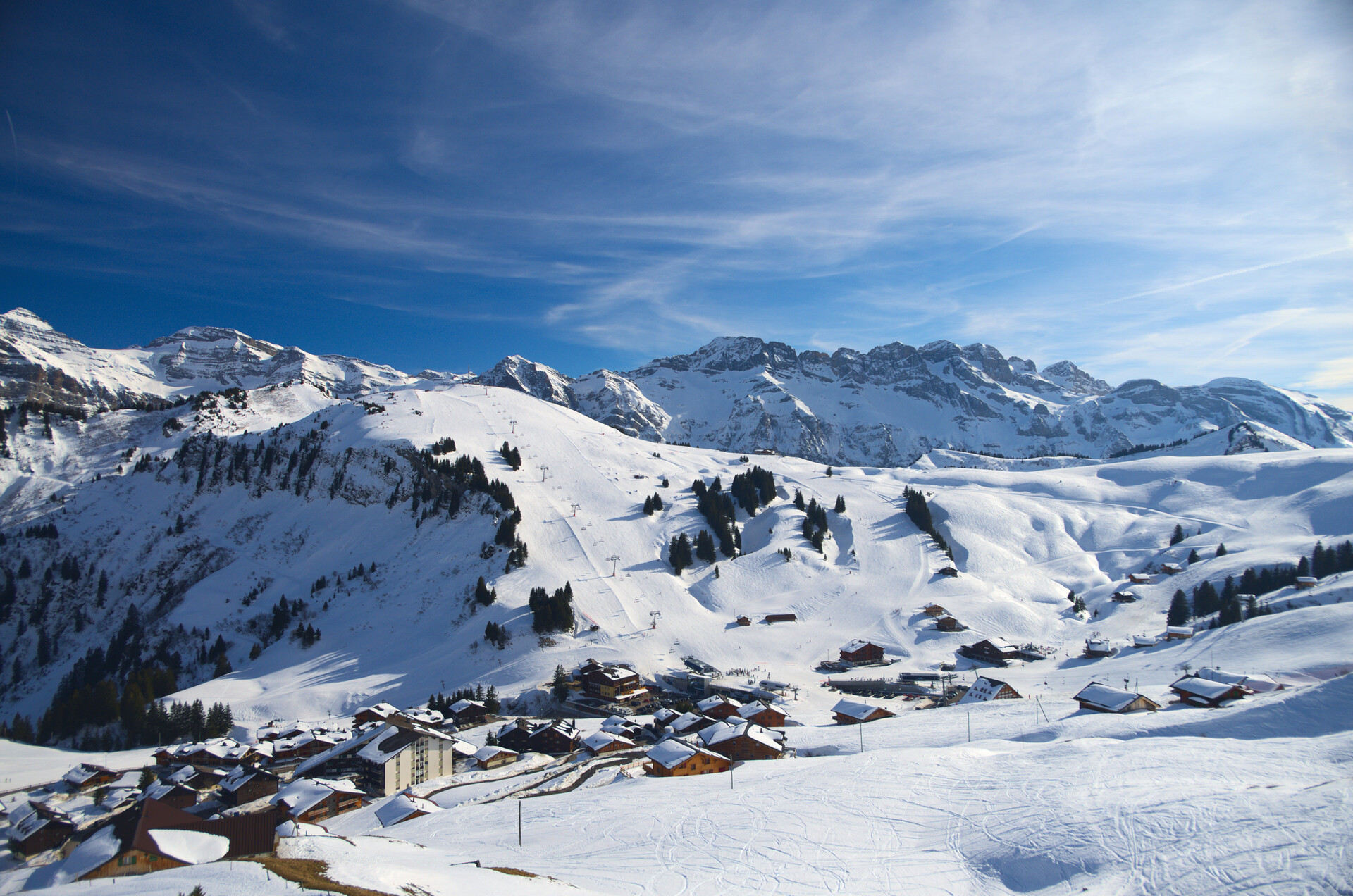
Avoriaz lies at an altitude of 1,800 metres, which might suggest it isn’t exactly the sort of place you’d expect to reach by bus or train. But appearances can be deceiving. After all, skiers can’t drive right up to the resort anyway. Since it opened in the 1960s, it has been completely car-free. Winter sports enthusiasts are therefore well advised to use public transport for their journey rather than their own cars. Thanks to an additional TGV connection to Thonon-les-Bains, the journey to the picturesque Lake Geneva takes winter sports enthusiasts just a few hours from Paris. In addition, several trains from Switzerland, just a few kilometres away, stop at the station, which shortens the journey time for passengers from Germany, for example. Finally, the last leg of the journey to the mega-ski region of Les Portes du Soleil (580 kilometres of slopes) via Avoriaz is just a one-and-a-half-hour shuttle bus ride.
Savoie
Accessible destinations/ski areas: La Norma, Valfréjus & La Norma
From Modane on the French-Italian border, it is just under 6 km to the charming ski resort of La Norma. For winter sports enthusiasts travelling to ski without a car, that is precisely the key figure. After all, the municipality – where two of the longest Alpine tunnels begin – has a railway station. And the TGV from Paris stops there twice a day on its way to Milan. This fast connection from the metropolis on the Seine to the Savoie department therefore makes the train journey to the Savoy Alps very appealing. Especially as, from there, skiers need only a 15-minute shuttle bus ride to be dropped off almost directly at the edge of the Valfréjus & La Norma ski area (135 km of slopes).
Travelling by train to winter sports destinations in Italy
South Tyrol
Accessible destinations/ski areas: Bressanone, Drei Zinnen Dolomites, Plan de Corones, Rosskopf, Santa Cristina Valgardena, Vipiteno, Ortisei, Val Gardena/Alpe di Siusi, Selva di Val Gardena
One of the best rail links between Italy’s ski regions runs through the Val Pusteria. Here, the “Ski Pustertal Express” runs every half hour from Bressanone via Percha to Vierschach. The railway line thus provides access to over 200 kilometres of slopes, including the popular Plan de Corones and Drei Zinnen Dolomiten ski areas. The entire journey takes just 40 minutes. At Kronplatz, winter sports enthusiasts can then step straight from the platform onto the Ried gondola lift, before heading up to the popular family ski resort with 116 kilometres of slopes.
Overall, travelling by train from Germany to the ski resorts in South Tyrol is now not only comfortable but also fast. A Eurocity (EC) train departs from Munich Central Station five times a day via Innsbruck, the Brenner Pass and Bressanone to Bolzano – with no changes and a journey time of under four hours. From the station there, skiers then have an almost seamless bus connection to winter sports resorts such as Santa Cristina Valgardena, Ortisei or Selva di Val Gardena. And from here, the entrance to the Val Gardena/Alpe di Siusi ski area (178 kilometres of slopes) is just a stone’s throw away.
However, to get to Italy or Switzerland in the first place, snow sports enthusiasts can make use of Deutsche Bahn’s Europa Spezial ticket. For families in particular, travelling by train with this ticket is a good and affordable alternative to driving, as children under 14 travel free of charge and ticket prices start at just 39 euros when booked in advance. In South Tyrol itself, winter sports enthusiasts can then use the ‘Mobilcard’, which is valid on all local public transport buses and trains. With the local public transport ticket, the Wipptal valley – and thus the station in Vipiteno – is easily accessible. From here, skiers and snowboarders need only take a short walk through the town’s medieval streets before taking the gondola from the valley station directly up to the Rosskopf ski area.
Travelling by train to winter sports destinations in Germany
Upper Bavaria
Accessible destinations/ski areas: Brauneck-Wegscheid, Garmisch-Partenkirchen, Garmisch-Classic Zugspitze
The Zugspitze, Germany’s highest mountain, and the Garmisch-Classic ski resort are popular destinations for day trippers from Munich and the surrounding area. This is one of the reasons why Deutsche Bahn (DB) offers a special train that travels from Munich Central Station to Garmisch-Partenkirchen in just 80 minutes. It is a ski train with plenty of storage space for skis and snowboards, which departs at around 7.30 am on weekdays and gets skiers to their destination just in time for the lifts to open. At the weekend (Saturday and Sunday), the journey begins as early as 6.30 am, with additional services during the peak season between December and March. Here, a second train departs just under an hour later, which even stops at Garmisch’s local mountain.
Winter sports enthusiasts wishing to continue directly to the Zugspitze must change to the Bayerische Zugspitzbahn (BZB) at this point at the latest. In both cases, however, the DB’s ‘Garmisch Ski Ticket’ can be used. The best part is that the ticket, which is valid for a return journey on the relevant DB and BZB trains, also serves as a one-day lift pass. Skiers and snowboarders can choose between the Garmisch Classic ski area (€60 for adults, €44 for under-18s) and the Zugspitze ski area (€65 for adults, €48 for under-18s). So, upon arrival, all you have to do is get off the train, take three steps and you’re ready to enjoy the slopes.
Travelling from Munich with the Bayerische Regiobahn (BRB) is just as straightforward. With the “Ski Kombi Ticket Oberland Winter”, skiers from the Bavarian capital can travel comfortably by train to the Brauneck-Wegscheid, Spitzingsee-Tegernsee and Bayrischzell ski resorts. In addition to the return journey on the BRB, the ticket includes a bus transfer from the station to the valley station and back, as well as a day lift pass. For adults, this ski fun by train costs 55 euros, for teenagers (aged 16 to 18) 52 euros and for children (aged 6 to 15) 31 euros.
Allgäu
Accessible destinations/ski areas: Oberstdorf, Kleinwalsertal
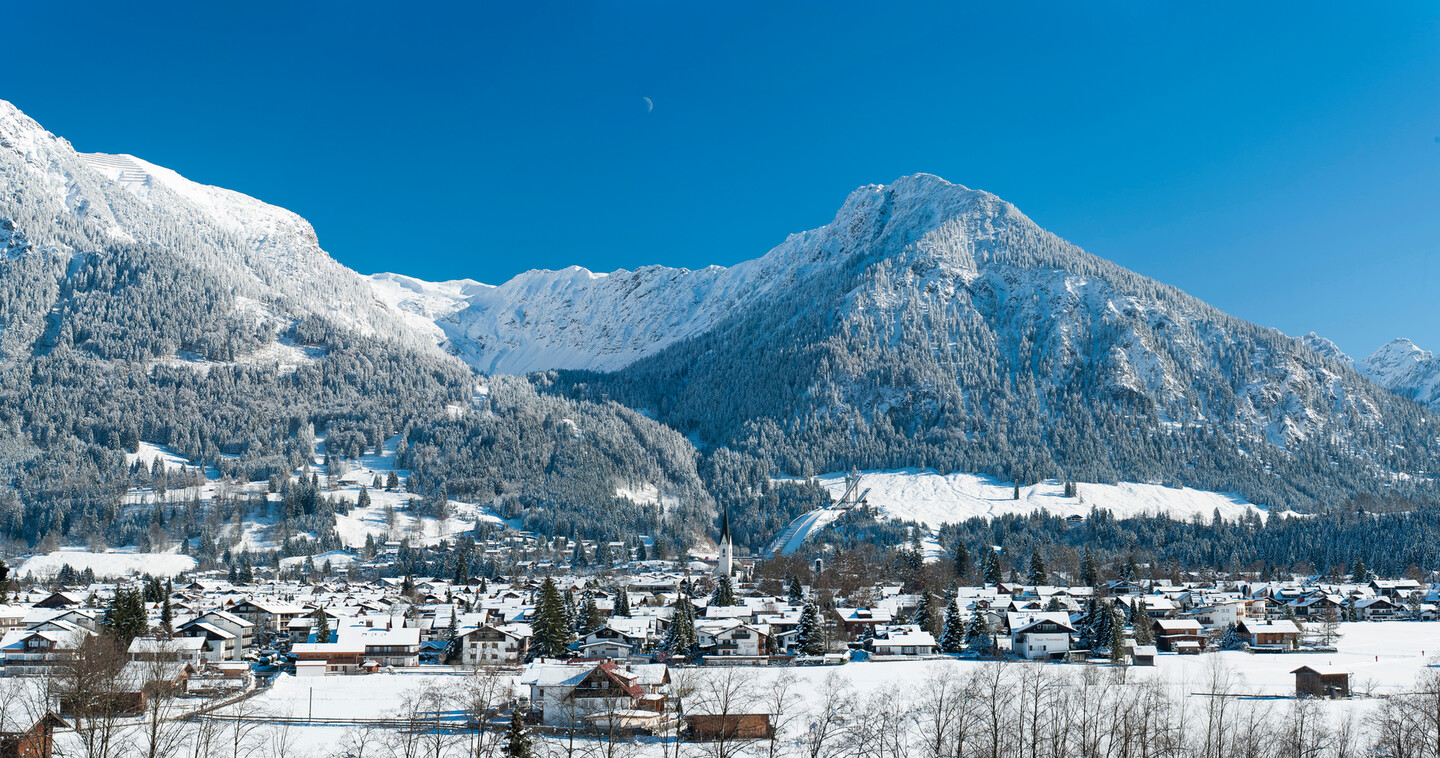
Travelling by train to the starting point of the Four Hills Tournament is easy with Deutsche Bahn (website in German). After all, Oberstdorf railway station is right in the town centre and offers excellent bus connections for skiers to the access points of the local ski resorts. Winter sports enthusiasts wishing to take this direct train route to the ski resort can do so in the Allgäu using a special combined ticket. Included in this are: travel to and from the resort by train, the bus transfer and a day lift pass for the Fellhornbahn, Nebelhornbahn and Söllereckbahn. The “Oberstdorf Ski Ticket” costs €69 for adults and is available for all age groups at various rates ranging from €56 to €12.
North Rhine-Westphalia
Accessible destinations/ski areas: Winterberg
A short weekend trip to go skiing in the Sauerland is very popular in Germany’s most populous federal state during the high season. If you want to avoid the traffic jams on the access roads, you can also travel to Winterberg very comfortably by train. There is even a direct rail link to the station from the Ruhr area, including Dortmund, Bochum, Essen and Oberhausen. From there, the region’s eight ski resorts can be reached quickly by bus. In winter, an additional ski bus runs to the valley stations at weekends. Thanks to the rail link to the Ruhr area, winter sports enthusiasts can also reach Winterberg quickly from the Rhineland, the Münsterland or the Netherlands.
Hesse
Accessible destinations/ski areas: Willingen
It is less than 400 metres from Willingen railway station to the valley station of the Ettelsberg cable car, which takes you straight into the ski resort. Thanks to this walk, there is no need to wait for the ski bus here. However, winter sports enthusiasts travelling by train should note that there is only a direct rail connection from Kassel to the home of the world’s largest ski jump, where athletes compete in the Ski Jumping World Cup every year. Anyone wishing to make a trip to the snow from the Rhine-Main region, the Ruhr area or the Rhineland will therefore need to change trains at least once on the way to Willingen.
Thuringia
Accessible destinations/ski areas: Oberhof
Oberhof, where the Biathlon World Cup attracts tens of thousands of spectators year after year, is actually known as Germany’s cross-country skiing mecca. Skiers, on the other hand, who are seeking the seclusion of the snow-covered trails in the Thuringian Forest and wish to do a few laps on cross-country skis there, can easily avoid travelling by car altogether. Instead, they can opt for the relaxed journey by train. Those travelling by train from Leipzig or Erfurt need only change to a bus once, at Zella-Mehlis or Gotha, on the way to Oberhof. From there, the journey continues directly to the bus station in the town centre. Furthermore, it is also possible to travel to Oberhof by train from Berlin, Dresden or Nuremberg with a change.
For those travelling through Germany, Deutsche Bahn now offers a wide range of attractive options for travelling to ski resorts by train. This means winter sports enthusiasts can head straight for the snow without the hassle of motorway traffic jams!
FAQ’s – Travelling to ski resorts by train
Can I travel to my ski holiday by train?
Yes! Many attractive ski resorts are now easily accessible by train. And not just in the Alps in Switzerland, Austria and France or the Dolomites in Italy, but also in the German low mountain ranges.
Which ski resorts are easily accessible by train?
The list of these resorts is long: Interlaken and the Jungfrau Region, Zermatt, Davos and St. Moritz are just a small selection in Switzerland. Others include, for example, Zillertal, Gasteinertal, Ötztal, Zell am See-Kaprun and the Kitzbühel Alps in Austria; Garmisch-Partenkirchen in Germany; Kronplatz in Italy; and Alpe d’Huez or La Norma in France. Winter sports enthusiasts now have the option of leaving the car behind on their way to the mountains.
What are the advantages of travelling to a ski resort by train?
On their way to the mountains, winter sports enthusiasts can experience the many benefits of this mode of transport. For instance, by taking the train, they avoid spending hours stuck in traffic jams in their cars; they can relax in a compartment or open-plan carriage, look after their children, or even sleep on the train, depending on the connection. What’s more, by switching from car to train, skiers also save on petrol, ensuring a more environmentally friendly journey to the ski resort.
Will my ski luggage fit on the train?
Most bus and train operators in the mountains have now adapted to the needs of winter sports enthusiasts. In particular, trains that run directly to ski resorts usually have extra space set aside for ski luggage.

