
Climate change is no longer a myth. All over the world, people and nature are feeling the effects of higher temperatures and rising sea levels. In the mountains in particular, where ski resorts and the tourism industry are fundamentally dependent on cold weather and snow in winter, changing climatic conditions pose an enormous challenge. In view of melting glaciers and shorter winters, the question arises as to whether winter sports can be practised sustainably today and in the future. SnowTrex shows how this can be achieved and who is particularly committed to it.
How winter weather in the Alps has changed
The verdict reached several years ago by experts at the Austrian weather service, the Central Institute for Meteorology and Geodynamics (ZAMG), is clear: “The Alpine region has been more severely affected by climate change than other regions to date. For example, a higher temperature increase has been measured in the Austrian Alps than in the global comparison. (…) Basically, we will also have to expect a shorter snow cover period throughout the Alpine region.” Overall, Europe’s largest high mountain range has become 1.8 degrees warmer on average between 1970 and today.
This warming is noticeable in winter not only in the valleys, but also in the mountains. The average snow cover in the Alps has decreased significantly between November and May. In the past 50 years alone, it has decreased by 8.4 per cent. In concrete terms, this means that the snow season below 2,000 metres above sea level is getting shorter. Between 1970 and 2020, depending on the year, by an average of 22 to 34 days. That is almost a whole month.
Climate change is causing glaciers in the Alps to melt faster
The high temperatures have an even more serious impact at higher altitudes. This is where most of the nearly 4,000 Alpine glaciers are located, which have lost almost 50 per cent of their total volume since 1900. And it won’t stop there. Experts predict that the eternal ice in the Alps will melt by half again by 2050.
It is not only scientists who know that the weather in high mountains has been characterised by extreme weather conditions for thousands of years, even in the cold season. There are always years like 2022, when temperatures are well above the usual annual average. The same applies to winters in which it snows almost continuously for weeks in the Alps, as in 1999, and people in villages and ski resorts have to contend with metres of fresh snow. In fact, according to ZAMG, the trend in recent years shows that precipitation increases towards the end of the year and decreases in summer. However, due to higher temperatures in winter, rain tends to fall in the valleys and lower down the mountains, while the snow line is moving to ever higher altitudes.
What ski resorts are doing for sustainable winter sports
Many ski resorts recognised years ago that the climate in the Alps is changing, and above all how quickly. Those responsible in the mountains are therefore making intensive efforts to preserve and protect their natural environments. After all, this is the basis of their economic existence. Ski resorts are investing millions in their own sustainability, some of which can only be controlled with special software. Engelberg, for example, has been an official “Energy City” since 2011. To obtain this title, the town below the Titlis glacier in the canton of Obwalden had to implement a total of 79 climate protection measures. These were specified by the authorities. In further steps, the entire power supply of the monastery community has now been converted to renewable energies, including that of the 17 gondolas and lifts in the Engelberg-Titlis ski resort.
Another ski resort that is fully committed to sustainable winter sports is Zell am See–Kaprun. In order to reduce its own carbon footprint during operation, one of its goals is to switch its own fleet of snowcats around the Kitzsteinhorn from pure combustion engines to hybrid models, in addition to generating electricity from hydropower. This measure already saves 20 per cent in fuel and 20 per cent in CO2 during daily slope preparation in winter. In addition, the 14-tonne snow groomers are 20 per cent quieter than their predecessors.
La Plagne, on the other hand, has taken a slightly different approach to making its slopes as sustainable as possible for guests. Since 2009, the Savoie department has been focusing on sustainable energy production through a biomass power plant, which now supplies 90% of the energy required for the entire ski resort. In terms of mobility, the resort also relies on a fleet of electric cars and shuttle buses from the train stations in Moûtiers, Aime and Bourg-Saint-Maurice, as well as free public transport within the resort.
These ski resorts are already climate-friendly today.
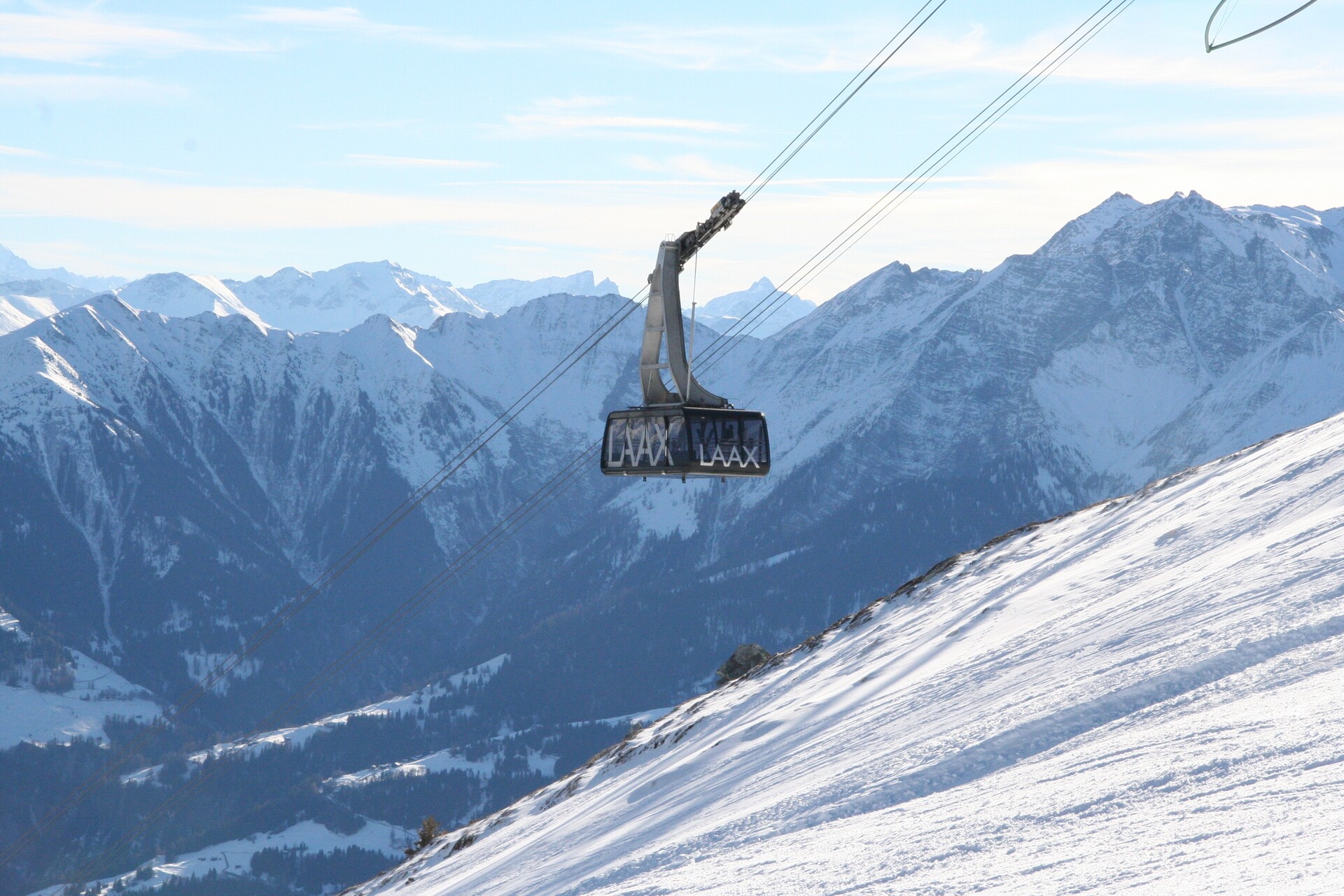
As winter sports in the high mountains are very energy-intensive, climate-friendly ski resorts mainly focus on saving electricity and sourcing all their energy from “green” sources. Flims-Laax-Falera is a pioneer in the Alps in this regard. In order to harmonise life on the slopes in the canton of Graubünden with the environment, the “Greenstyle” concept was developed in Laax over ten years ago. Point “5” of the 6-point plan aims to cover 100 per cent of the annual energy requirements for the ski resort and villages from renewable energies in the future. The other points are:maximum energy efficiency, decarbonisation of the building stock, solar architecture , electrification of mobility and energy storage.
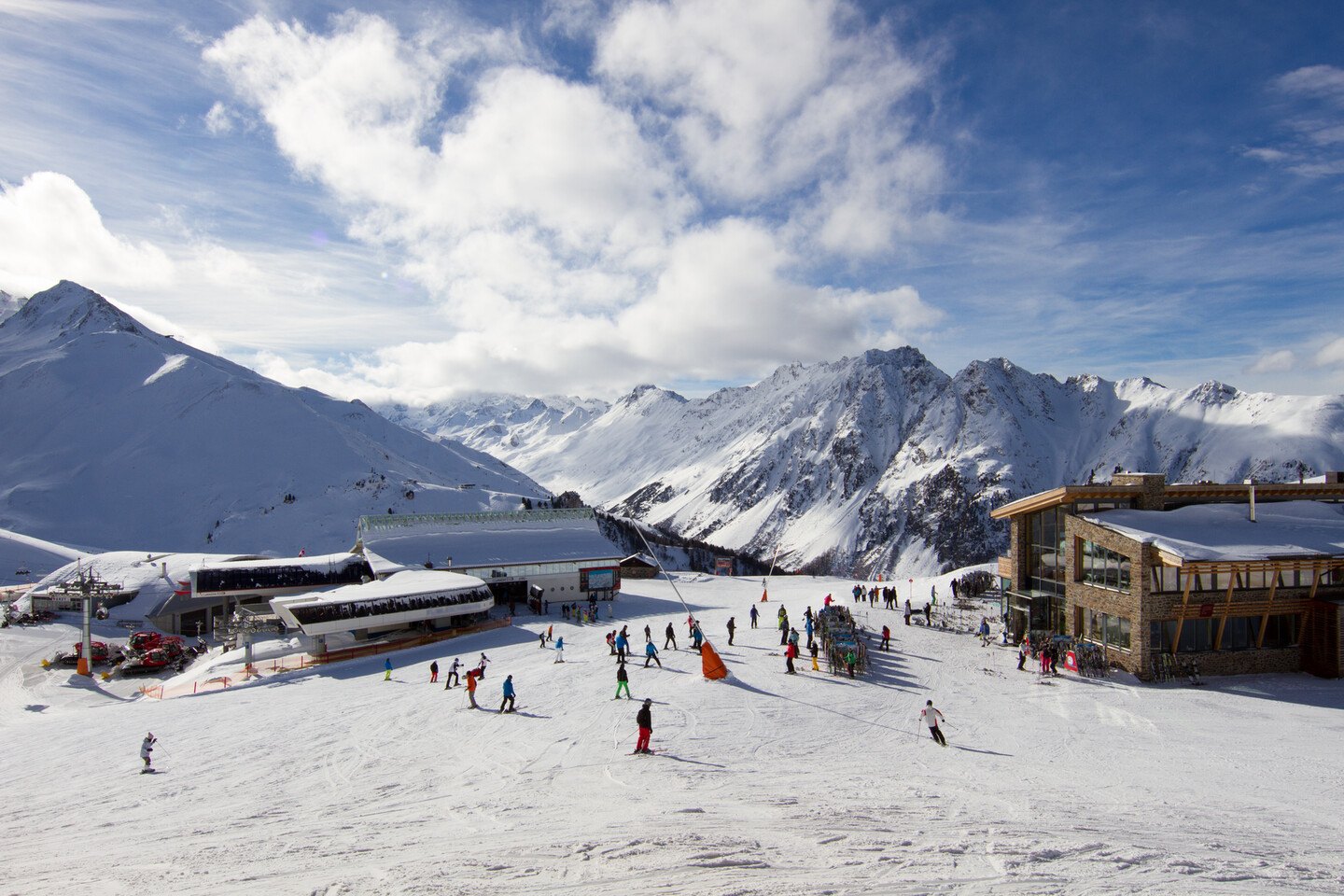
Sustainability and climate protection are also high on the agenda at the Silvretta Arena in Ischgl. The snow area is already considered the largest climate-neutral ski resort in the Alps. To offset its own CO2 emissions, Silvrettabahn AG, the ski resort operator, invests in international and local climate protection projects. In the village itself, the ski bus network has recently been expanded. The aim is to reduce the number of cars on the roads. On the mountain, solar and heat recovery technology is also being used. This saves 80,000 litres of heating oil and 244 tonnes of carbon monoxide annually.
Are winter sports really bad for the climate?
When it comes to skiing holidays and climate change, the label “climate sinner” is often used these days. But is that really the case? To what extent are hundreds of thousands of skiers who visit the ski resorts in the Alps and other high and low mountain ranges every winter “climate sinners”? Subjectively, it is certainly true that winter sports are only possible with a high energy consumption. For a perfect day on the slopes, electricity must be consumed, water used and fuel burned – and not in small quantities. Viewed objectively, however, the figures in this area are surprising. In 2018, the German Federal Environment Agency (UBA) published a study comparing the greenhouse gas balance of different types of holidays.
According to the study, long-haul flights, for example to the Maldives, have the largest overall carbon footprint. Here, one person generates 454 kg of carbon dioxide (CO2) per day. In contrast, the same average traveller generates “only” 33 kg of CO2 during a skiing holiday in Austria over the same period, and as little as 20 kg when travelling to the ski resort by train. The UBA study clearly shows that, for all types of holidays, travel to and from the destination contributes by far the most to the emissions balance. A flight to Asia alone generates 436 kg of CO2 per day per person, while accommodation accounts for 23 kg and activities at the holiday destination for 5 kg. In contrast, a skiing trip to Austria causes 17 kg of CO2 for “transport”, 11 kg for accommodation and 6 kg for skiing.
The difference in emissions can be seen when travellers switch from car to train on their way to the ski resort. From 17 kg of CO2 per day/person for travel to and from the resort, the figure drops by over 80 per cent to just 3 kg!
Travelling to ski resorts by train is becoming easier and easier
And when you consider the potential CO2 savings on skiing holidays, it quickly becomes clear which area causes the most emissions. According to information from the operators of the Wintersport-Arena Sauerland ski resort in Winterberg, travel to and from the ski resort alone accounts for 78 per cent, or more than two-thirds, of the carbon footprint. The reason for this is simple: the vast majority of skiers still prefer to travel to the ski resort by car. In addition to convenience and cost, most travellers primarily value the independence of getting from A to B according to their own schedule. However, few people are really aware that winter sports enthusiasts do not have to forego this comfort when travelling to ski resorts by train, for example.
After all, railway companies in Austria and Switzerland in particular have greatly expanded their rail networks and thus also local public transport in ski resorts over the past decades. This means that travelling to and from your skiing holiday by train is sometimes faster, less stressful and free of traffic jams. And with the right offer from SnowTrex, it’s also inexpensive.
Train travel to the snow offers a lot of comfort
In winter, there are three night trains and 15 ICE, IC and EC connections from Germany to Austria via Cologne, Frankfurt or Munich. Some of these trains also stop directly at the ski resort, such as St. Anton, or in the immediate vicinity on their way to Innsbruck or Salzburg. Another advantage here is that holders of a guest card, which is already included in the booking for many destinations with SnowTrex, can use the local ski buses free of charge – for example, in the Wilder Kaiser region.

In France, too, winter sports enthusiasts can take the bus to ski resorts such as Valmeinier. The SNCF state railway’s TGV takes you from Paris to the Alps in four hours. There, travellers can then take an additional shuttle service directly to the mountain from the valley stations. And these buses cannot be missed, as they wait for the express trains. Of course, there are also offers to travel to the snow by train in Switzerland, the nation of trains. For example, Swiss Federal Railways (SBB) has launched the “Ride&Slide” project in collaboration with several ski resorts in Graubünden, including Arosa-Lenzerheide. Anyone who buys an R&S ticket here and presents it at the valley station of a participating mountain railway will receive a 30 per cent discount on ski passes and ski lessons as well as discounted rental equipment, in addition to the train journey to the mountains.
How winter sports resorts are “locking out” cars
The most famous car-free winter sports resort is located at the foot of the world-famous Matterhorn in Switzerland. In the sophisticated resort of Zermatt in the canton of Valais, cars with combustion engines have been “locked out” since 1961. The tens of thousands of guests who visit Europe’s highest ski resort every year appreciate this tranquillity and the associated focus on sustainability. In the village itself, they can move around the streets undisturbed by petrol and diesel-powered cars. After all, only electric cars, electric buses and horse-drawn carriages are permitted in the village itself. Holidaymakers arriving by car are only allowed to drive as far as Täsch, 6.3 km away. There, they must park their cars in one of the car parks and then continue their journey to Zermatt by shuttle train.

In addition to Switzerland, there are also several winter sports resorts in Austria and France that are closed to car traffic. In Serfaus, for example, it was decided in 1970 to close the town centre to private transport. However, in order not to bring traffic to a complete standstill, a tunnel under the road was opened in 1985. Since then, the world’s highest air cushion railway has been operating in this tunnel. It connects the lower edge of the village with the valley station of the cable car. From here, winter sports enthusiasts can then reach the Serfaus-Fiss-Ladis ski area. In contrast, the Valmorel ski station was not opened until 1976. Since then, however, winter sports enthusiasts have searched in vain for cars in the village itself. This is because the apartments and chalets, almost all of which have direct access to the 165 kilometres of slopes in the Le Grand Domaine ski area (2,550 m), are arranged around the village centre. And this is completely car-free, as all accommodations have underground parking.
Ski resorts rethink artificial snow production
For a perfect day of skiing, winter sports enthusiasts need one thing above all else: snow. In order to prepare the slopes optimally, ski resorts are naturally dependent on the weather – mainly cold temperatures and precipitation. And not just since the effects of climate change have become increasingly noticeable in recent decades, especially in the mountains. Ski tourism has developed rapidly over the course of the 20th century. In Austria alone, winter sports generate more than £11 billion annually, accounting for 4.1 per cent of the gross domestic product. Destinations in the Alps have had to adapt again and again. It is important to take into account the increasing demands of guests and competition from other ski resorts. This means ensuring the best possible conditions on the slopes in your own ski resort. Even after more than 80 years, the magic word here is still artificial snow.
Cable cars in the Alps are strongly committed to green electricity
Since an American researcher sprayed water in a cooled wind tunnel during an icy test for jet engines in the 1940s and discovered the principle of artificial snowmaking more or less by accident, it has developed significantly to this day. Those responsible for ski resorts are also aware that enormous amounts of water and electricity are required to operate snow cannons and snow lances. That is why a radical rethink has taken place here in recent years. After all, artificial snow production poses challenges for the environment and is also a decisive cost factor.
According to its own figures, the cable car industry in Austria consumes around 750 gigawatt hours (GWh) of electricity per year. Although this represents only 1.2 per cent of the Alpine republic’s total electricity consumption, the industry is nevertheless attempting to reduce its electricity consumption, among other things by using new technologies for artificial snowmaking. With success: since 2012, its own energy requirements have fallen by almost a fifth. Cable cars in Austria now obtain over 90 per cent of their electricity from renewable energy sources such as hydropower, wind and solar energy.
Ski resorts in Germany have taken a similar approach. According to the Association of German Cable Cars (VDS), the energy consumption of lifts, gondolas and snow cannons in the 2021/22 winter season was 42.5 GWh. This corresponds to 0.0075 per cent of Germany’s total energy requirements. However, the VDS sourced around 74 per cent of the electricity it needed from renewable sources. And just under 6 per cent came from self-generated green electricity.
This is how environmentally friendly skiing trips become possible
Winter sports enthusiasts who want to ski in an environmentally conscious manner should consider five points when planning an eco-friendly holiday in the snow. First and foremost, of course, is choosing a climate-friendly destination. In other words, a ski resort that has decided to become sustainable itself through various measures and investments. In the Alps, these places include Laax, Engelberg, Ischgl, La Plagne and Zell am See-Kaprun. All of these communities are now pursuing their own climate concept in the ski resort. Once there, you should then book environmentally friendly ski accommodation, for example with SnowTrex. These are hotels and other accommodations that have been awarded special seals and certificates. The establishments then supply themselves with renewable energy, for example, rely on local food and thus reduce CO2 emissions from long transport routes, or work with recycling concepts for waste and wastewater.
When travelling to the resort, which is still responsible for the largest carbon footprint in winter sports, special attention should be paid to a sustainable approach. In contrast to travelling by car, travelling to the mountains by train reduces CO2 emissions per person per day by 80 per cent! And now, ski resorts in Alpine countries such as Austria, France and Switzerland are easily accessible by train from the UK. However, if you don’t want to give up your car for the journey, there are a few things you should bear in mind. For example, you should drive in a fuel-efficient manner and not travel alone or in pairs, but with several passengers in the car. You should also avoid using roof boxes and other attachments, as these increase the car’s air resistance and thus its fuel consumption.
Interest in sustainable ski fashion for the slopes is growing
Once at the ski resort, winter sports enthusiasts should clearly follow the rules to protect the environment and stay within the designated piste areas, even in deep snow. After all, many ski resorts in the Alps border on animal and nature reserves. And in order to preserve or restore the flora and fauna there, many communities have now set very strict ski area boundaries, which visitors must respect. Last but not least, environmentally conscious winter sports enthusiasts should look for sustainable ski clothing and equipment. Eco-fashion for greater sustainability involves more than just the innovative processing of unusual raw materials such as recycled PET bottles and coconut fibres into membrane fabrics.
Manufacturers of jackets, trousers and other clothing for the slopes must also pay attention to the origin of the raw materials, their environmentally friendly processing and the well-being of workers in production and at suppliers in order to ensure truly sustainable production. Companies that offer exactly this type of ski fashion are then also easily recognisable to potential customers by special seals of approval. Winter sports enthusiasts can then be very sure that the water protection of the clothing is environmentally friendly. After relying on chemicals in the form of poly- and perfluorinated chemicals (PFCs) for impregnation for a long time, most brands have long since been striving for chemical and thus sustainable alternatives in this area.
FAQs on sustainable winter sports
How can ski resorts become more sustainable?
On the path to sustainable operation, ski resorts can take the same climate protection measures as cities and countries. Firstly, it is important to switch the electricity and heating supply completely to renewable energies. In the resort itself, transport concepts should be used to strengthen public transport and reduce private transport. In addition, CO2 emissions can be further reduced through other drive concepts, sustainable building materials and recycling.
Which area emits the most CO2 in winter sports?
The carbon footprint of winter sports can be divided into three areas: travel, accommodation and skiing itself. Travel to and from the ski resort alone accounts for over 75 per cent of CO2 emissions, or two-thirds of the total. Accommodation on site, on the other hand, accounts for only 20 per cent, and skiing for just under 5 per cent, depending on the ski resort.
How much electricity do ski resorts in Austria consume?
According to the cable car industry, ski resorts in Austria consumed around 750 gigawatt hours (GWh) of electricity in the 2021/22 winter season. This corresponds to 1.2 per cent of the Alpine republic’s total electricity demand. However, through the use of new technologies, Austrian ski resorts have managed to reduce their own energy consumption by almost a fifth over the past 10 years. In addition, renewable energy sources such as hydropower, wind and solar energy now account for over 90 per cent of the electricity mix used by cable cars.
Where are the most sustainable ski resorts today?
Climate protection is a major issue in the winter sports industry today, especially in the mountains. Accordingly, the number of sustainable ski resorts is increasing. In Switzerland, the main ones are Flims-Laax-Falera, Engelberg-Titlis and Zermatt, while in Austria they are the Silvretta Arena (Ischgl), Zell am See-Kaprun and the Stubai Glacier. In France and Italy, La Plagne, Chamonix, Val di Fassa-Carezza and Val di Fiemme-Obereggen are considered pioneers.
How important is winter sports for the economy in the Alps?
Winter sports are of enormous economic importance, especially in the Alps. In Austria alone, the industry generates over 7 billion euros annually. If we include companies indirectly involved in winter sports, such as the Austrian Federal Railways (ÖBB), the figure rises to 11 billion euros, which corresponds to around 4.1 per cent of Austria’s total gross domestic product. This is a scale that also applies to the retail sector in the Alpine republic. Incidentally, Germany is considered the most important source market for winter sports in Europe. Overall, Germans spend over €16.4 billion per year on all winter sports such as skiing, cross-country skiing and the like.

