
Sustainability and winter sports. In view of climate change, which is also having an increasing impact on winter weather conditions in the Alps, ski resorts in the Alps need to adapt. And in some cases, they have been doing so for decades with investments worth millions. For example, in mountain infrastructure, green energy supply and other nature conservation measures. But what exactly is happening in the ski resorts? SnowTrex takes a look at Davos Klosters.
100 sustainability measures in 15 years
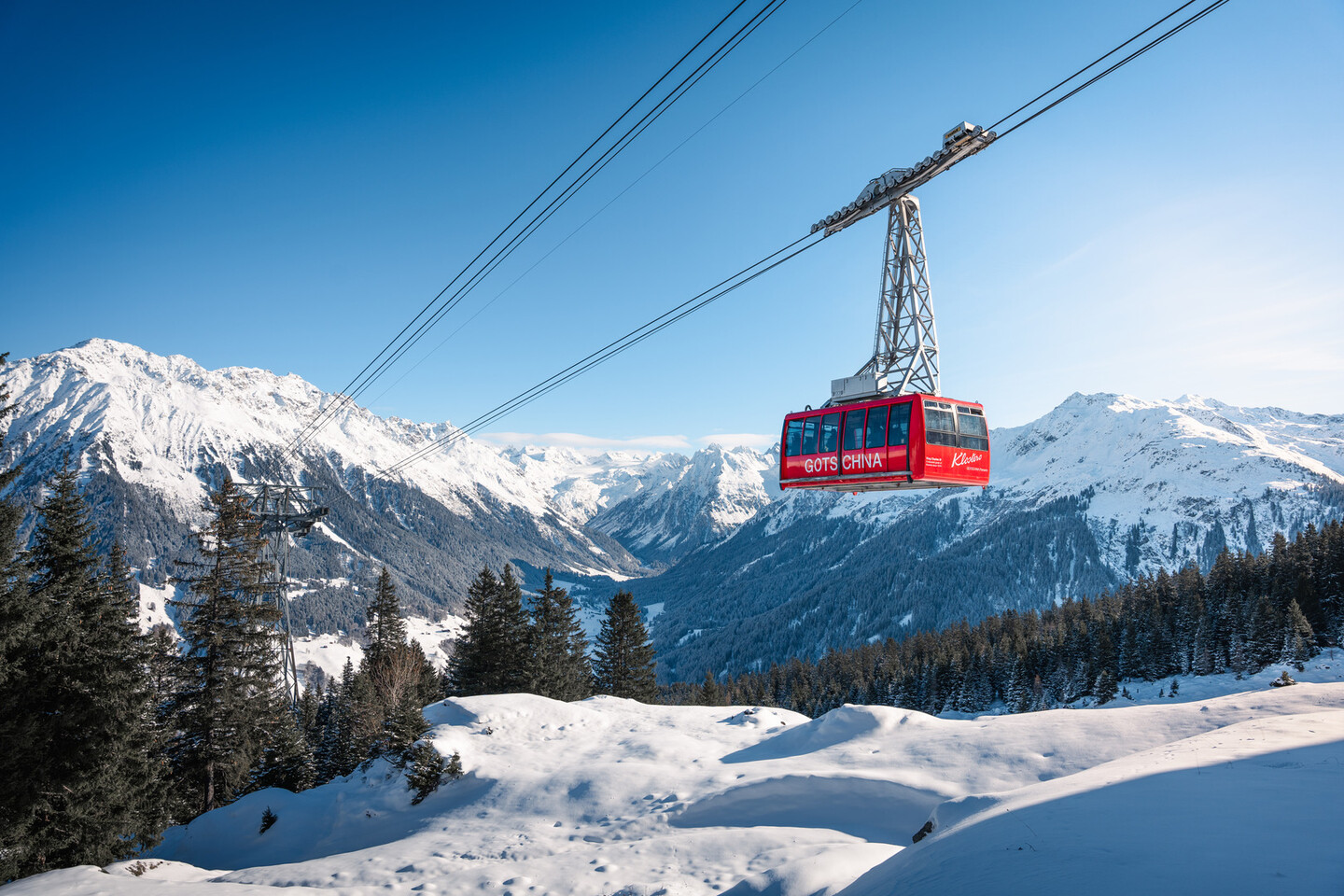
The fact that Davos Klosters has long been one of the most climate-friendly ski resorts in Europe is a matter of course in Europe’s highest town (1,560 m): “Sustainability has always played a role, but today’s guests expect more communication on this topic. We have been implementing over 100 projects on the topics of energy, efficiency and the environment for over 15 years, thereby taking an important step towards our sustainability strategy,” Martina Walsoe, project manager for “Renewable Energies” at Davos Klosters Bergbahnen, explained to SnowTrex.
The focus is not only on a sustainable infrastructure in the ski resort itself. A holistic approach is also being taken, which currently encompasses more than 100 sustainability measures. Walsoe: “The projects range from solar panels on our mountain railway buildings and small hydroelectric power plants for producing electricity from hydropower to the protection of fens and certain wild animals.”
Solar energy for the Davos Klosters ski resort
One of the largest energy consumers in Davos is the ski resort. Those responsible for Davos Klosters Bergbahnen have therefore been working intensively on how they can reduce their own consumption in the long term and produce their own energy. One of the most important pieces of the puzzle in this strategy is the “Solar Energy Master Plan”.
With the expansion of photovoltaic systems, part of the energy required will be produced from solar power. The plan envisages investments of over 10 million Swiss francs between 2022 and 2027. This will secure the installation of solar systems at around 40 locations in the ski resort on Parsenn/Gotschna and the Jakobshorn. In the long term, the mountain railways want to produce a large part of their electricity themselves.
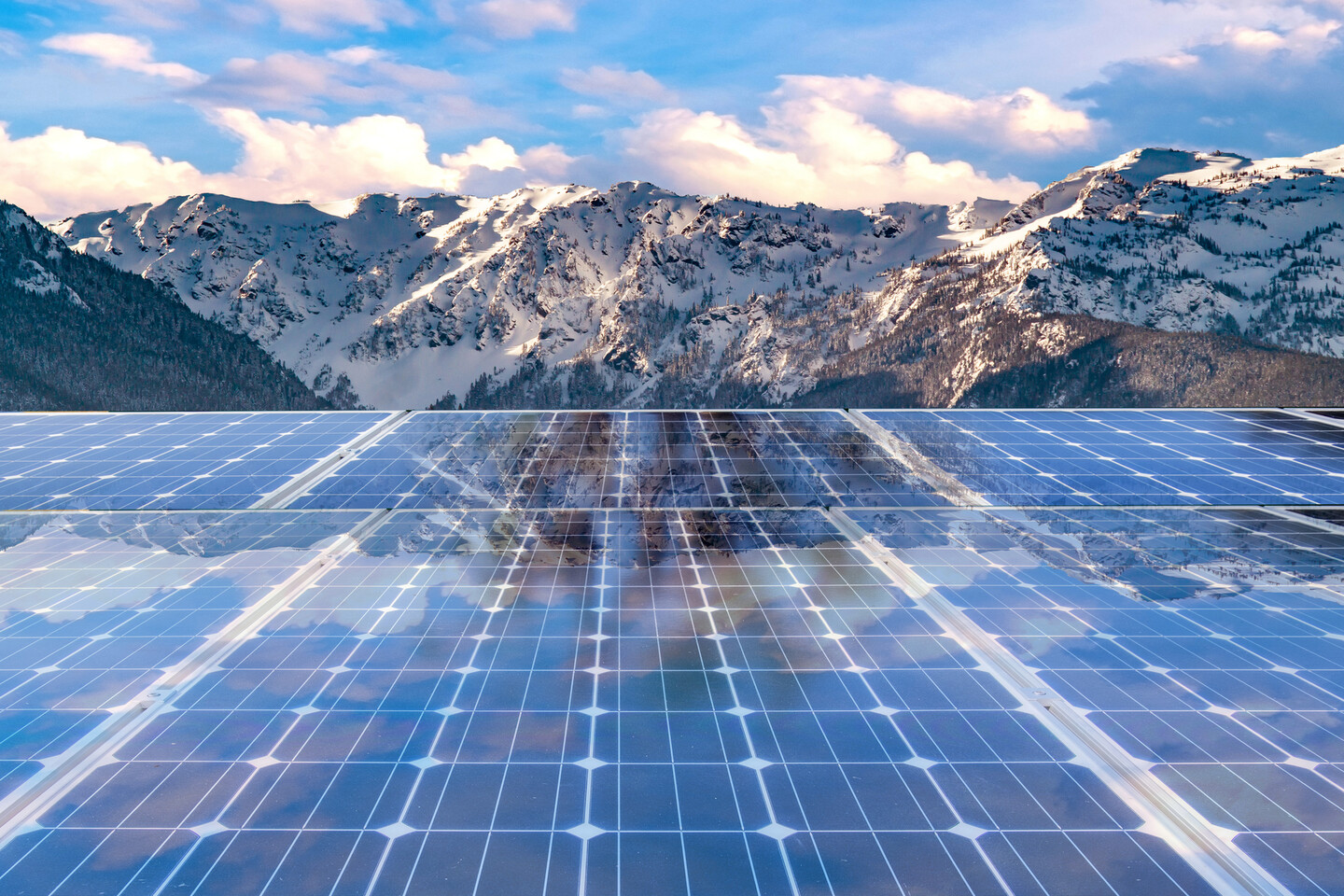
On the Jakobshorn, for example, 97 solar panels on the garage facades of the Clavadeler Bubble and Jatz Quattro lifts convert sunlight into electricity. Something similar is happening on the Weissfluhjoch, where the first photovoltaic systems were installed in the early 1990s. This year, the system was even expanded because the location is so suitable. The reason for this is the high reflectivity of the snow and the fact that the façade system can be used to produce important winter electricity. In total, all the solar systems of Davos Klosters Bergbahnen produce around 700,000 kWh per year. “With our measures, we want to become even more efficient and resource-saving. This is the aim of many of our future projects. One of our goals is to produce even more of the electricity we need from renewable sources ourselves or to minimise the use of fossil fuels on the mountain,” says Martina Walsoe, describing the plan. The best example is the restaurant on the Weissfluh summit, which can now do without its old oil heating system thanks to a new energy source. This saves around 45,000 litres of heating oil per year.
Water supplies Davos Klosters with snow and electricity
The weather in the Alps has changed significantly in recent decades, particularly in terms of precipitation. The effects of climate change are also being felt in Davos Klosters, of course: “Naturally, we experience differences in the winter months from year to year. Last winter, we had less natural snowfall than usual. This is where our investments in technical snowmaking over the last few years have paid off. It meant we were able to offer top slope conditions throughout the winter,” says project manager Martina Walsoe, explaining the strategy the mountain railways are using to make themselves less dependent on climatic changes.
Hydroelectric power stations on the Jakobshorn and Rinerhorn
Water consumption in the ski resort is therefore important. However, in order to use this precious resource as efficiently and sustainably as possible, the water is not only used for snow cannons. The snowmaking system on the Jakobshorn has been supplemented with a small hydroelectric power plant using the existing pipes. Two turbines now generate electricity there for around 10 months of the year, which is fed into the local power station. A total of 800,000 kWh is generated per year, which corresponds to the annual electricity consumption of around 200 households.

As on the Jakobshorn, the Davos Klosters mountain railways are also pursuing a dual approach to hydropower on the Rinerhorn. The water on the mountain is stored in a new reservoir and then used for snowmaking in a second step. During the planning stage, great attention was paid to environmental protection. For example, it first had to be clarified whether the volume of water in the streams was sufficient and whether the flora of the streams would be affected by the construction and operation of the reservoir.
In the end, the power plant on the Rinerhorn produces 1.2 gigawatt hours (GWh) of electricity. Most of this green energy is used by the mountain railways themselves. Among other things, it is used for charging stations, heating and the operation of snow-making equipment. Incidentally, how all this works technically is no secret. In future, the hydroelectric power station at the valley station will also be accessible to interested visitors, together with a water theme trail.
Everyone can contribute to nature conservation in Davos Klosters
In order to enjoy fantastic skiing experiences in winter, nature must also play its part in Davos Klosters. This is another reason why the mountain railways are committed to nature conservation. Several projects in the field of environment and biodiversity form the basis for this. These include, for example, the preservation of the Gämpi fen on the Jakobshorn. As a biotope, it serves as an important natural water reservoir on the mountain. It is also a unique habitat for rare animals and plants. To protect the moor, Davos Klosters Bergbahnen and the municipality have implemented several measures in collaboration with landowners. These include clearing spruce and larch trees to make room for the moor. To this end, mowing is only carried out periodically and grazing by other animals is prohibited until at least the mid-2030s.
Another biotope in Davos Klosters that is worthy of protection is the Seewer Berg dry meadow on Parsenn. Today, the area is regularly mowed by hand with a scythe to prevent it from becoming overgrown and turning into forest. In order to preserve the vegetation, grazing and fertilisation are also prohibited here. The capercaillie, native to the canton of Graubünden, is also suffering from changes to its habitat. To help the population recover, the mountain railways are helping to partially reopen the heavily overgrown mountain forest on the Wiesner Alp and in the Würzenwald. In addition, a management plan has been drawn up with gamekeepers and foresters. This plan takes into account not only the capercaillie, but also other animal and plant species.
Winter sports enthusiasts can help
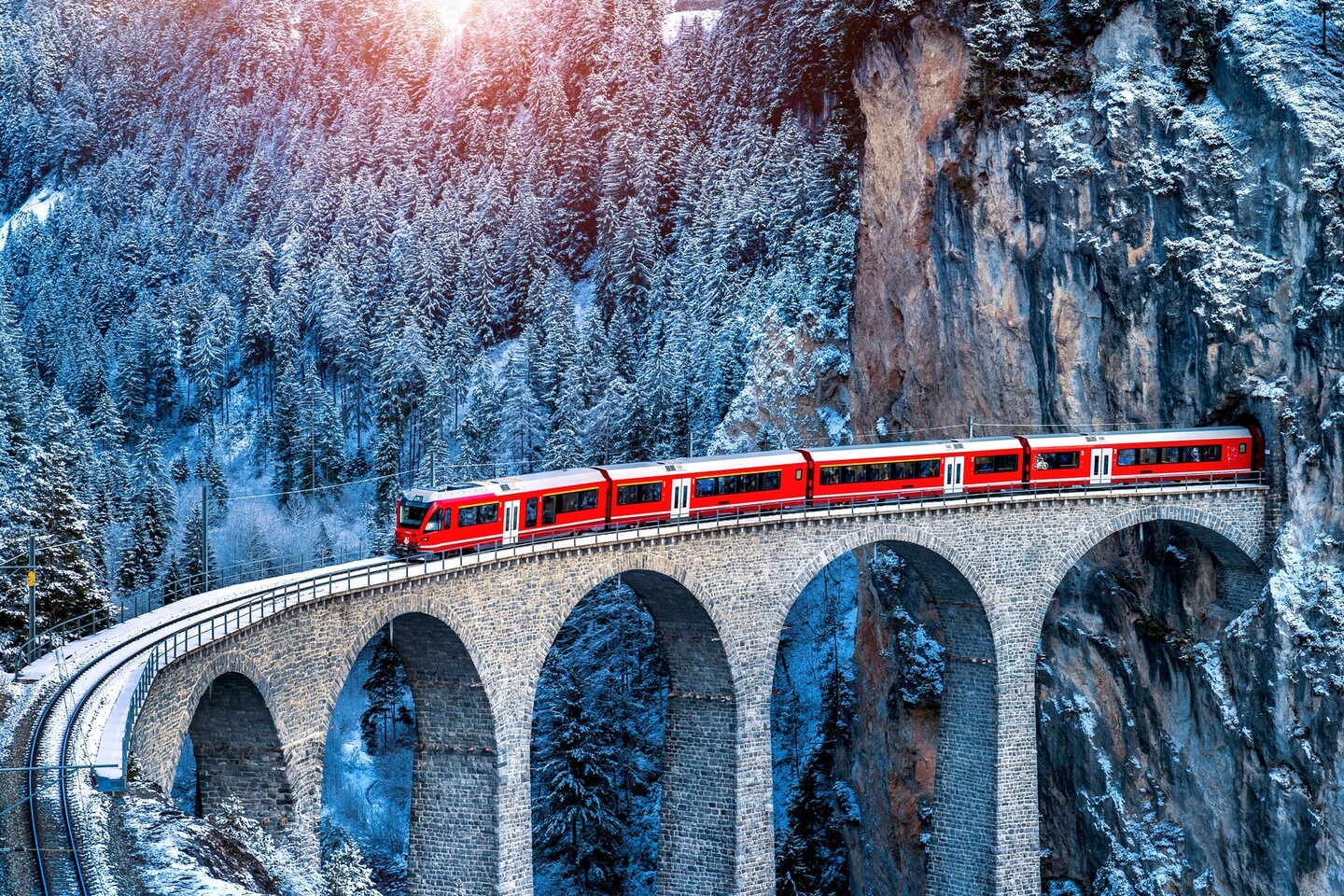
Ultimately, however, it is not only the mountain railways but also winter sports enthusiasts themselves who can do something to promote sustainable skiing in Davos Klosters, as Martina Walsoe explains: “An important factor is the journey to the resort. This accounts for a large part of a guest’s carbon footprint. We try to encourage guests to travel by train by offering attractive deals and collaborations.” Given that more than two-thirds of CO2 emissions are generated during travel to and from the ski resort, this is the best lever to use. The train journey from Zurich to Davos alone causes 25 times less CO2 than the same journey by car. And ski guests who leave their cars behind in Davos can use all public transport free of charge with the “Davos Klosters Premium Card”.
Otherwise, there are restaurants and shops in the village, such as the “AlpäTraum” speciality shop, which sells cheese and sausage specialities and other regional foods. Milk & More sells local dairy products, and farmers from the Davos and Klosters area offer fine homemade specialities in their farm shops, from homemade sausages and yoghurt to delicious pastries. It goes without saying that no litter or cigarette butts may be left behind on the more than 220 kilometres of slopes in the ski area. In addition, all winter sports enthusiasts are required to always ski on marked and approved slopes. Freeriders are also asked to stay away from designated protected areas off the slopes. This is because they could damage plants and trees and disturb wildlife there.
FAQs on sustainability in winter sports in Davos Klosters
How much is being invested in solar energy in the Davos Klosters ski area?
By the mid-2020s, Davos Klosters Bergbahnen will have invested over 10 million Swiss francs (10.4 million euros, as of 7 November 2023) in the construction of solar panels on buildings and lifts in the ski resort. The eight systems already installed by 2022 produce around 203,000 kilowatt hours (kWh) of electricity per year, which corresponds to the annual electricity consumption of around 180 households.
What should winter sports enthusiasts avoid when travelling to and from Davos Klosters?
Like many other ski resorts, Davos Klosters Bergbahnen is trying to encourage its ski guests to avoid travelling by car when arriving and departing. This is because travel accounts for more than two-thirds of the carbon footprint of a skiing holiday. Those who leave their cars at home can now travel comfortably by train to Swiss ski resorts. Switzerland has one of the world’s best rail networks, and a train journey from Zurich to Davos alone produces 25 times less CO2 than the same journey by car.
How much energy do the hydroelectric power stations in Davos Klosters generate?
The two hydroelectric power stations at Jakobshorn and Rinerhorn together generate over 2 million gigawatt hours (GWh) of electricity annually. A large part of this is used by Davos Klosters Bergbahnen itself for heating and operating the buildings on the mountain and the transport facilities. However, a significant portion is also fed into the Davos power station, which supplies the town and households with sustainably produced electricity.

