
Seven Summits: two words that set the hearts of mountaineers and adventurers racing. Conquering the highest peak on each of the seven continents is the ultimate challenge for them. However, the mountain giants in Asia, North America, Europe and elsewhere don’t just fascinate professional mountaineers; even for ordinary winter sports enthusiasts, there’s really no getting round the world’s highest peaks. SnowTrex explains what makes the myths surrounding Everest, Aconcagua and Vinson so compelling, just how complicated climbing them is, why Mont Blanc doesn’t feature on this list, and what other interesting facts there are to know about the Seven Summits.
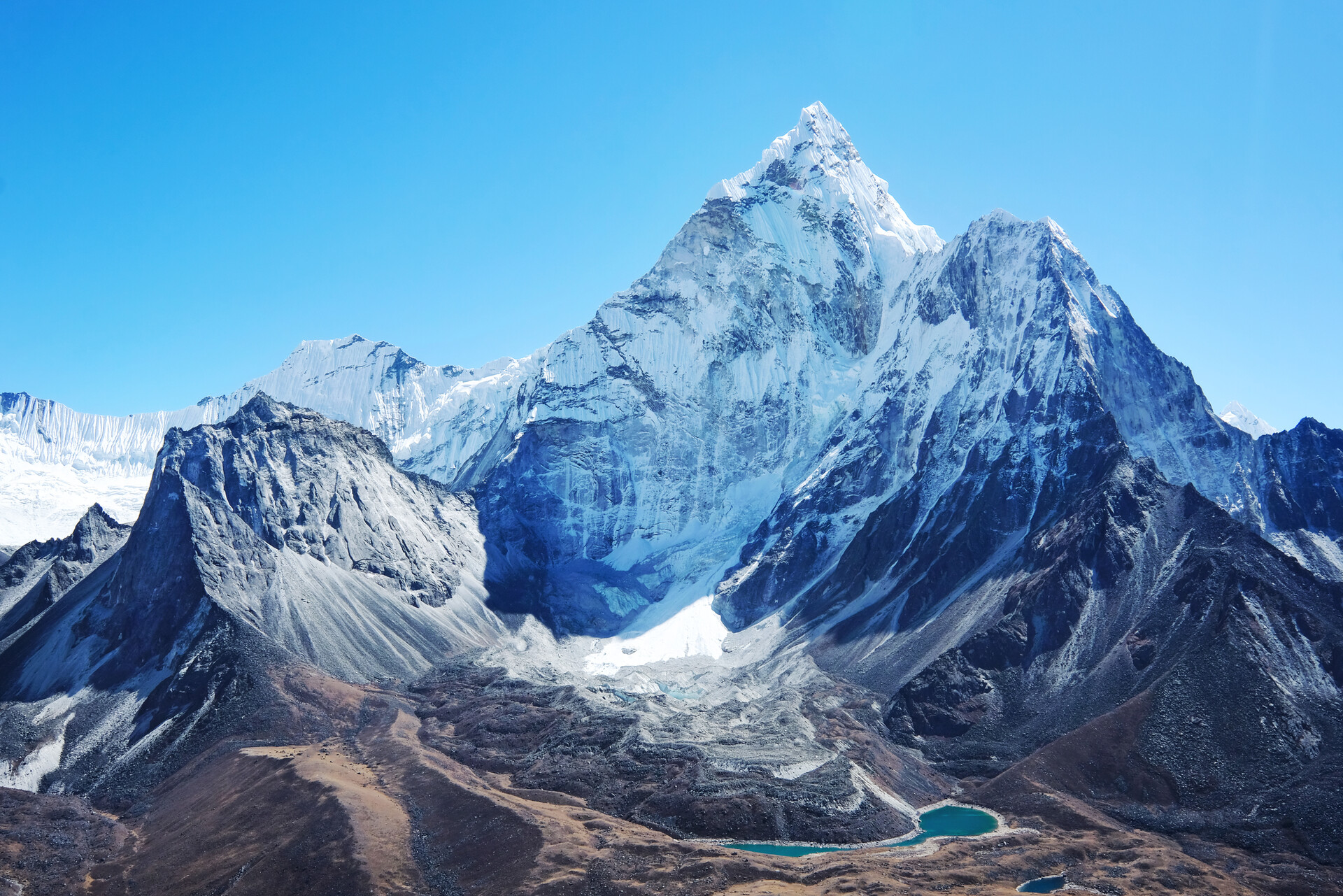
Seven Summits – the highest mountains on all 7 continents
| Mountain | Continent | Height |
|---|---|---|
| Mount Everest | Asia | 8,849 m |
| Aconcagua | South America | 6,961 m |
| Denali | North America | 6,190 m |
| Kibo (Kilimanjaro) | Africa | 5,895 m |
| Elbrus | Europe | 5,642 m |
| Mount Vinson | Antarctica | 4,892 m |
| Carstensz Pyramid | Oceania | 4,884 m |
Mount Everest (Asia) – The Roof of the World

Please also note that by using our services and integrating the YouTube API Services, the YouTube Terms of Service and the YouTube API Services Terms apply and your use of our website is deemed to be acceptance of these terms.
Height and location
At an impressive 8,848 m, Mount Everest towers over the Himalayas as the king of the Seven Summits and the highest mountain on Earth. Situated on the border between Nepal and the Tibet Autonomous Region, this majestic colossus – named after the British surveyor Sir George Everest and known in Nepali as Sagarmatha (‘Forehead of the Sky’) or Qomolangma (“Mother of the Universe”) in Tibetan, has been a symbol of the ultimate mountaineering challenge for almost 100 years.
Difficulties and challenges
The main route up Everest leads through the notorious Khumbu Icefall, over steep ice slopes and through the ‘Death Zone’ above 8,000 metres. There, the oxygen content of the air drops dramatically, and just before the summit lies the Hillary Step, with a 70-degree incline. Extreme weather – with temperatures that can drop to a wind chill of -60 degrees – as well as sudden storms, the risk of avalanches, snow blindness or altitude sickness present additional obstacles. Consequently, the ascent requires technical skill, perfect acclimatisation and mental strength.
Significance for mountaineers
As the highest point on Earth, Everest embodies the Holy Grail of mountaineering. Since its first ascent by Edmund Hillary and Tenzing Norgay in 1953, the mountain has lost none of its fascination. For many mountaineers, an ascent of Everest is the highlight of their career and a triumph of human will over the extreme challenges of nature.
Aconcagua (South America) – The Colossus of the Andes
Height and location
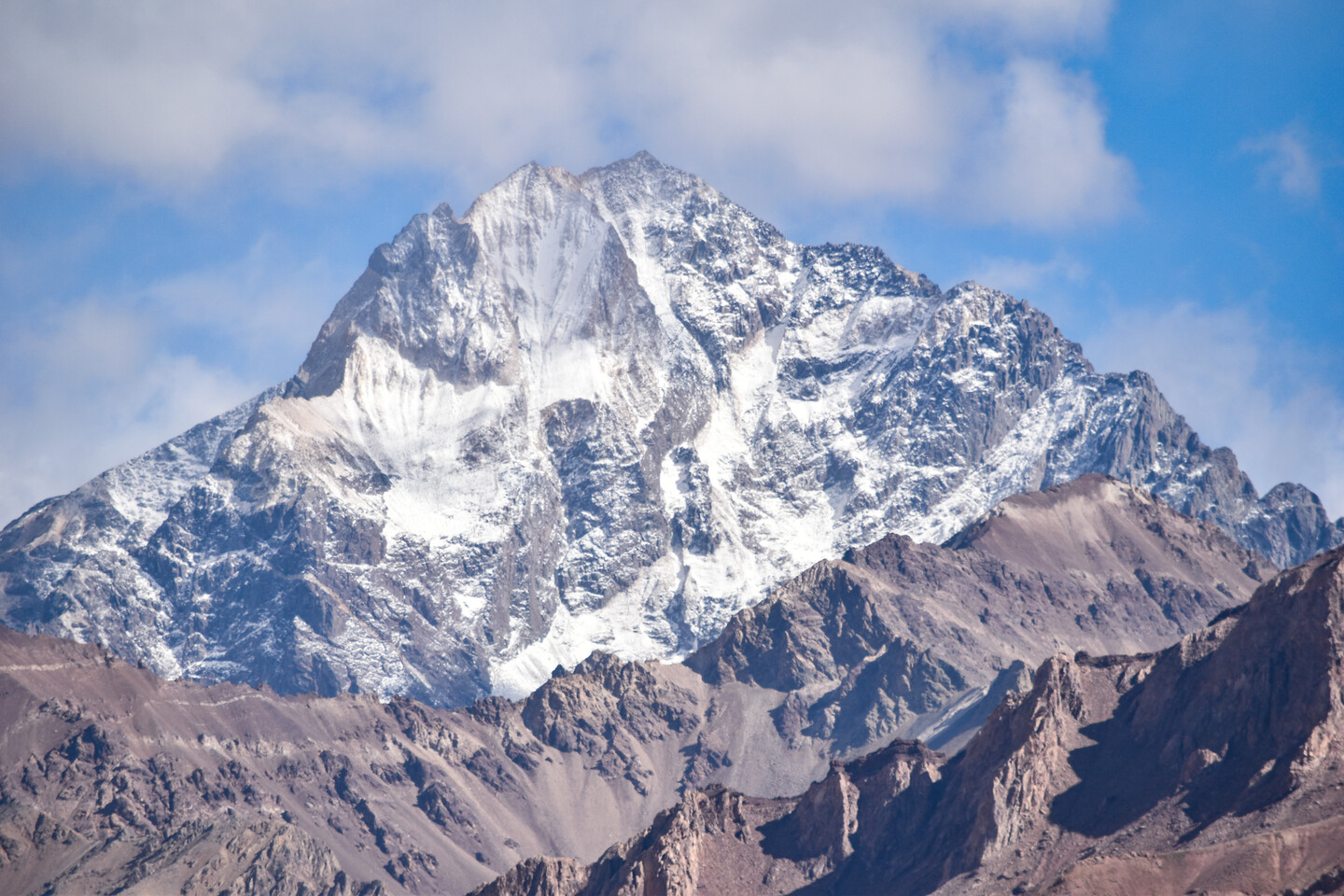
Number 2 on the Seven Summits list is Aconcagua, standing at 6,962 m in the Argentine Andes near the Chilean border. The highest mountain outside Asia is the remnant of a former volcano. It was last active over 5 million years ago and offers impressive views across the mountain range and the surrounding highlands.
Difficulties and challenges
Although technically less demanding than some of the other Seven Summits, Aconcagua should not be underestimated. The standard route does not require extensive climbing skills, but extreme weather conditions – including strong winds and sudden snowstorms – present many pitfalls that mountaineers must be aware of. The greatest challenge lies in the altitude itself, as the thin air and harsh conditions result in a summit success rate of only around 40 per cent.
Popularity among mountaineers
Since its first ascent in 1897 by the Swiss mountaineer Matthias Zurbriggen, Aconcagua has remained an ideal introductory peak for aspiring Seven Summits climbers. As a result, around 3,500 mountaineers attempt the ascent each year, making it one of the most frequently climbed mountains over 6,000 metres in the world. Its relatively easy accessibility and the fact that the summit can be reached without technical climbing experience contribute significantly to its popularity.
Denali (North America) – Alaska’s icy giant
Height and location
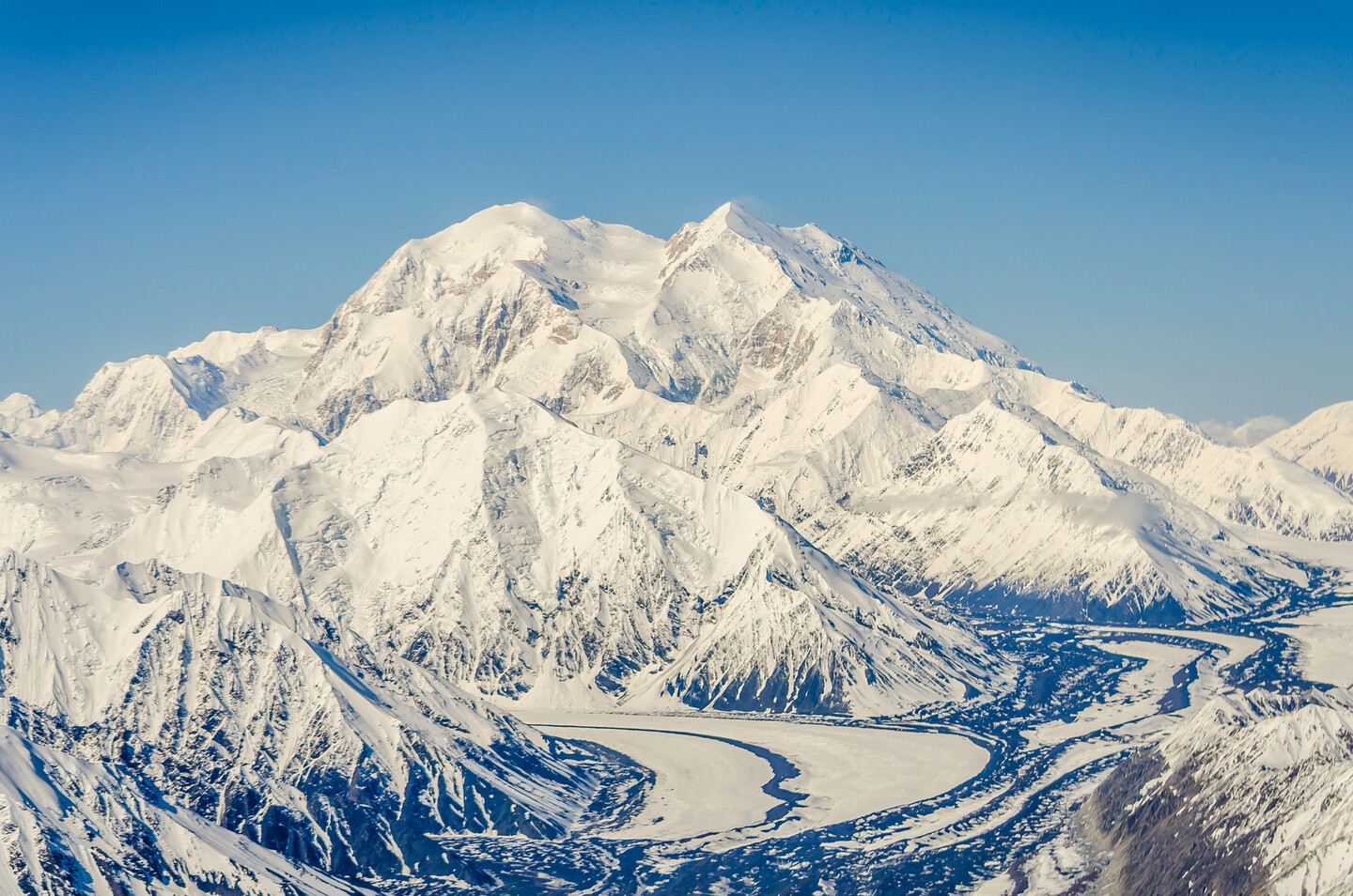
Denali, which means ‘the Great One’ in the language of the Koyukon Native American tribe, rises 6,190 m above Denali National Park in Alaska. In 2025, on the instructions of the new US President, the mountain was renamed Mount McKinley after a decade. As the highest mountain in North America, its summit – first reached in 1913 by a climbing party led by Hudson Stuck and Harry Karstens – lies just 350 km south of the Arctic Circle.
Difficulties and challenges
What Denali lacks in terms of absolute height, it makes up for with extreme Arctic conditions. The combination of polar temperatures of up to -40 degrees, fierce storms and its utterly remote location in the Alaskan wilderness makes it one of the toughest challenges the Seven Summits have to offer. This is also because climbers must carry all their own equipment and haul it on sledges, which presents an additional physical and logistical challenge.
Distinctive features of the summit
Denali has the greatest elevation gain of any mountain in the world – from base camp to the summit, there are over 5,500 metres of elevation gain to be conquered. This fact, combined with the need for complete self-sufficiency, makes the ascent to North America’s highest peak an authentic wilderness experience that pushes even highly professional mountaineers to their limits.
Kilimanjaro (Africa) – The snow-capped peak on the equator
Height and location
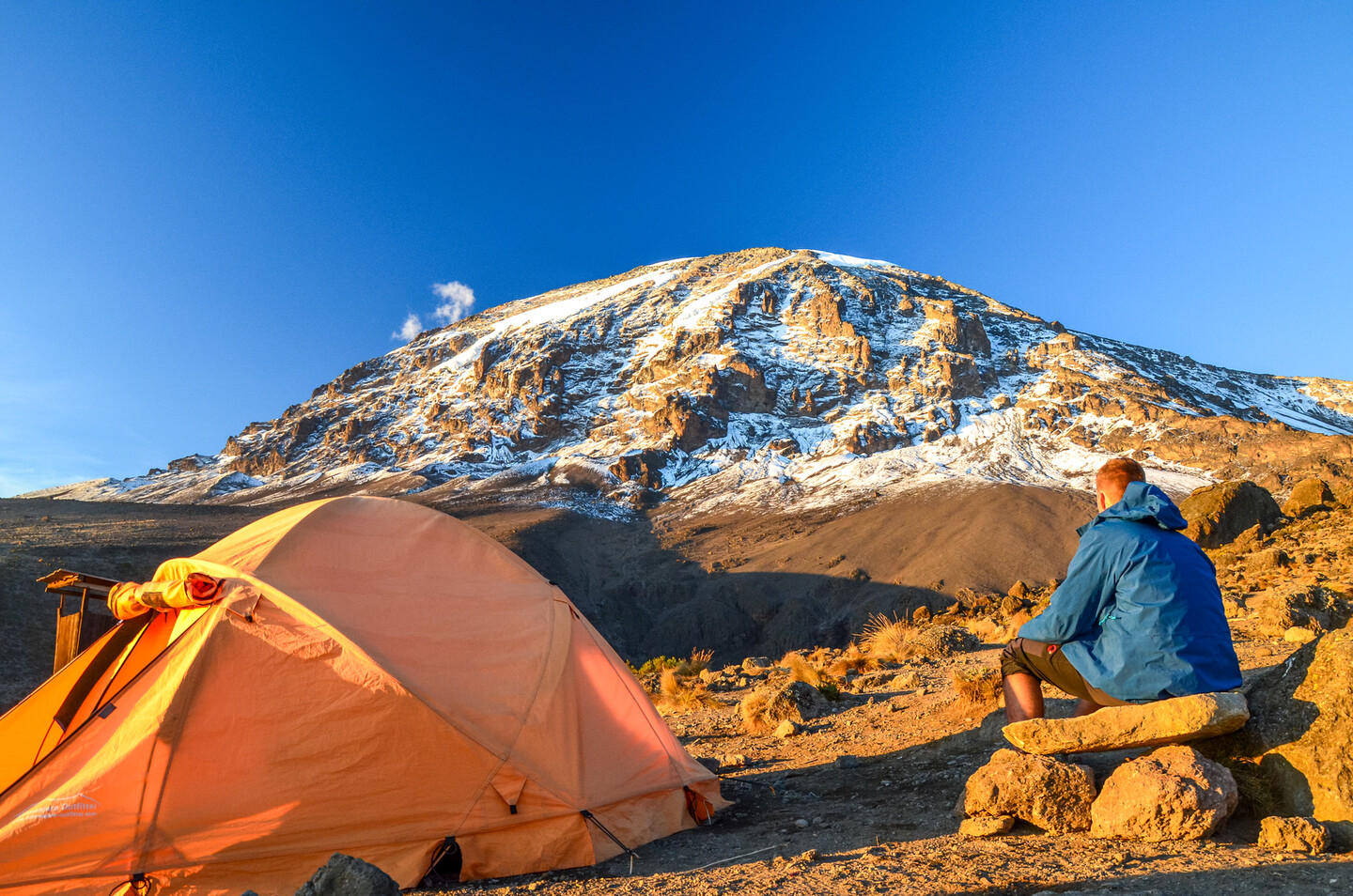
The Kilimanjaro massif rises 5,895 m above the Tanzanian savannah, making it the highest mountain in Africa. As a free-standing volcano with its three craters – Kibo (which also forms the summit), Mawenzi and Shira – its striking silhouette is visible from a great distance.
Difficulties and challenges
Technically, Kilimanjaro is one of the easier of the Seven Summits, as no climbing experience is required for the ascent to the Kibo crater rim. The first ascent was achieved on 6 October 1889 by the German African explorer Hans Meyer and the Austrian mountaineer Ludwig Purtscheller. The main challenge at the summit, situated near the equator, lies in the rapid gain in altitude and the associated risk of altitude sickness. The success rate varies greatly depending on the route chosen and the duration of the ascent.
Cultural significance
The ‘Mountain of Light’, as it is known in the local language, holds deep cultural and spiritual significance for the local population. As an iconic symbol of Africa and a UNESCO World Natural Heritage Site (since 1987), it attracts thousands of mountaineers every year. Kilimanjaro’s receding glaciers have also become a symbol of global climate change.
Elbrus (Europe) – The dormant volcano of the Caucasus
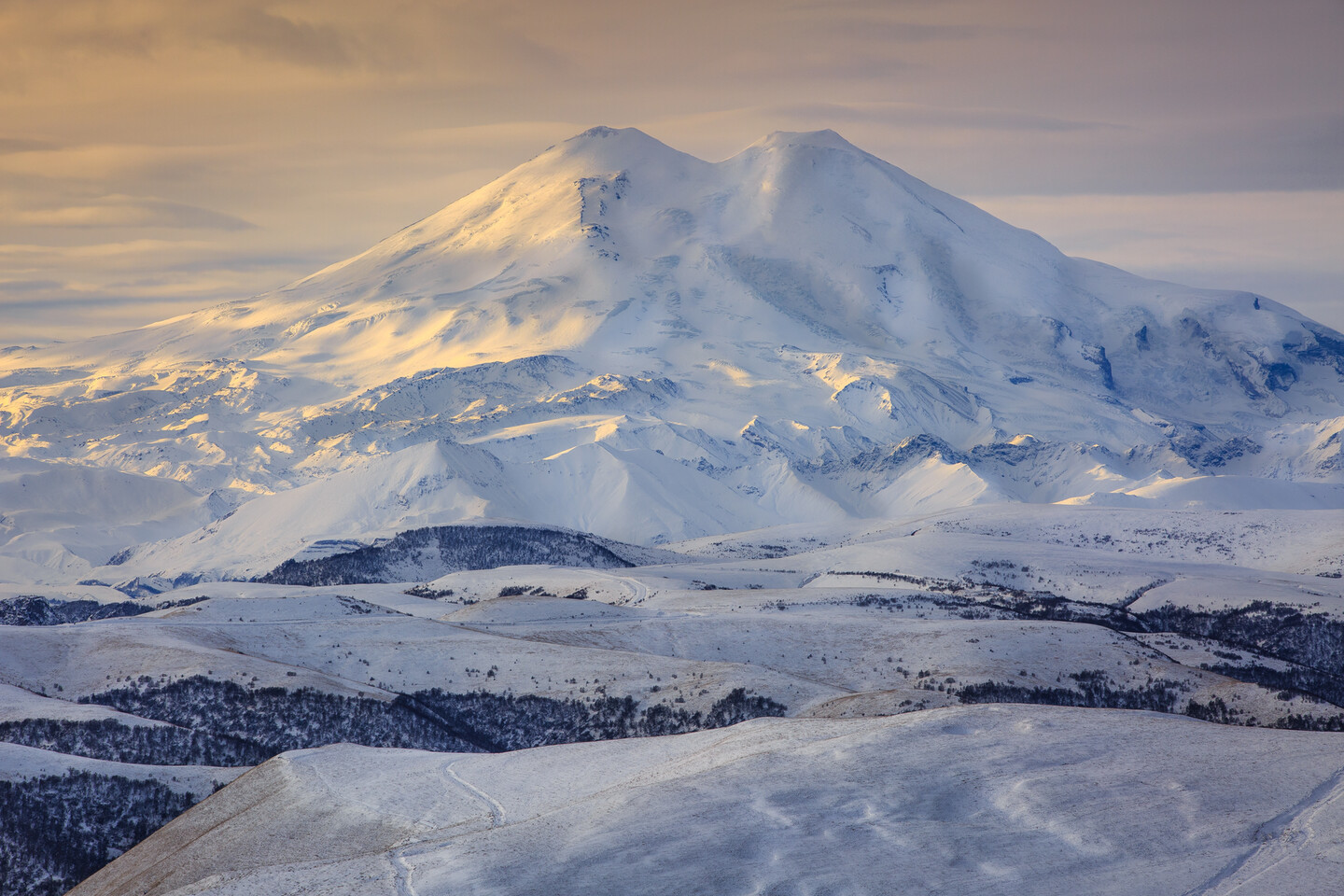
Height and location
At 5,642 m, Elbrus is the highest mountain in Europe and forms part of the Caucasus mountain range in Russia, near the border with Georgia. Its two peaks – the eastern one (5,621 m) and the slightly higher western one (5,642 m) – crown the extinct volcano. The fact that Elbrus is the highest peak in Europe, rather than Mont Blanc (4,808 m) on the border between France and Italy, is due to the unresolved question of exactly where the intra-Eurasian boundary lies. Geographers have been at odds over this for years, although a majority of them place the Caucasus volcano in Europe rather than in Asia.
Difficulties and challenges
Elbrus is often underestimated, which makes it dangerous. Although technically moderate, extreme weather conditions – including sudden storms and temperatures as low as -25 degrees – can make the ascent considerably more difficult; Kilar Khatchirov, a local shepherd, was the first to succeed on 22 July 1829. Furthermore, the standard route requires a basic knowledge of how to use crampons and an ice axe for the glacier zone around the summit.
History and cultural significance
Mount Elbrus has a rich history, ranging from ancient myths to fierce battles during the Second World War. Today, however, the Caucasus volcano is a popular destination for skiers and mountaineers. The region around Elbrus is also home to several ski resorts with over 35 kilometres of slopes at altitudes between 2,300 m and 3,800 m.
Mount Vinson (Antarctica) – The frosty giant at the end of the world
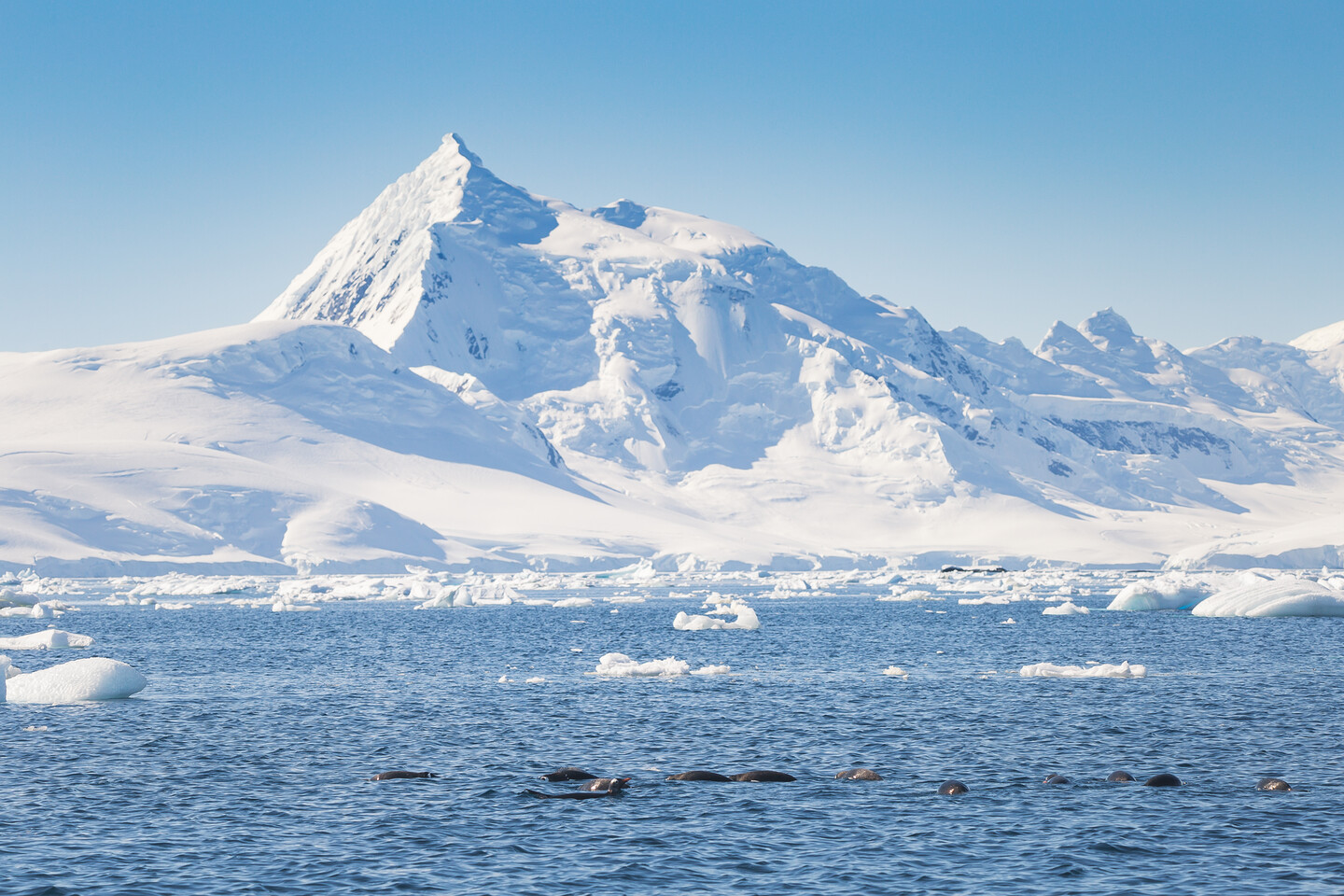
Height and location
At 4,892 m, Mount Vinson is the highest peak in Antarctica. It is situated in the Ellsworth Mountains, some 1,200 km from the South Pole, making it the most remote peak of the Seven Summits. This is evidenced by the fact that this icy giant was the last of the Seven Summits to be first ascended, in 1966. The ascent was achieved on 18 December by four members of the American Alpine Club: Pete Schoening, John Evans, Barry Corbet and Bill Long.
Difficulties and challenges
The greatest hurdle on Mount Vinson is precisely its extreme isolation in the hostile climate of Antarctica. It is not uncommon here for temperatures to drop to as low as -40 degrees for several days at a time. Furthermore, the 24-hour sunlight during the Antarctic summer can lead to snow blindness due to intense reflections. Finally, the logistics involved in climbing Vinson are complex and expensive, as everything has to be transported there by aeroplane.
Special features of the ascent
An expedition to Mount Vinson, which lasts around 20 days on average and is only possible with a mountain guide experienced in the Antarctic, remains to this day an extraordinary adventure in one of the most unspoilt regions on Earth. The crystal-clear air in Antarctica allows for visibility of over 100 km across seemingly endless and surreal ice landscapes. However, the short climbing season between November and January, as well as the high costs, make Vinson the most exclusive of the Seven Summits.
Carstensz Pyramid (Australia/Oceania) – New Guinea’s rocky peak
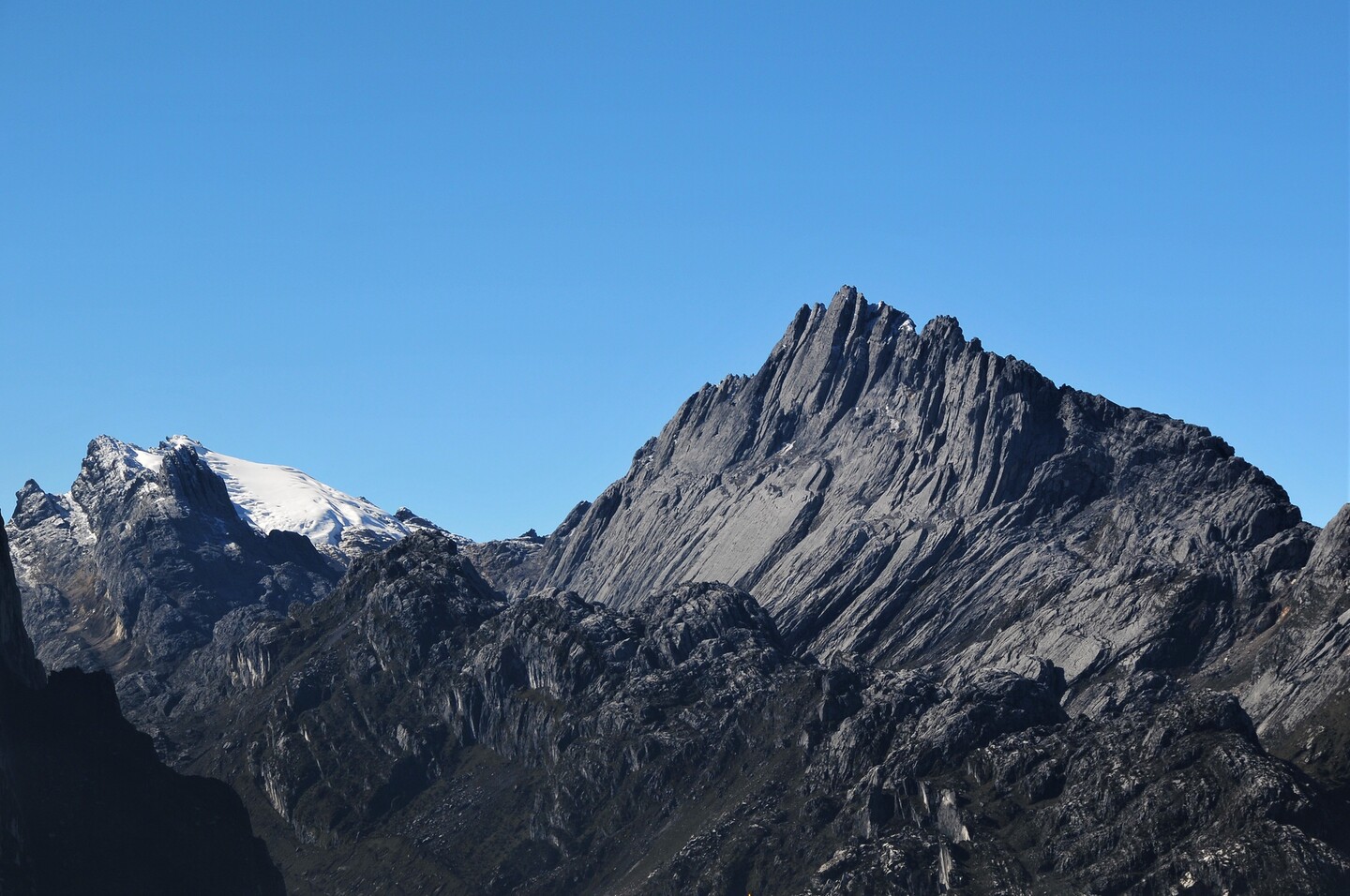
Height and location
The Carstensz Pyramid, also known in Indonesian as Puncak Jaya – ‘Victory Peak’ – reaches a height of 4,884 m and is situated in the province of Papua on the island of New Guinea. As the world’s highest insular mountain, it is the most unusual of the Seven Summits. The first ascent was achieved on 13 February 1962 by a quartet of mountaineers comprising Heinrich Harrer, Philip Temple, Russel Kippax and Albert Huizenga.
Difficulties and challenges
Unlike the other six highest peaks on the continents, the Carstensz Pyramid requires genuine climbing skills. On the route, at an altitude of almost 4,900 metres, mountaineers need to be proficient in rock climbing, as the terrain is classified as more difficult than that of Mount Everest, and crossing it is only possible with the aid of fixed ropes. Furthermore, political unrest in the region, complicated official permit procedures and the difficult access through the jungle all make the endeavour of climbing Puncak Jaya even more challenging.
Uniqueness of the summit
As the only one of the Seven Summits that requires technical climbing and is situated in a tropical region, the Carstensz Pyramid stands out clearly from mountains such as Everest or Elbrus. The rainforest surroundings, the view of the Grasberg mine – the world’s largest gold mine – and encounters with local tribes continue to make this expedition a cultural experience for all involved.
The Kosciuszko Controversy
A notable feature is the debate surrounding the seventh summit: Whilst the American Dick Bass, who between 1983 and 1985 became the first person to conquer every single one of the Seven Summits, regards Mount Kosciuszko (2,228 m) in Australia as the highest peak in Oceania, Reinhold Messner argues otherwise. The mountaineering legend from South Tyrol regards the Carstensz Pyramid as the highest, as it lies on the Australian continental plate. Today, both versions of the Seven Summits are respected, although Messner’s version, which includes the Carstensz Pyramid, is considered more challenging by climbing enthusiasts.
The Seven Summits as a challenge
Motivation and goals of mountaineers
What drives people to take on the enormous challenge known as the ‘Seven Summits’? For many mountaineers, they embody the perfect blend of sporting challenge and global voyage of discovery. The peaks represent the diversity of our planet – from tropical rainforests to polar ice deserts. It is this combination of pushing one’s personal limits and experiencing cultural diversity that makes the Seven Summits so appealing.
Training and preparation
Preparation for a Seven Summits project is comprehensive and time-consuming. Physical training focusing on endurance and strength building, climbing skills, acclimatisation trips and mental training are essential. Successful mountaineers often start with easier peaks such as Kilimanjaro or Elbrus and then gradually increase the level of difficulty.
Successful ascents and records
Since Dick Bass became the first person to climb all the Seven Summits in 1985, around 500 mountaineers have achieved this goal. Notable records include the fastest ascent of all the peaks by the Australian Steve Plain in less than 118 days. Equally remarkable are the ages of the American Jordan Romero and the South African Werner Berger, who are the youngest (15 years) and oldest (76 years) to have conquered the Seven Summits. Their achievements demonstrate that, with the right preparation and determination, people can achieve extraordinary goals.
The Seven Summits as a trend
Growing popularity
What was once considered an exotic challenge for elite mountaineers has, in the 21st century, become an established goal for ambitious adventurers. The ease of access to the summits provided by commercial expedition operators, better equipment and more comprehensive information have led to a significant rise in the number of successful ascents of the Seven Summits.
Commercial Ascents and Tourism
Specialist tour operators now offer complete Seven Summits packages that cover everything from logistics to summit guides. The cost for all seven summits is generally between 150,000 and 200,000 euros, with Mount Everest and Mount Vinson being the most expensive expeditions.
Criticism and environmental impact
As popularity has grown, so too have the challenges surrounding the ‘Seven Summits’. Overcrowded routes, litter left behind and the commercialisation of formerly untouched areas repeatedly raise questions about sustainability. Responsible expedition operators are therefore increasingly focusing on environmentally friendly practices and educational programmes to preserve the beauty of the mountains for future generations.
FAQ on the Seven Summits
How much does it cost to climb all the Seven Summits?
The total cost of climbing all the Seven Summits is usually between 150,000 and 200,000 euros. Mount Everest, costing between 45,000 and 65,000 euros, and Mount Vinson (35,000 to 45,000 euros) are the two most expensive expeditions. However, prices for Seven Summits expeditions can vary considerably depending on the operator, group size, expedition style and the level of personal support required.
How long does it take to climb all the Seven Summits?
Most successful Seven Summits climbers take between five and eight years to complete all the peaks. This depends on factors such as available time, financial resources, experience and weather conditions. The record for the fastest ascent of all seven summits was set by the Australian Steve Plain in 2018, taking 117 days, 6 hours and 50 minutes.
Which of the Seven Summits is considered the most difficult?
Technically speaking, the Carstensz Pyramid is the most demanding peak, as it requires genuine climbing skills. Mount Everest presents the greatest challenge due to its extreme altitude, the ‘death zone’ above 8,000 metres and the potentially dangerous weather conditions. Denali is often described as the most physically demanding mountain, as climbers have to carry all their own equipment into the Alaskan wilderness.
How many people have climbed all seven summits to date?
To date, around 500 people have successfully climbed every single one of the Seven Summits with the right training. This figure increases by around 30 to 40 people each year. Interestingly, more people have climbed Mount Everest (over 6,000) than all the Seven Summits combined.
Which of the Seven Summits is best suited to beginners?
Kibo, the summit of the Kilimanjaro massif in Africa, is generally regarded as the easiest of the Seven Summits for beginners to climb. It requires no technical climbing skills and can be ascended via well-marked trails. After gaining initial experience on Kilimanjaro, Elbrus or Aconcagua usually follow as the next steps on the path to more challenging peaks.

